

Finding the right home modification provider in Australia can feel overwhelming. There are many options, different qualifications to verify, and NDIS requirements to navigate.
At Nursed, we’ve helped countless people through this process. This guide walks you through what to look for, how to assess providers, and the steps to make the best choice for your needs.
What Home Modifications Actually Do
Home modifications are physical changes to your living space that remove barriers and make daily tasks safer and easier. They range from simple additions like grab rails and non-slip flooring to complex renovations such as widened doorways, stepless showers, and automatic door openers. The scope depends entirely on your needs, your home’s layout, and what tasks you struggle with. A modification might be as straightforward as installing lever taps instead of knobs, or as involved as removing load-bearing walls to improve kitchen flow for wheelchair access.
Why Assessment Matters Before Any Work Begins
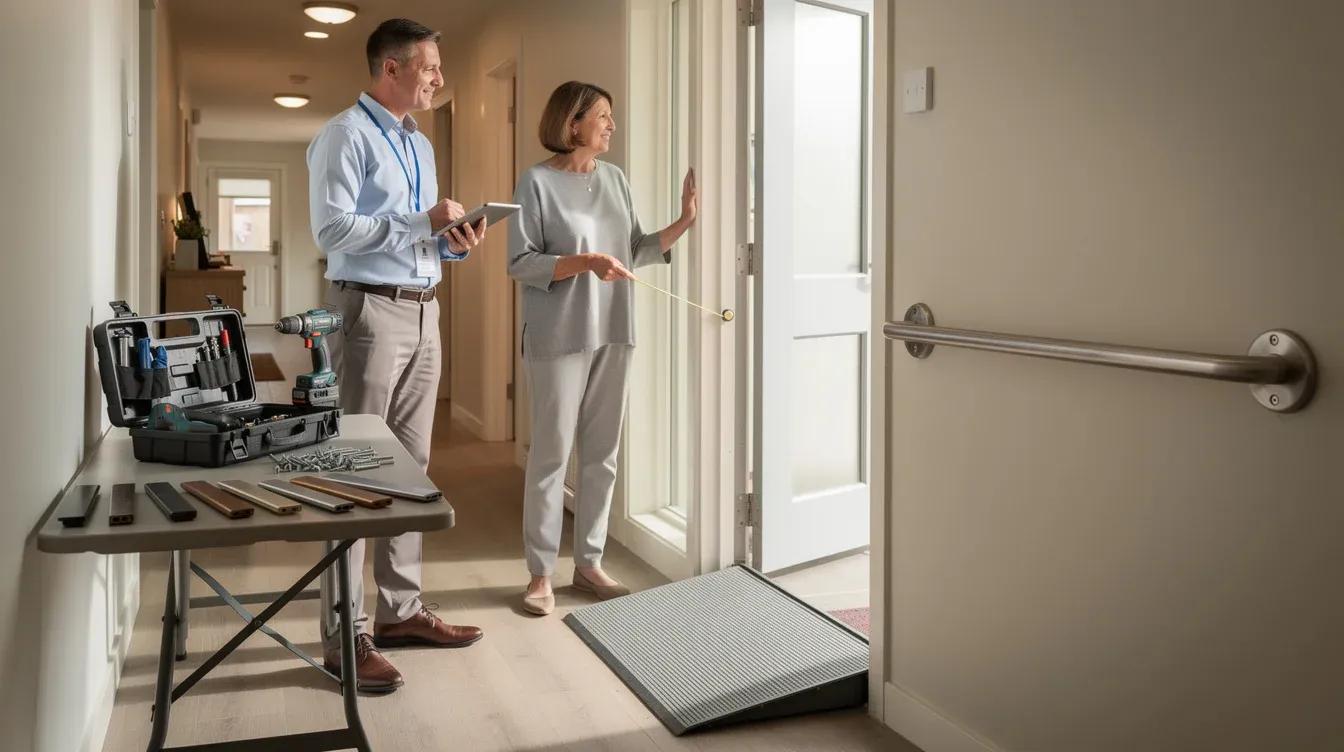
The key difference between a useful modification and a wasted investment comes down to whether it addresses your actual daily struggles. An occupational therapist assessment identifies which modifications will have the most impact on your independence. They observe how you move through your space, what tasks cause difficulty, and where hazards exist. This assessment prevents you from spending money on changes that don’t solve your real problems. Without this step, you risk investing in modifications that look good but don’t improve your daily life.
Falls at Home: The Numbers Tell the Story
Every day, about 400 older Australians are admitted to hospital due to falls at home in people over 65, and addressing home hazards can reduce falls by about 30 per cent. That statistic alone shows why modifications aren’t optional extras-they’re prevention tools. Falls lead to hospitalisation, loss of independence, and often trigger a cascade of care needs that become far more expensive than the modification itself. An unmodified home is also unsafe for carers, which can lead providers to limit or withdraw services to protect staff safety.
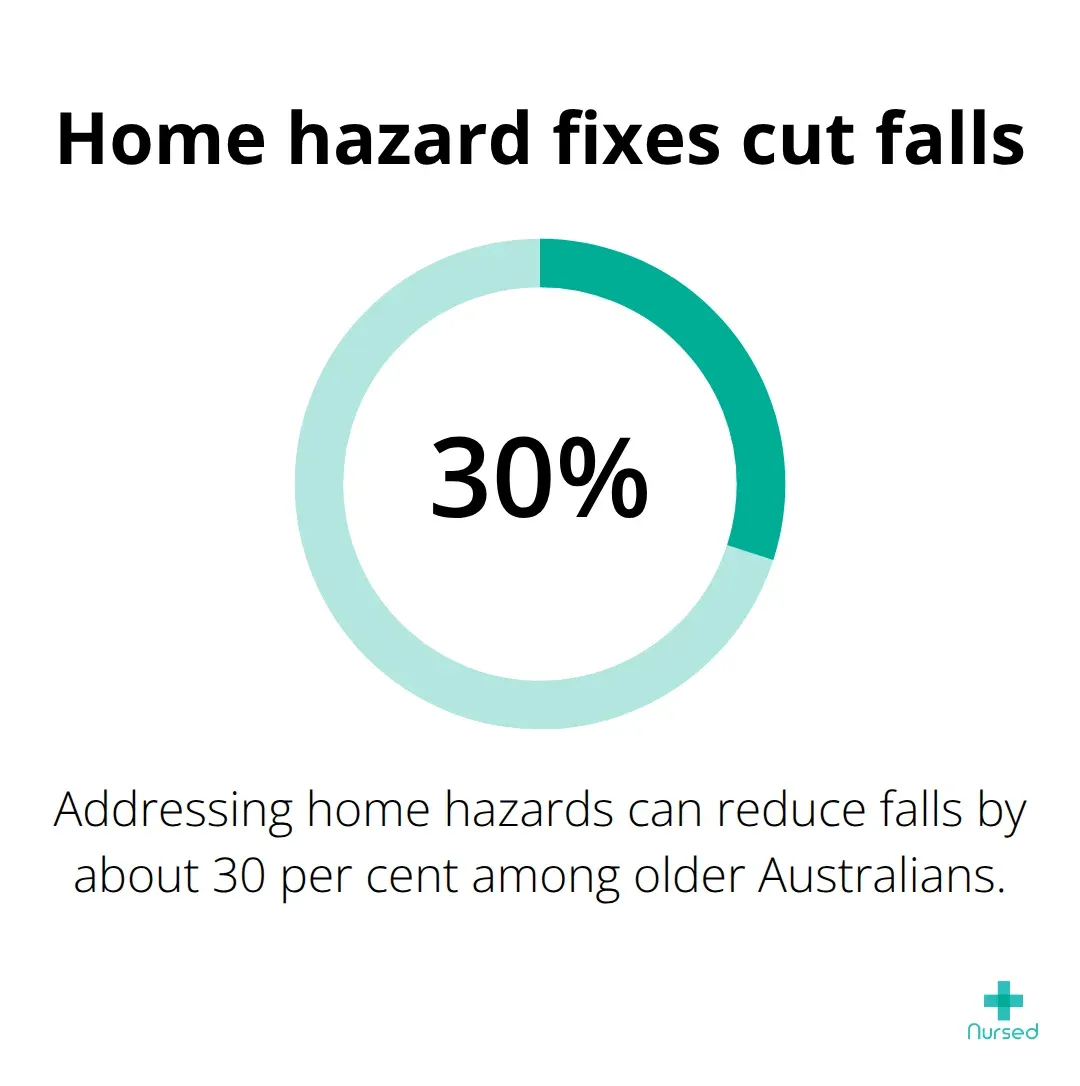
Installing grab rails, non-slip flooring and sensor lighting prevents these incidents from happening in the first place. Investing in modifications now saves money long-term by reducing the need for more intensive and expensive care later.
Bathrooms Lead the Way
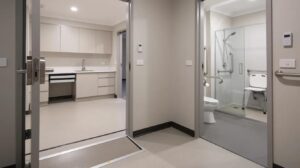
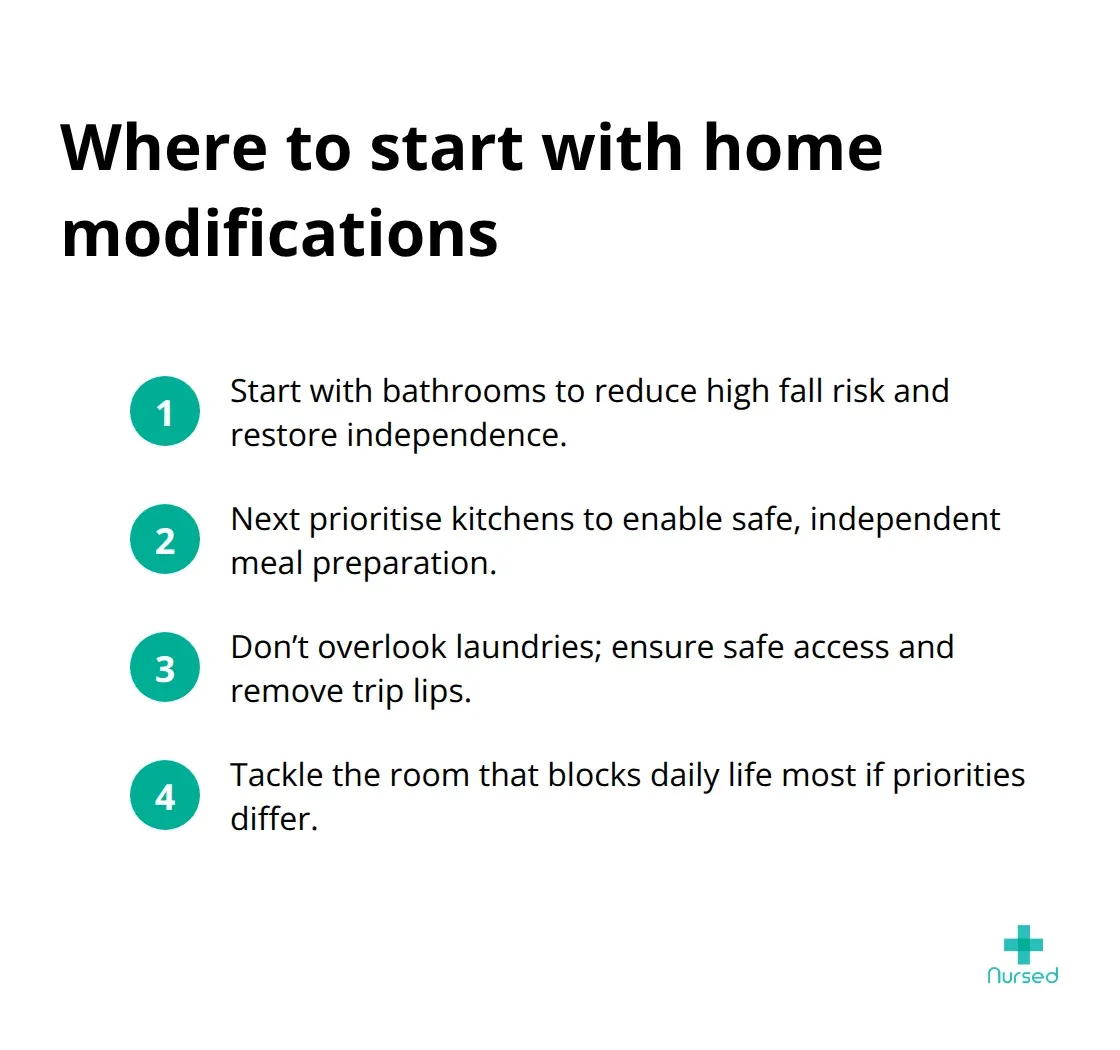
Most people start with bathroom modifications because these rooms present the highest fall risk and the greatest barrier to independence. Grab rails, walk-in showers, raised toilets, and lever taps address the specific hazards of wet, slippery surfaces and confined spaces. These changes transform a dangerous room into a space where you can wash and toilet safely without constant assistance. The bathroom is often where people first lose their independence, so modifications here have the biggest immediate impact on daily life.
Kitchens and Laundries Follow
Kitchens are the second priority because they’re where independence truly matters-being able to prepare a meal without help changes everything. Modifications here might include lowered countertops, wider routes between appliances, and more base drawer storage to reduce bending and reaching. Laundries often get overlooked until someone realises they can’t access the washing machine safely. Widened access routes and removal of trip hazards like lips between rooms make laundry manageable again. The order matters less than starting with whichever room creates the biggest obstacle to your daily life, and understanding what you actually need sets the stage for finding the right provider to deliver it.
What to Look for in a Home Modification Provider
The difference between a home modification that transforms your life and one that misses the mark often comes down to the provider you choose. You need someone who understands occupational therapy assessments, knows NDIS funding inside out, and can translate your daily struggles into practical solutions. Not all providers are equal. Some specialise in complex renovations but lack OT expertise. Others understand disability needs but cannot navigate the funding maze. The best providers do both.
NDIS Knowledge Separates Good Providers from the Rest
Your provider must understand NDIS funding criteria because it shapes everything from what modifications qualify for funding to how much you’ll pay out of pocket. The NDIA funds modifications that are reasonable, necessary, and directly related to your disability. This means a modification that improves safety but isn’t tied to your specific impairment won’t receive funding, even if it seems sensible. Providers who understand this distinction will guide you toward modifications the NDIA will actually approve rather than proposing expensive work that becomes your responsibility. Ask potential providers whether they’ve worked with the NDIA before and request examples of modifications they’ve funded. If they cannot articulate the difference between reasonable and necessary, they lack sufficient experience. Registered NDIS providers have the compliance expertise to reduce approval delays and cost surprises.
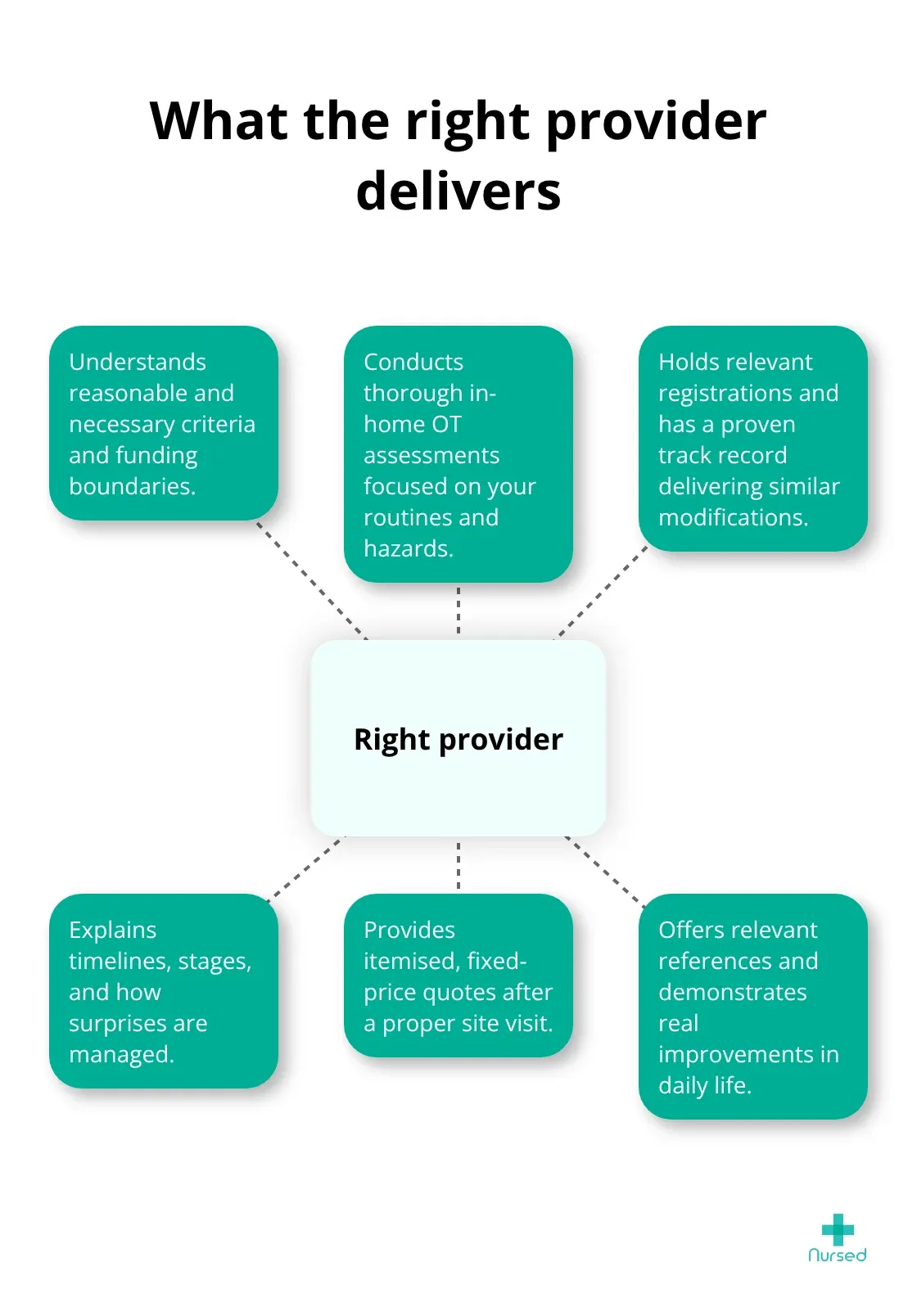
When you compare quotes, ask each provider to explain which parts of their proposal the NDIA will fund and which parts you’ll need to cover yourself. This clarity prevents shock when the invoice arrives.
Assessment Quality Determines Everything That Follows
A thorough occupational therapist assessment isn’t a box to tick before work starts-it’s the foundation of a modification that actually works. The assessor should spend time in your home, observing how you move through spaces, what tasks cause difficulty, and where hidden hazards exist. They should ask specific questions about your daily routines, not generic ones. For example, an assessment focused on kitchen modifications should explore exactly how you prepare meals now, what barriers you face, and what independence looks like for you. Providers who rush assessments or rely on phone consultations instead of home visits often miss critical details. After assessment, the provider should present recommendations with clear explanations of why each modification matters for your specific situation. They should also discuss staging-which modifications to prioritise first if funding is limited. Trustworthy providers acknowledge that budgets are real and help you make strategic choices rather than pushing expensive solutions you don’t need.
Credentials and Real-World Experience Matter More Than Brand Names
Check whether your provider holds relevant qualifications and registrations. Occupational therapists should be registered with their professional body and have experience with home modifications specifically, not just general therapy work. Builders should hold state-based licensing and public liability insurance. For NDIS work, verify they’re registered with the NDIS. However, credentials alone don’t tell the full story. A provider with five years of home modification experience and a strong understanding of NDIS processes will serve you better than one with impressive qualifications but limited practical delivery. Ask for references from clients with similar needs to yours (someone who’s had a kitchen modified if you need kitchen work, or bathroom modifications if that’s your priority). When you contact references, ask whether the provider delivered on time, stayed within budget, and whether the modifications actually improved daily life. These conversations reveal what working with them is really like.
How Providers Handle Your Specific Situation
The way a provider responds to your initial inquiry tells you a lot about how they’ll work with you throughout the project. A good provider asks detailed questions about your home, your disability, and your goals before offering solutions. They don’t push a one-size-fits-all approach. They also explain their process clearly-what happens after assessment, how they coordinate with the NDIA, what timeline you can expect, and how they’ll handle unexpected issues. Providers who offer fixed-price quotes after a proper site visit demonstrate confidence in their assessment and planning. Those who rush you toward a decision or avoid answering questions about their process are red flags. The right provider treats you as a partner in the modification journey, not just a customer to process quickly.
How to Choose the Right Home Modification Provider
Credentials Form the Foundation
Credentials matter, but they represent only the starting point. A registered NDIS provider with state-based builder licensing and public liability insurance demonstrates they operate within compliance frameworks. This compliance alone doesn’t guarantee they’ll deliver what you need. The real test is whether they understand your specific situation and possess the practical experience to solve it.
Check whether occupational therapists on their team hold professional registration and have specific experience with home modifications, not just general therapy work. Ask how many NDIS projects they’ve completed and request examples of modifications they’ve successfully funded. Providers who hesitate to explain their track record lack confidence in their process.
How Providers Respond to Your Inquiry
When you contact potential providers, notice how they respond. Do they ask detailed questions about your home layout, your daily routines, and your goals before suggesting solutions? Providers who jump straight to recommending expensive modifications without understanding your actual barriers prioritise their revenue, not your outcomes.
Request references from clients with similar needs to yours-if you need kitchen modifications, ask for someone who’s had kitchen work completed. When you contact references, ask whether the modification stayed within budget, arrived on schedule, and whether daily life actually improved. These conversations reveal what the provider is really like to work with.
Comparing Quotes and Timelines
Comparing quotes requires more than looking at price. Request itemised quotes that break down exactly which components the NDIA will fund and which parts you’ll cover yourself. This separation prevents invoice shock later. Ask each provider to explain their timeline from assessment to completion and how they handle unexpected issues like structural problems discovered during work.
Providers offering fixed-price quotes after a proper site visit demonstrate they’ve completed thorough planning. Those pushing you toward a decision without visiting your home in person cut corners. Trustworthy providers discuss staging modifications with limited budget rather than pushing the full scope immediately.
What Online Reviews Actually Tell You
Read online reviews on platforms like Trustpilot, but focus on specific details rather than star ratings. Reviews mentioning clear communication, realistic timelines, and whether modifications solved the stated problem carry more weight than generic praise. Look for patterns: if multiple reviews mention delays or poor communication, that’s a genuine concern. If reviews consistently mention the provider explained funding complexity clearly and stayed responsive throughout, that reflects their actual working style.
Partnership Throughout the Process
The provider you choose should treat you as a partner in the modification process, asking questions, explaining their reasoning, and keeping you informed at every stage. Providers who hesitate to answer questions about their process, avoid discussing budget constraints, or rush you toward decisions without proper assessment create unnecessary risk.
Final Thoughts
Selecting the right home modification provider in Australia comes down to three core factors: their understanding of NDIS funding requirements, the quality of their occupational therapy assessment, and their proven track record delivering modifications that genuinely improve daily life. Credentials matter, but experience matters more. A provider who articulates exactly which modifications the NDIA will fund, who spends time in your home observing your actual routines, and who provides itemised quotes separating NDIS-covered work from out-of-pocket costs demonstrates they prioritise your outcomes over quick revenue.
The benefits of working with the right partner extend far beyond the physical changes to your home. A quality provider reduces your stress by navigating the funding complexity you shouldn’t have to manage alone, prevents costly mistakes by recommending modifications aligned with your real barriers rather than generic solutions, and protects your long-term independence by staging work strategically when budgets are limited. Most importantly, they transform your home into a space where you can live safely and independently, which changes everything about your quality of life.
Contact two or three home modification providers Australia who hold NDIS registration and ask them to visit your home for assessment. During these conversations, notice whether they ask detailed questions about your daily routines and listen carefully to your answers, request references from clients with similar needs and follow up with those references, and compare their itemised quotes side by side while paying attention to what each provider explains about NDIS funding versus your responsibility. If you need support navigating this process, Nursed can help you identify the right modifications and coordinate funding approval as a registered NDIS provider.