

Choosing the right supported independent living options can feel overwhelming when you’re navigating the NDIS. The path you select shapes your daily life, independence, and quality of support for years to come.
At Nursed, we’ve seen firsthand how the wrong choice leads to frustration, while the right one opens doors. This guide walks you through each option so you can make a decision that actually fits your life.
What SIL Actually Is and Who It’s For
SIL Covers Support, Not Housing
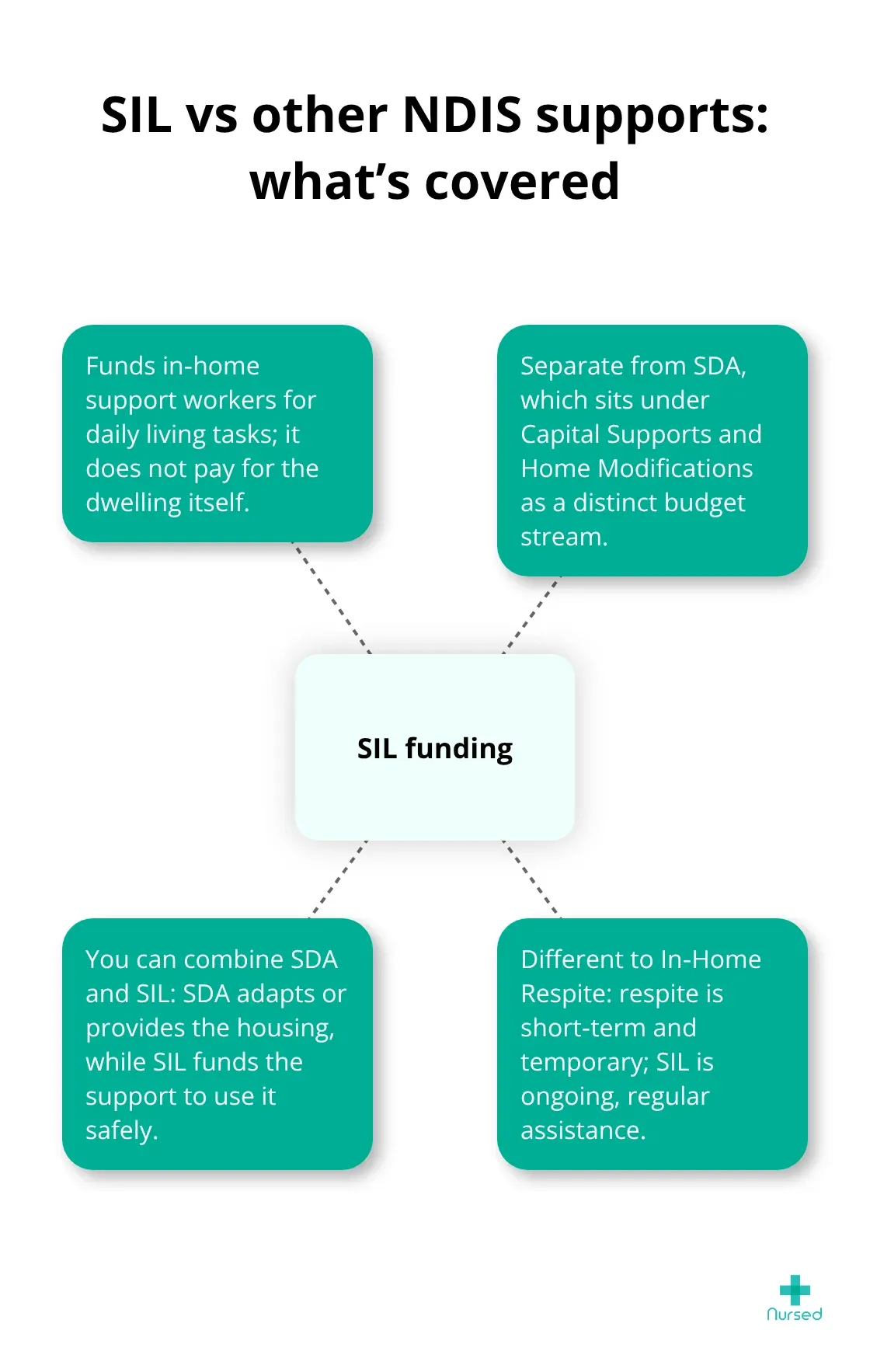
Supported Independent Living under the NDIS funds staff to help you with everyday tasks in your home, not the home itself. The NDIA allocates this money specifically for in-home support services within the home and living category alongside other housing options. SIL pays for the people helping you, not the roof over your head. Your rent, mortgage, utilities, and groceries come from separate sources entirely.
This distinction matters because many people mistakenly believe SIL funding covers accommodation costs, then face a funding shortfall when reality hits. The NDIS Price Guide support worker rates are set by the NDIA using the Disability Support Worker Cost Model. If you need 24/7 support across a shared home, costs add up quickly, which is why accurate funding calculations from the start prevent disappointment later.
How SIL Differs from Other NDIS Supports
Specialist Disability Accommodation versus Supported Independent Living shows that SDA is funded under the Capital Supports budget in an NDIS plan, under the Home Modifications category, as a separate funding stream from SIL. You can have both SIL and SDA in your plan, but they serve separate purposes with distinct budgets. You might use SDA funding to modify a bathroom for wheelchair access while using SIL funding to pay someone to help you shower safely.
SIL also differs from In-Home Respite, which provides temporary short-term support, whereas SIL offers ongoing regular assistance. Understanding these differences prevents you from applying for the wrong support type and wasting time in the approval process.
Who Actually Qualifies for SIL
To qualify for SIL, you need a permanent and significant disability affecting your daily living, evidence that you require core supports for at least 1.5 hours daily, a genuine capacity-building goal, and a suitable living arrangement. An occupational therapist assessment for SIL eligibility carries significant weight here; the NDIA typically requires this professional evaluation before approving funding.
You must be an adult over 18 years old living primarily with physical and/or neurological disabilities. Conditions like cerebral palsy, acquired brain injury, and autism commonly qualify, provided the functional impact meets the threshold. The NDIA’s decision ultimately hinges on whether SIL represents the most appropriate use of your plan funds compared to alternative supports, not simply whether you have a disability.
This assessment process determines not just your eligibility, but also which SIL arrangement suits you best-a question we’ll explore in the next section.
Your SIL Living Arrangements Explained
Shared SIL Housing: Cost-Effective Community Living
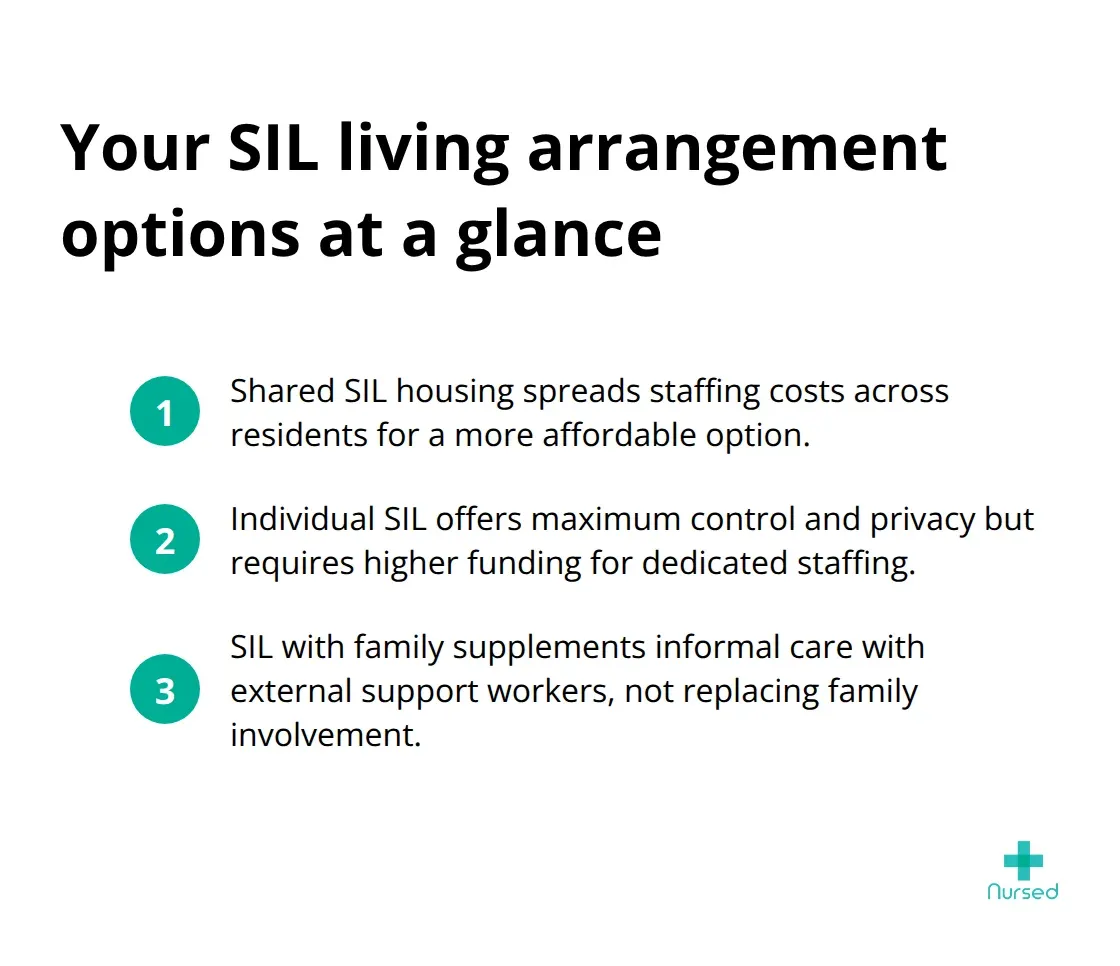
Shared SIL housing represents the most common pathway. You live with other people with disabilities in a group home where support staff assist all residents according to a coordinated roster of care. This arrangement typically costs less per person because staffing expenses distribute across multiple residents, making it financially viable for many NDIS participants. A shared home with three residents might require 2.5 full-time equivalent support workers, whereas individual support would demand dedicated staff around the clock.
The social element matters significantly. Research on group living consistently shows participants report stronger community connections and reduced isolation compared to isolated living arrangements. However, shared housing demands compatible housemates. Poor matches create conflict that undermines the entire arrangement.
When evaluating a shared home, ask the provider directly how they select compatible residents and what happens when conflicts arise. Quality providers invest time in matching people based on routines, communication styles, and personal preferences rather than simply filling vacancies.
Location and Accessibility in Shared Homes
Location affects shared arrangements significantly. A group home in an inner suburb provides better public transport access, closer proximity to shops and services, and more community participation opportunities than an isolated property. Transport accessibility determines whether you can actually access activities independently or remain dependent on staff to drive you everywhere. This factor often separates thriving arrangements from restrictive ones.
Individual SIL: Maximum Control at Higher Cost
Individual SIL in your own home offers maximum control and privacy but demands higher funding levels because one person cannot share support staff with others. This option suits people with highly specific routines, complex medical needs, or strong preferences for solitude. Someone with acquired brain injury requiring consistent environmental routines might thrive in their own home where nothing changes unexpectedly. Someone with severe mobility challenges might need their exact home environment adapted rather than fitting into an existing shared space.
The cost is substantial though-24/7 individual support typically requires three to four full-time support workers rotating shifts, which significantly exceeds group home costs. The NDIA scrutinises individual arrangements more carefully, requiring clear evidence that shared living genuinely won’t work.
SIL with Family: Supplementing, Not Replacing
SIL with family or trusted support networks represents a third path where you remain in your family home and SIL funding pays for external support staff to supplement what family members already provide. This works well when family members are committed to hands-on involvement but need professional support for specific tasks or overnight coverage. It fails catastrophically when family members view SIL as a complete replacement for their involvement rather than an enhancement.
The NDIA expects genuine family involvement in these arrangements. Funding covers the support staff gaps, not the entire care picture. Your Support Coordinator should facilitate honest conversations about what family can realistically provide and where external support genuinely adds value rather than creating dependency. Understanding which arrangement aligns with your independence goals, budget constraints, and lifestyle preferences determines whether your SIL experience empowers you or frustrates you-a distinction we’ll examine in the next section.
What Actually Matters When Picking Your SIL Option
Your Independence Goals Drive Everything
Your independence goals determine everything else in this decision. State what you want to achieve in the next two to three years with brutal honesty. Do you want to learn cooking skills so you can prepare simple meals independently? Do you need support primarily at night while managing mornings yourself? Are you working toward employment and need staff flexibility around work hours? Generic goals like becoming more independent mean nothing when you choose between a shared home and individual support.
A shared group home with structured routines won’t work if your goal requires flexible staffing around a part-time job, but it works perfectly if you want social connection and someone managing meal preparation consistently. The NDIA requires capacity-building goals anyway, so articulate them clearly now rather than discovering mismatches after you’ve moved.
Budget Constraints Shape Your Real Options
Your NDIS plan allocation directly constrains your options, and this is where many people face hard realities. Individual SIL with 24/7 support costs significantly more than shared arrangements because staffing expenses don’t distribute across residents. A shared home typically costs between $80,000 and $120,000 annually depending on support intensity and location, while individual support can exceed $180,000 yearly.
Check your NDIS plan allocation for home and living supports, then request quotes from at least three providers for your preferred arrangement. The SIL provider will create a detailed quote based on your assessed support needs and the roster of care they propose. If the quote exceeds your allocation, you have three choices: accept a shared arrangement instead, request a plan review with the NDIA to argue for increased funding, or supplement with family contributions. Many people choose shared housing not because they prefer it, but because the maths simply work within their plan.
Location Determines Your Actual Independence
A group home in the inner suburbs of Melbourne or Sydney gives you public transport options, walkable access to shops and and services, and genuine community participation. A rural location offers peace and space but traps you in dependency on staff for every errand and social outing. Disability Services Commission research consistently shows participants in accessible locations report higher community engagement and life satisfaction than those in isolated settings.
When evaluating a potential home, spend time there on different days and times. Can you actually walk to a cafe, library, or shops? Does public transport run frequently? Are there community groups, sports clubs, or services relevant to your interests within reasonable distance? Ask the provider what community participation typically looks like for current residents-if they struggle to name specific activities residents do independently, that’s a warning sign.
Provider Quality Separates Thriving from Barely Coping
Staff continuity matters more than almost any other factor. Constantly rotating support workers means repeatedly explaining your preferences, routines, and communication needs. High staff turnover indicates poor working conditions, inadequate training, or management problems that will directly affect you.
When interviewing potential providers, ask about their staff turnover rate over the past two years and their approach to staff training. Reputable providers invest in induction programmes, ongoing professional development, and positive behaviour support training. They should explain their incident reporting process clearly and demonstrate how they handle conflicts or concerns. Ask to speak with current residents or their families if possible-their honest feedback reveals far more than marketing materials.
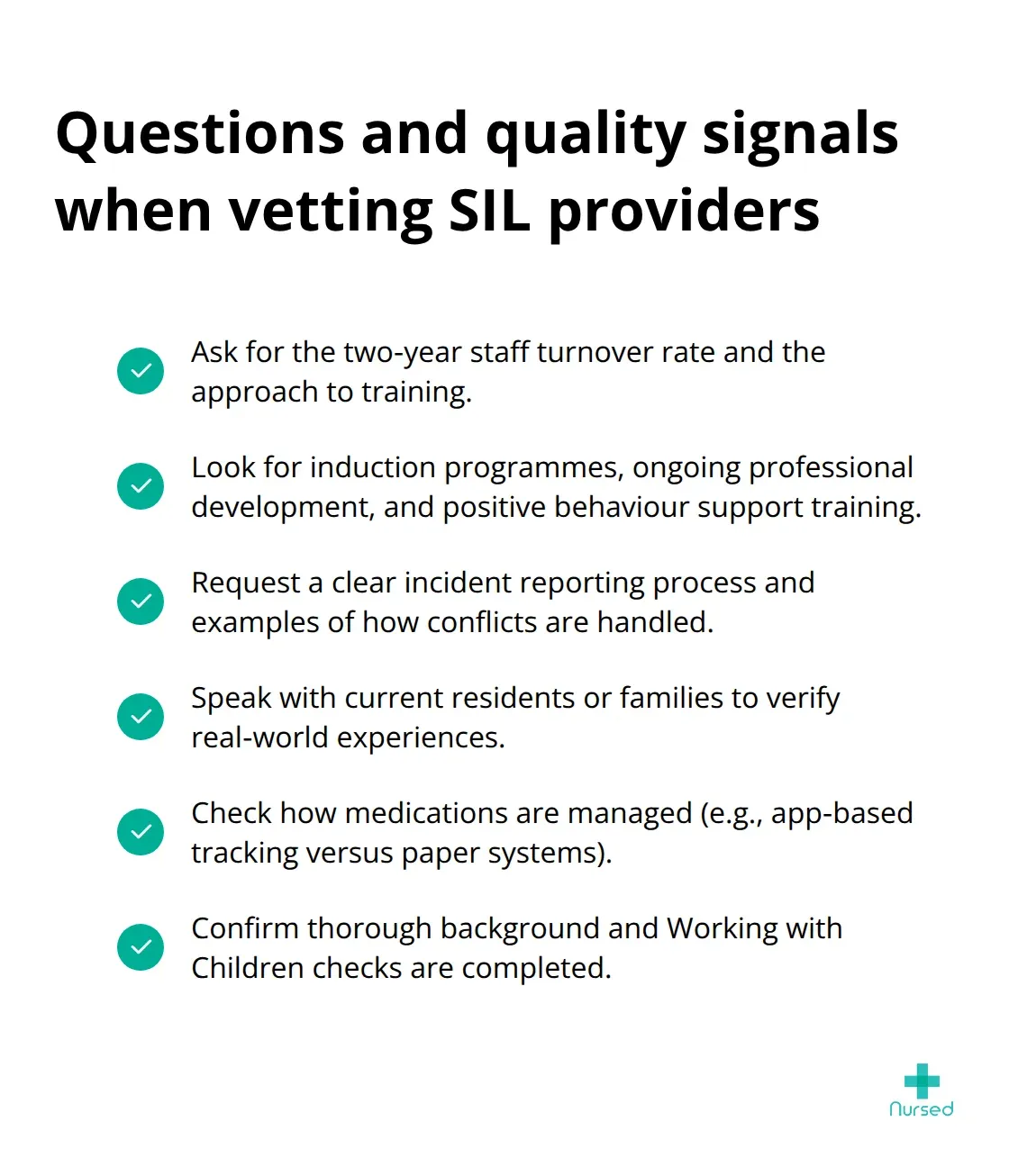
Some providers manage medications through apps with real-time tracking, while others use paper systems prone to errors. Some conduct thorough background checks and working with children checks, while others cut corners. These operational details directly impact your safety and quality of life.
Final Thoughts
Matching your needs with the right supported independent living options requires honest assessment of what independence means to you, what your NDIS plan can realistically fund, and which provider will genuinely support your goals rather than just fill a vacancy. Start by clarifying your capacity-building goals with your Support Coordinator and write down what you want to achieve in the next two years-whether that’s developing cooking skills, building community connections, or maintaining employment. Then request detailed quotes from multiple providers for your preferred arrangement and compare not just the dollar amount but the staffing model, location accessibility, and provider track record with similar participants.
Meeting potential providers in person and asking difficult questions reveals whether they prioritise your independence or simply manage your care. Ask how they select compatible housemates, what their staff turnover rate is over the past two years, and how they handle medication management and incident reporting. Request contact details for current residents or families willing to share their experience, as these conversations expose whether a provider genuinely supports your goals.
Getting this decision right matters because you’ll live with the consequences daily for years. The wrong choice creates frustration, isolation, or financial strain, while the right choice opens possibilities for genuine community participation and skill development. We at Nursed work with participants to find supported independent living options that fit their lives, offering personalised support that prioritises independence and community integration.