

Living in a Supported Independent Living (SIL) home shouldn’t mean compromising on accessibility. NDIS home modification funding can transform your living space into an environment that supports your independence and wellbeing.
At Nursed, we’ve seen firsthand how the right modifications make a real difference. This guide walks you through funding options, eligibility requirements, and practical steps to get the modifications you need.
What Home Modifications Really Mean for SIL Living
Capital Supports: Permanent Investments in Independence
NDIS home modifications fall under Capital Supports and represent permanent investments in your living environment, not temporary fixes or cosmetic upgrades. The distinction matters because the NDIA funds modifications that directly address disability-related barriers to independence, safety, or daily functioning. If you live in a Supported Independent Living home, these modifications can mean the difference between needing constant carer assistance and managing daily tasks yourself. Home modifications can reduce fall risk among people with disability by 20–30%-a significant safety gain that translates to fewer injuries and hospital visits.
Three Cost Categories That Shape Your Options
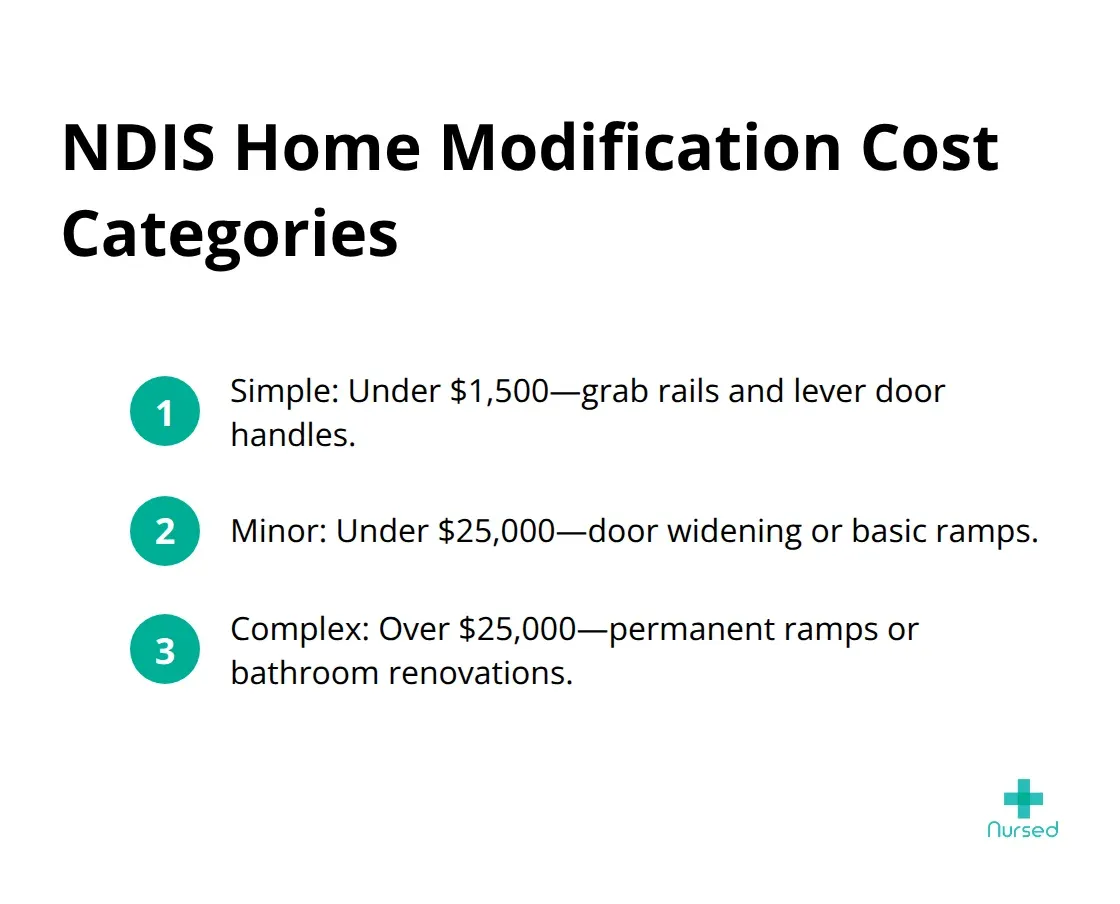
The NDIA approves modifications across three cost categories: simple changes under $1,500 like grab rails and lever door handles, minor modifications under $25,000 such as door widening or basic ramps, and complex structural work exceeding $25,000 involving permanent ramps or bathroom renovations. What makes a modification fundable isn’t whether it sounds reasonable-it’s whether an occupational therapist can link it directly to your disability and demonstrate how it improves your capacity to live more independently.
Identifying Real Barriers in SIL Homes
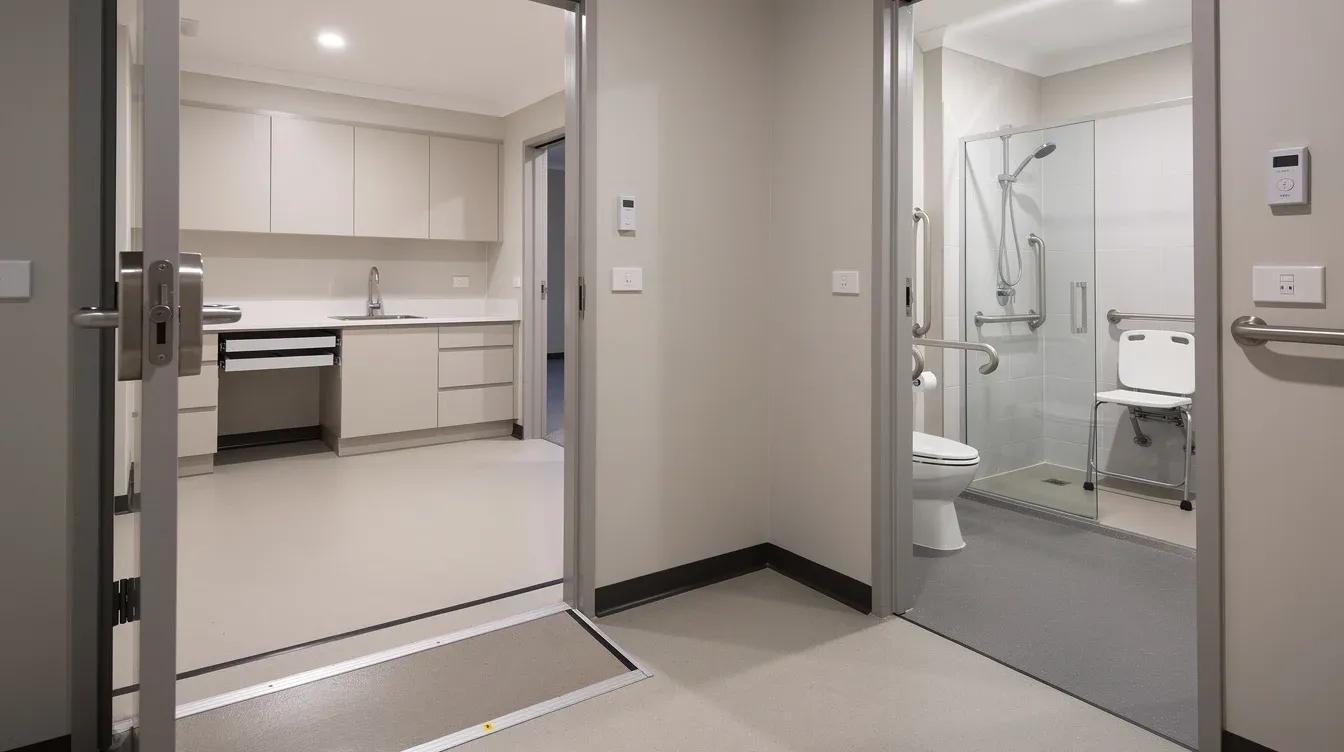
SIL participants face specific barriers that standard housing doesn’t address. Narrow doorways prevent wheelchair access, standard bathrooms create fall hazards, kitchens with fixed benchtops are unusable for people with limited reach, and stairs become complete barriers for mobility aid users. The most common modifications in SIL homes are bathroom reconfigurations, including level-access showers, grab rails, non-slip flooring, and handheld showerheads-these modifications address genuine safety concerns because wet environments pose the highest fall risk.
Practical Modifications That Reduce Carer Burden
Doorway widening to 900–950mm removes the need for two-person transfers, which reduces carer burden and gives you control over your own movement. Ramps must comply with Australian Standard AS1428.1 and may require local council permits, meaning a proper ramp installation isn’t a DIY project. Ceiling hoists for bedrooms, accessible kitchen modifications with lowered benchtops, and internal circulation improvements all serve one purpose: they enable you to participate in daily life without constant assistance. The approval process demands clarity-vague requests get rejected, but specific requests backed by occupational therapy evidence get funded. Understanding which modifications actually matter for your goals, rather than which modifications sound impressive on paper, shapes your entire application strategy.
How Your NDIS Plan Funds Home Modifications
Capital Supports in your NDIS plan work differently from Core Supports, and understanding this distinction changes everything about your modification strategy. Capital Supports exist specifically for higher-cost, long-term investments like permanent home modifications that improve your safety and independence. When the NDIA approves funding, they invest in structural changes that directly reduce your disability-related barriers, not cosmetic upgrades or general home maintenance. The approval process hinges on one thing: an occupational therapist must prove your modification directly addresses your disability and improves your capacity to live independently in your SIL home. Without this clinical link, your request faces rejection, regardless of how reasonable the modification sounds. If Capital Supports aren’t currently in your plan, you can request a plan review at your annual planning meeting or when your circumstances change, though you’ll need strong occupational therapy evidence to justify adding this funding category.
What Actually Gets Funded and What Doesn’t
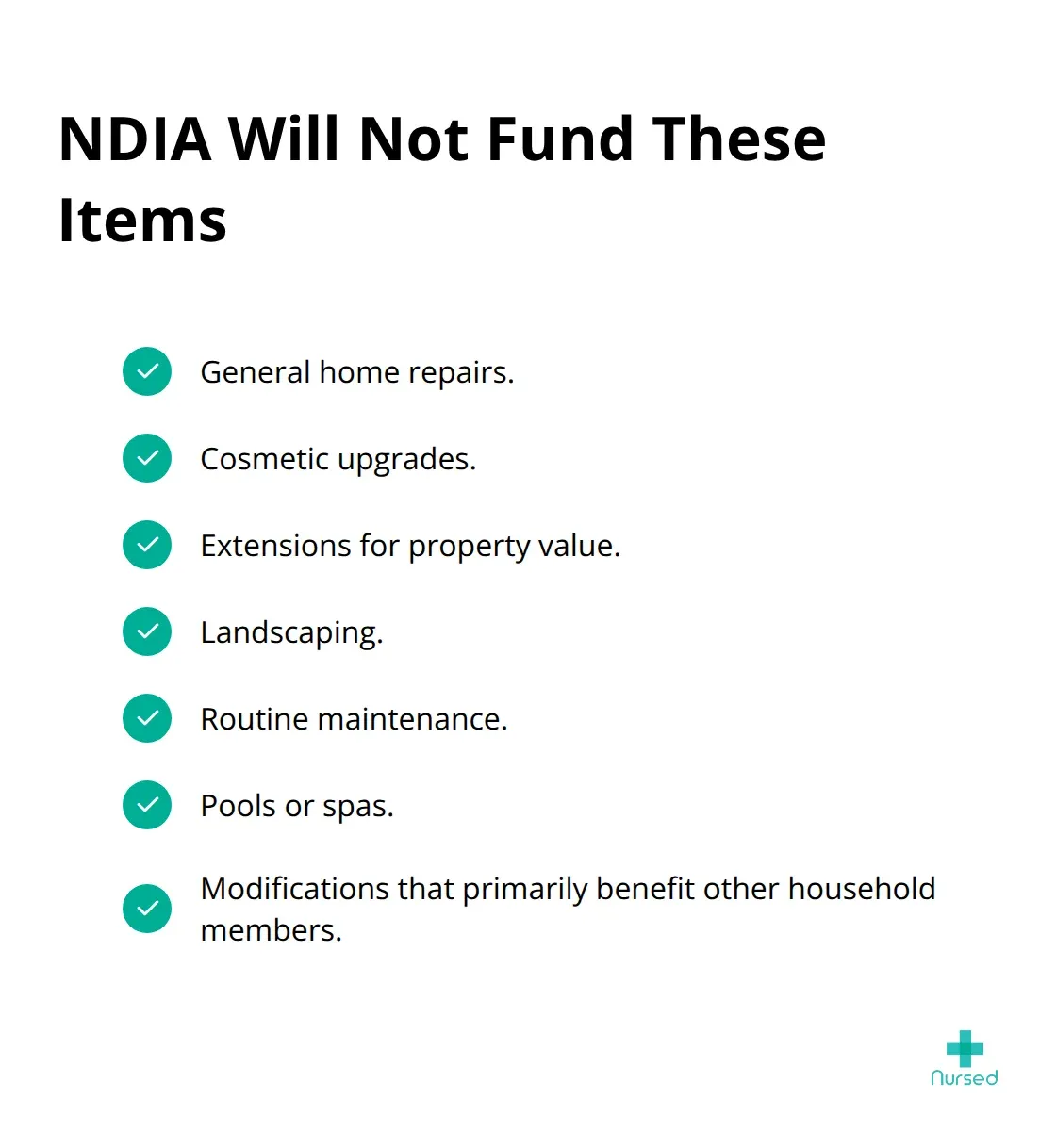
The NDIA funds three tiers of modifications based on cost and complexity. Simple modifications under $1,500-grab rails, lever taps, non-slip flooring, handheld showerheads-typically require no quotes and move through approval faster because they present low risk and low cost. Minor modifications under $25,000 include non-structural changes like door widening to 900–950mm, basic ramps, stairlifts that don’t require building work, and accessible kitchen modifications with lowered benchtops. Complex modifications exceeding $25,000 involve structural work such as permanent concrete ramps, full bathroom renovations with level-access showers, ceiling hoist installations, or widening multiple doorways throughout your home. For complex work over $30,000, the NDIA requires you to engage an NDIS Registered Buildings Works Project Manager to oversee planning and builder selection, which adds another layer of coordination but protects you from costly mistakes. The NDIA explicitly does not fund general home repairs, cosmetic upgrades, extensions for property value, landscaping, routine maintenance, pools or spas, or modifications that primarily benefit other household members rather than supporting your disability-related needs. Bathroom modifications rank as the most commonly approved changes in SIL homes because they address genuine safety risks in high-fall-risk environments.
Meeting the Eligibility Standards That Actually Matter
You must be an NDIS participant with an approved plan to access modification funding, and your home must be your primary residence where you intend to stay long-term. If you rent, your landlord must provide written consent before any work starts-without this, the NDIA won’t fund structural modifications, though non-structural assistive technology options may still be available. The modification itself must be reasonable and necessary, meaning it directly relates to your disability, improves your independence or safety, represents value for money compared to alternatives, and is the most cost-effective solution available. Occupational therapy evidence forms the backbone of every successful application; vague or weak OT reports represent the most common reason for rejections. Your therapist needs to document your specific functional difficulties, describe how the proposed modification addresses those barriers, explain why it’s the best solution, and include measurements, photographs, and cost comparisons. For complex modifications, you’ll need at least two detailed builder quotes with itemised costs and timelines, proof that contractors understand NDIS requirements, and sometimes additional documentation like engineering reports or council permits. The NDIA reviews your submission within approximately 14 days for straightforward requests, though complex cases can take weeks or months depending on whether they request additional information or engage an independent assessor to verify reasonableness and necessity.
Building Your Application Strategy
Strong documentation separates approved applications from rejected ones. Your occupational therapist must link every proposed modification directly to your disability and demonstrate how it improves your daily functioning in your SIL home. Include specific details about the barriers you face-don’t write “I can’t access the bathroom safely” but rather “I use a wheelchair and the standard toilet height creates transfer difficulties that require two-person assistance.” Photographs of problem areas, measurements of doorways or bathroom spaces, and evidence of how modifications will reduce your carer dependency all strengthen your case. When you obtain builder quotes, ensure contractors understand NDIS requirements and provide itemised breakdowns rather than lump-sum figures. The NDIA needs to see exactly what work will occur, how long it will take, and what each component costs.
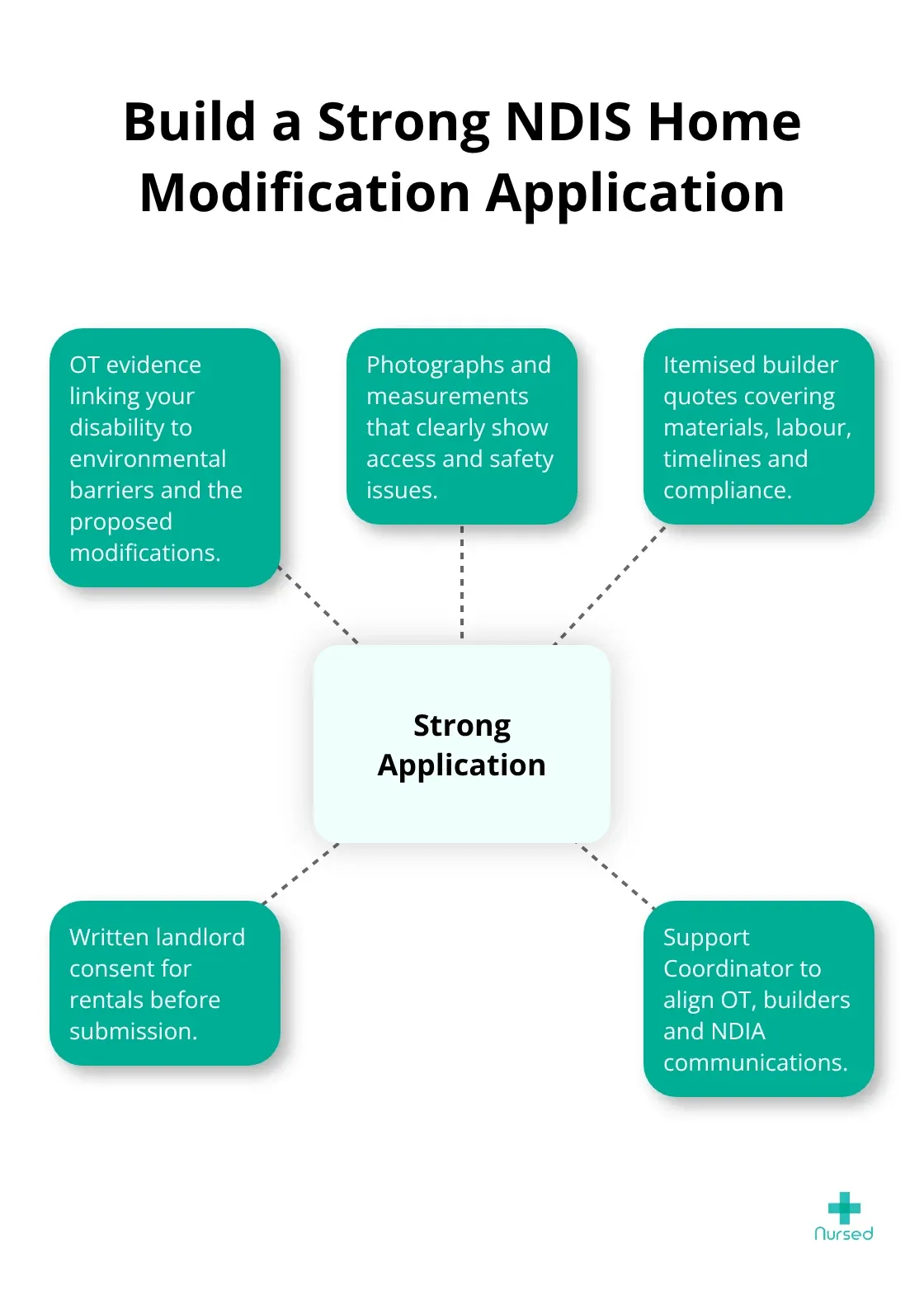
If your landlord approval is required, obtain written consent before submitting your application-the NDIA will request this documentation, and missing it delays your entire process. Your Support Coordinator (if you have one) can help coordinate between your occupational therapist, builders, and the NDIA, ensuring all documentation meets requirements and submissions happen on schedule. This coordination becomes particularly valuable for complex modifications where multiple professionals need to communicate effectively.
Getting Your Home Modification Approved
Build your clinical case with specific details
The path from identifying a modification need to having work completed demands precision at every step, and most rejections stem from weak occupational therapy assessments rather than unreasonable modification requests. Start by listing the specific daily tasks you struggle with in your SIL home-not vague descriptions but concrete examples. You cannot transfer safely from your wheelchair to the standard toilet without two carers, or you fall when moving between the kitchen and living room on the polished concrete floor. Your occupational therapist needs these details to build a clinical case that links your disability directly to environmental barriers.
When you meet with your OT, bring photographs of problem areas, measurements of doorways and bathrooms, and documentation from your carers about how many people currently assist you with daily tasks. Complex home modification approvals typically take 50 to 90 days from submission. Delays almost always occur because documentation is incomplete rather than because the request itself is unreasonable.
Obtain Detailed Builder Quotes and Landlord Consent
For modifications exceeding $1,500, you must obtain at least two detailed builder quotes with itemised costs for each component, not lump-sum figures that hide what work actually occurs. Contractors unfamiliar with NDIS requirements frequently provide quotes that lack sufficient detail, so explicitly ask builders to specify materials, labour costs, timeline, and compliance with Australian Building Code standards.
If you rent, secure written landlord consent before submitting anything to the NDIA. Missing this single document stops your entire application, regardless of how strong your clinical evidence is. The NDIA will not proceed without proof that your landlord approves structural modifications to the property.
Select Contractors Who Understand NDIS Requirements
Builders experienced with NDIS modifications understand that the NDIA requires itemised invoicing, progress documentation, and final sign-off against the approved scope of work. General builders often resist this administrative requirement, which creates friction and delays. For complex modifications over $30,000, the NDIA mandates you engage an NDIS-registered project manager who oversees design, manages builder appointments, and ensures work stays within approved budgets and timelines.
If you have a Support Coordinator funded through your NDIS plan, they can coordinate between your occupational therapist, builders, and the NDIA. This coordination accelerates approvals and prevents communication breakdowns. The NDIA will request evidence that your chosen builder holds appropriate licences and understands NDIS invoicing procedures, so verify this before committing.
Understand Approval Conditions and Appeal Rights
Once the NDIA approves your modification, you receive a Service Agreement detailing the approved amount, approved scope, and conditions you must meet. Work must comply with the approved scope exactly, the Australian Building Code, and local regulations. Non-compliant work will not be funded.
If your request is denied, you can request an internal review within three months under the NDIS Act. Provide additional evidence or clarification that addresses the NDIA’s concerns rather than simply resubmitting the same documentation. Strong appeals include updated occupational therapy reports, additional builder quotes demonstrating cost-effectiveness, or new evidence about how the modification supports your NDIS goals.
Final Thoughts
Your NDIS home modification funding creates the foundation for long-term independence in your SIL home, and the modifications you approve today should accommodate how your needs may change over the next five to ten years. Work with your occupational therapist to think beyond immediate fixes-if you install a ramp now, design it wide enough for future mobility aid changes, and if you widen doorways, consider whether future ceiling hoist installation might need structural reinforcement. This forward-thinking approach prevents costly modifications down the track and maximises the value of your approved funding.
Your home modifications work best when you coordinate them with other NDIS supports, since modifications that reduce transfer complexity directly lower your carer dependency and free up support hours for other activities. If you have assistive technology funding, some items like portable ramps might fall under that category rather than Capital Supports, so clarify with your Support Coordinator which funding source applies. This coordination prevents budget waste and ensures every dollar works toward your independence goals.
Quality outcomes depend on ongoing communication after work is completed, so ensure your builder provides final sign-off documentation confirming all work meets the approved scope and Australian Building Code standards. If issues arise-a grab rail installation that doesn’t feel secure or a ramp slope that’s steeper than specified-address these immediately rather than accepting substandard work. Connect with Nursed to discuss how we can help you coordinate your NDIS home modification funding project.