

Community participation planning isn’t a luxury-it’s essential for people with disabilities who want to build meaningful connections and grow. Yet many people don’t know where to start or how to navigate the barriers that stand in their way.
At Nursed, we’ve seen firsthand how the right support and strategy can transform someone’s ability to engage with their community. This guide walks you through practical steps to identify opportunities, overcome obstacles, and create a sustainable plan that works for your life.
Why Community Participation Actually Changes Lives
Social Connection and Real Health Outcomes
Community participation transforms far more than a person’s schedule-it reshapes their health and wellbeing. The Peoplebank health engagement platform in the Hunter New England and Central Coast region tracked 820+ participants and found that consistent community involvement correlated with better health outcomes and stronger social networks. People with disabilities who participate in regular community activities report higher confidence in daily interactions, improved ability to manage their own routines, and stronger sense of belonging. Social connection and real health outcomes matter deeply, which is why structured participation matters so much.
Skills That Transfer to Real Life
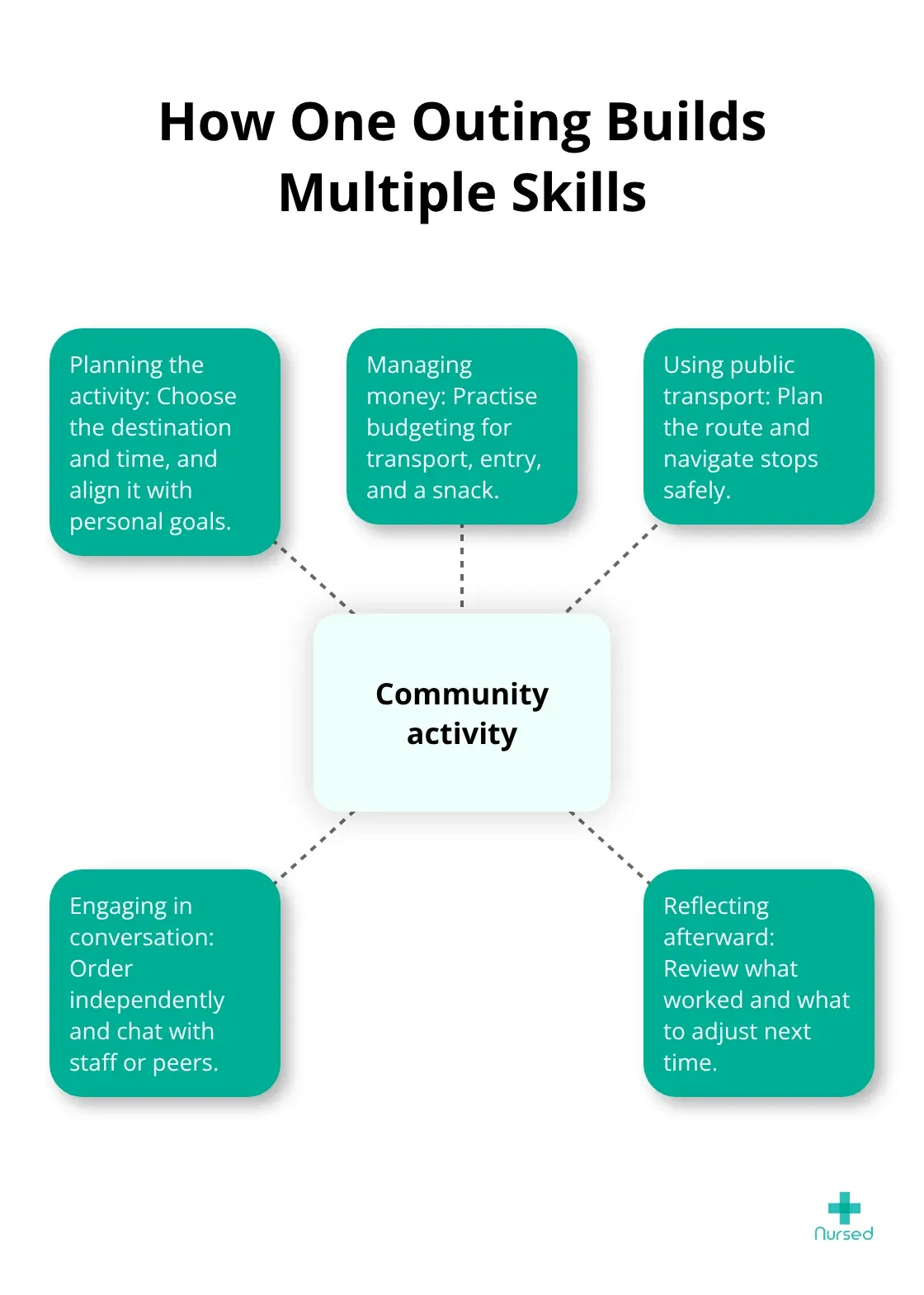
The most underrated benefit of community participation is skill development that transfers directly to independence. When someone attends a community activity, they practise budgeting at a café, manage travel logistics, order independently, handle conversations with strangers, and make real choices about their time. Blue Tongue Adventure, which delivers NDIS community participation programs, emphasises that a single outing can layer multiple learning opportunities: planning the activity, managing money, using public transport, engaging in conversation, and reflecting on the experience afterward.
These aren’t theoretical exercises-they’re practical repetitions that build competence. Someone who visits a library regularly gains confidence using technology, discovers interests that might lead to volunteering, and develops routines that structure their week. A person who loves cooking can scale that interest from visiting a café to volunteering in a community kitchen, creating genuine pathways to connection and contribution.
Intentionality Makes the Difference
The key difference between meaningful participation and tokenistic outings is intentionality makes the difference. Activities should align with what someone actually wants to learn, not just fill a calendar. When you select activities based on individual goals and interests (rather than convenience), participants develop measurable gains in self-advocacy skills and decision-making ability. Progress looks different for everyone-milestones might include using a shopping list independently, joining a group conversation, or managing a budget for an outing.
Support workers and coordinators play a vital role here. They help identify which tasks require practise, which interests drive genuine participation, and what social settings feel comfortable. The measure of success isn’t the number of places visited-it’s the confidence gained, skills practised, relationships built, and choices made along the way.
Understanding these foundations helps you move forward with concrete planning. The next section shows you exactly how to identify individual interests and assess what barriers might stand in the way.
Building Your Community Participation Plan
Ask the Right Questions First
Effective planning starts with honest conversations about what someone actually wants from community life, not what support workers think they should want. Ask direct questions: What activities bring genuine enjoyment? Which skills need practise? What social settings feel comfortable? What would increase independence in daily routines? These questions reveal the real foundation for planning, not assumptions. Apply the same principle here: ask what barriers exist, then work backward to solve them.
Identify Barriers and Create Solutions
Common obstacles include transport difficulties, sensory sensitivities in crowded spaces, anxiety about unfamiliar people, time constraints due to fatigue or other commitments, and cost. For each barrier, develop a concrete solution rather than accepting it as unchangeable.
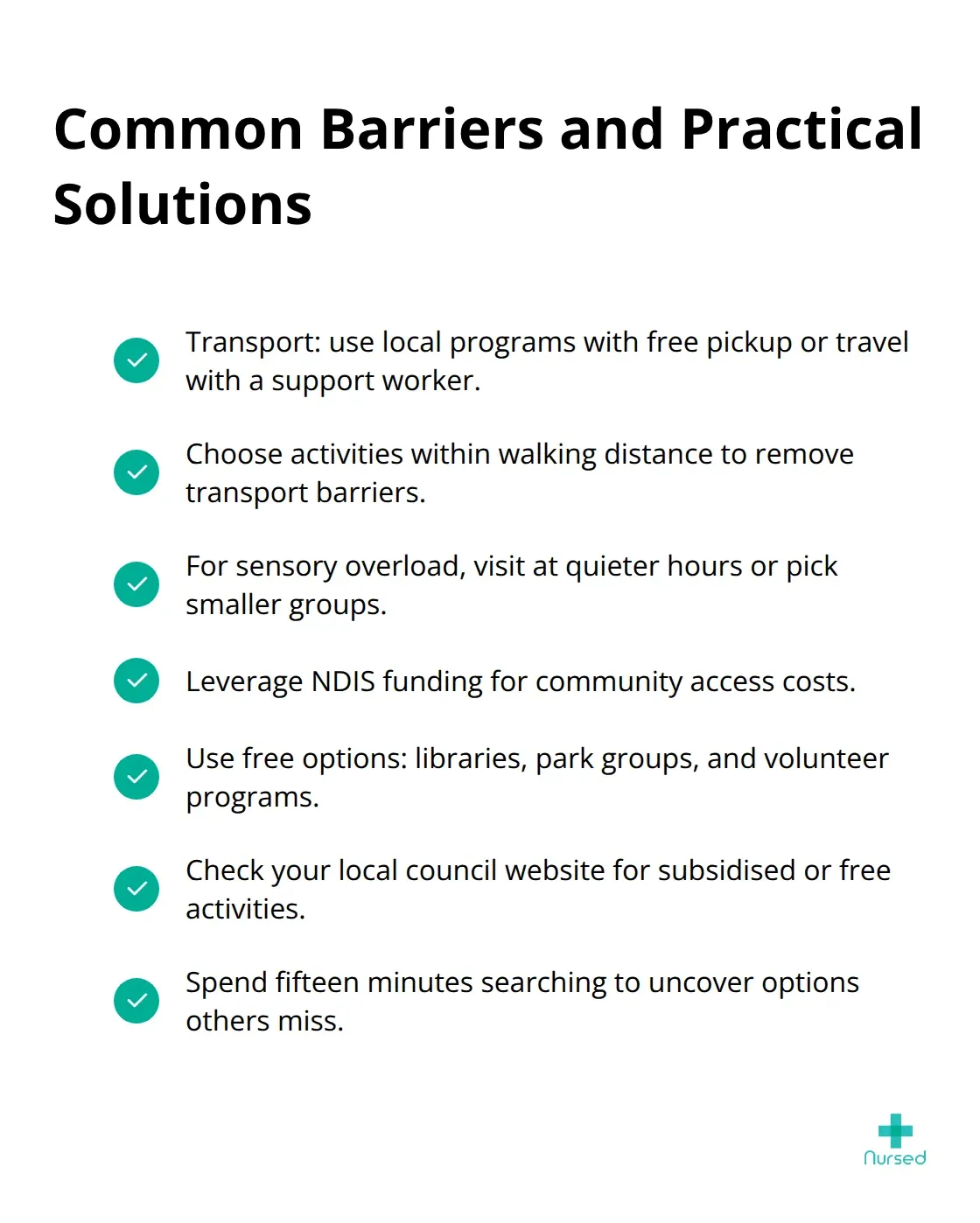
If transport is the issue, explore whether local community programs offer free pickup, whether a support worker can travel with the person, or whether activities can happen within walking distance. If sensory overload occurs during busy times, visit at quieter hours or choose smaller group settings. If cost limits participation, leverage NDIS funding for community access, or identify free community programs like library activities, park groups, or volunteer opportunities. Many councils offer subsidised or free community activities for people with disability; checking your local council website takes fifteen minutes and often reveals options no one mentioned before.
Build Consistency Through Documentation
A support coordinator, family member, or case manager should maintain a simple document listing what works, what doesn’t, which activities align with goals, and which barriers require ongoing solutions. This isn’t bureaucracy; it’s practical continuity so that whoever supports community participation on any given day knows the actual plan. Share specific details: this person needs fifteen minutes of preparation before an outing, prefers activities with familiar faces, manages money better when using a checklist, and thrives with activities involving cooking or art. Effective evidence and documentation are the cornerstone of quality support coordination.
Adjust Based on What Actually Works
When multiple people support someone’s community life, consistency matters. Regular check-ins between support workers, the person themselves, and family members help identify what’s working and what needs adjustment. If an activity isn’t generating the intended skill development or confidence gain after three or four attempts, shift to something different rather than persisting with something that doesn’t fit. Community participation planning isn’t static; it evolves as interests change, confidence builds, and new opportunities emerge. The next section shows you how to translate this plan into action through practical strategies that connect people with real community opportunities.
Making Community Participation Actually Happen
Start with Activities Close to Home
The gap between planning and action closes when you remove friction from the equation. Activities within walking distance or a short drive eliminate transport as a barrier, and local groups run consistently so participants build familiarity over time. Libraries host free programs, councils operate community centres with subsidised activities, and local sporting clubs frequently welcome people with disability. Your council’s website lists community activity calendars; most councils publish free or low-cost programs specifically designed for people with disability. Your local council likely runs similar programs but doesn’t advertise them widely. Contact the community services team directly and ask what free or subsidised activities exist within three kilometres of home. Most councils maintain lists that never appear on their main website.
Leverage NDIS Funding for Real Access
NDIS funding for community access sits unused in many plans. If someone receives NDIS support, their plan likely includes a line item for community participation, social connection, or daily activities. Support coordinators often miss this because they focus on core supports first, but you can explicitly request that community access appear in the plan at the planning meeting. Allocate a specific amount monthly and track what activities it funds. Transport to activities, entry fees, activity costs, and even a support worker attending with the person all qualify as eligible expenses. The NDIS scheme recognises that community participation matters for independence and wellbeing, so use that funding deliberately. Work with your support coordinator to map three to five activities that align with the person’s goals, calculate the actual cost, and write it into the plan as committed spending rather than hoping funding exists.
Navigate Coordinator Resistance
If your support coordinator resists or claims community access isn’t fundable, request a second opinion from the NDIS directly. Some coordinators simply don’t prioritise this because they haven’t seen it done well before. The NDIS explicitly funds community participation as part of its core purpose, so pushback usually reflects limited experience rather than actual policy. Contact your local NDIS office and ask whether your plan adequately funds community participation. They can clarify what counts as eligible spending and help you reframe the conversation with your coordinator. Alternatively, speak with Nursed about whether your current support structure aligns with your community participation goals. We work with people to translate NDIS plans into real community access, and we can review whether your funding allocation actually supports what you want to achieve.
Document What Works and Adjust
When multiple people support someone’s community life, consistency matters. A simple document listing what works, what doesn’t, which activities align with goals, and which barriers require solutions keeps everyone on the same page. Share specific details: this person needs fifteen minutes of preparation before an outing, prefers activities with familiar faces, manages money better when using a checklist, and thrives with activities involving cooking or art. Regular check-ins between support workers, the person themselves, and family members help identify what’s working and what needs adjustment. If an activity isn’t generating the intended skill development or confidence gain after three or four attempts, shift to something different rather than persisting with something that doesn’t fit. Community participation planning isn’t static; it evolves as interests change, confidence builds, and new opportunities emerge.
Final Thoughts
Community participation planning works because it connects what someone wants to achieve with real opportunities in their neighbourhood. The benefits are measurable: stronger social connections, genuine skill development, increased independence, and a genuine sense of belonging. These outcomes matter because they form the foundation of a life where someone can make choices, build relationships, and contribute to their community.
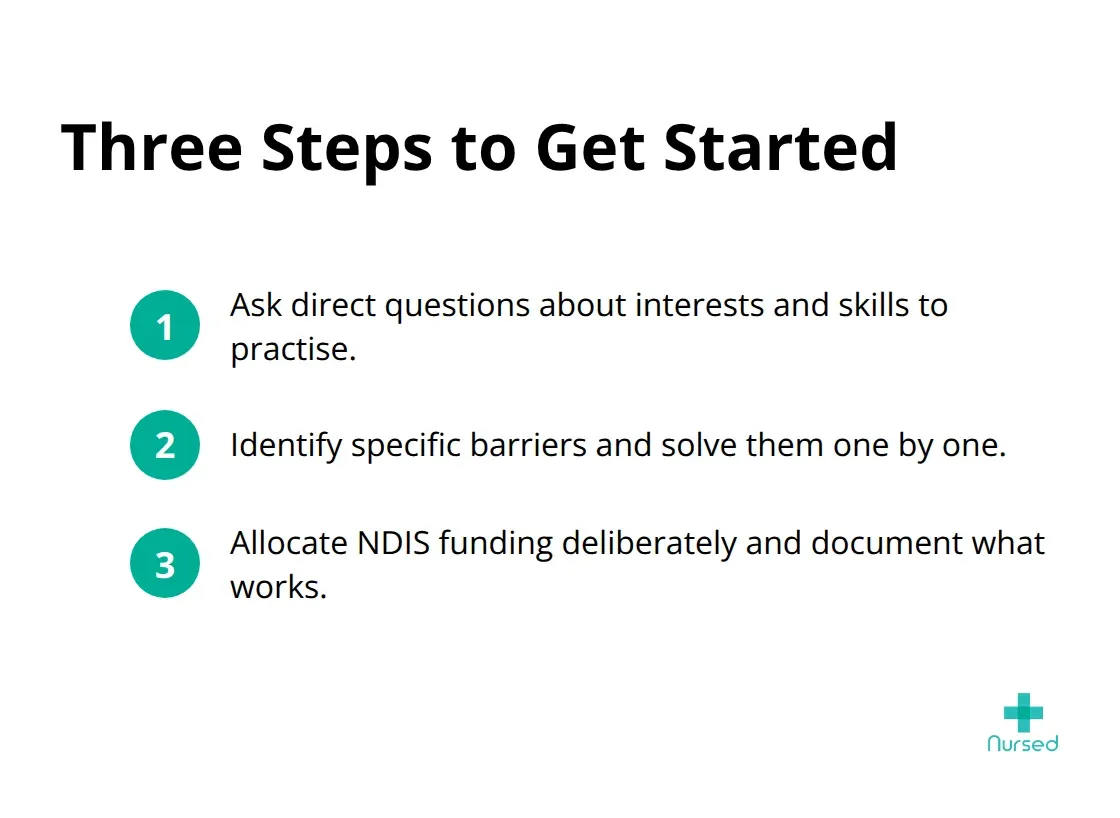
Getting started requires three concrete steps. First, ask direct questions about what activities genuinely interest the person and which skills need practise. Second, identify specific barriers and solve them one by one rather than accepting them as permanent obstacles. Third, allocate NDIS funding deliberately toward community access and document what works so that everyone supporting the person stays aligned.
At Nursed, we support people to turn community participation planning into reality. Whether you need support identifying local opportunities, navigating NDIS funding, or coordinating consistent participation, Nursed works with you to create a plan that actually fits your life.