


The NDIS landscape is shifting in 2026, and these policy updates will reshape how you access support and services. Whether you’re a participant navigating new eligibility criteria or managing changes to your funding allocation, understanding what’s ahead matters.
At Nursed, we’re here to walk you through every update and help you make the most of the opportunities these changes bring.
What’s Actually Changing in 2026
The NDIS framework planning rollout beginning 1 April 2027 marks a genuine shift in how the scheme operates, but 2026 itself is a preparation year where most participants continue under existing rules. The National Disability Insurance Agency has confirmed that from 1 July 2026, mandatory registration starts for Supported Independent Living providers and platform providers, signalling stronger compliance requirements across the sector. This matters because unregistered providers will face restrictions, potentially affecting your service options if your current provider hasn’t completed registration.
Functional Capacity Over Diagnosis
Funding decisions now increasingly rely on functional capacity rather than diagnosis alone, meaning two people with the same autism diagnosis or mobility limitation may receive different support budgets based on their actual daily living needs. The NDIA’s operational guidelines now emphasise functional evidence to justify supports, so what you struggle with in your daily routine-getting dressed, managing meals, accessing community activities-carries more weight than medical labels.
Start gathering this documentation now: incident records, carer statements, therapy reports, school or work statements, and clear examples of how disability impacts your everyday life. The NDIA’s focus on reasonable and necessary criteria has tightened considerably, with cost scrutiny heightened across all plan categories. Average plan funding is expected to reduce, with cuts to social and community participation funding beginning July 2026, so if your current plan includes community access or social supports, anticipate potential adjustments.
Plan Duration and Review Frequency
Some participants will experience shorter plan durations due to stricter planning scrutiny, meaning more frequent reviews and reassessments. If your plan review approaches, request updated functional assessments early and align your goals clearly to daily functioning to strengthen your case with the NDIA. This proactive approach prevents gaps in your support when transitions occur.
Provider Registration and Compliance
Service providers now face a tightening regulatory environment that directly affects you as a participant. The Integrity and Safeguarding Act 2026 brings stronger provider oversight, and the NDIA is moving toward electronic claiming systems to reduce fraud and improve payment transparency. This means providers must maintain thorough records, ensure invoices align precisely with pricing rules, and obtain informed consent for all services. Providers who cannot meet these standards may exit the market, potentially disrupting your current arrangements. If your provider hasn’t discussed these changes with you, that’s a red flag-proactive communication about compliance and service continuity should be standard.
Preparing for Assessment Changes
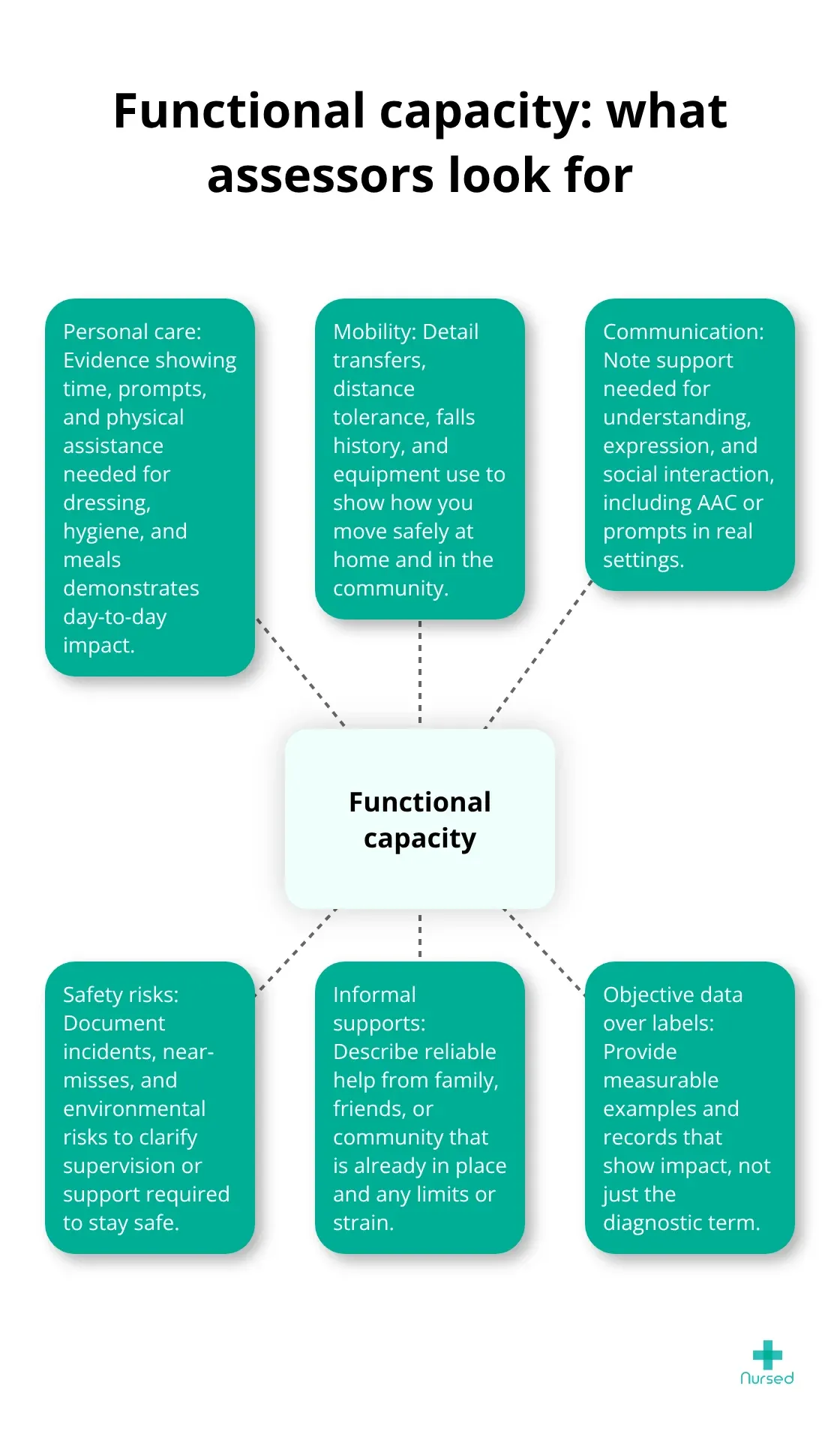
The new Support Needs Assessment conducted by trained assessors will evaluate your daily life across personal care, mobility, communication, safety risks, and informal supports. These assessments happen at a time and place you choose, with family or carers invited, and assessors write detailed reports informing your budget. This differs markedly from diagnosis-focused assessments, so prepare concrete examples of your support needs rather than relying on diagnostic labels. Track measurable progress with objective data, document changes or increased needs, and outline risks if current supports reduce or cease-this evidence prevents funding gaps when your plan shifts to the new framework in 2027. Understanding how assessors evaluate your needs positions you to communicate your requirements effectively and secure the supports that matter most to your daily life.
What Your Support Actually Looks Like Under New Rules
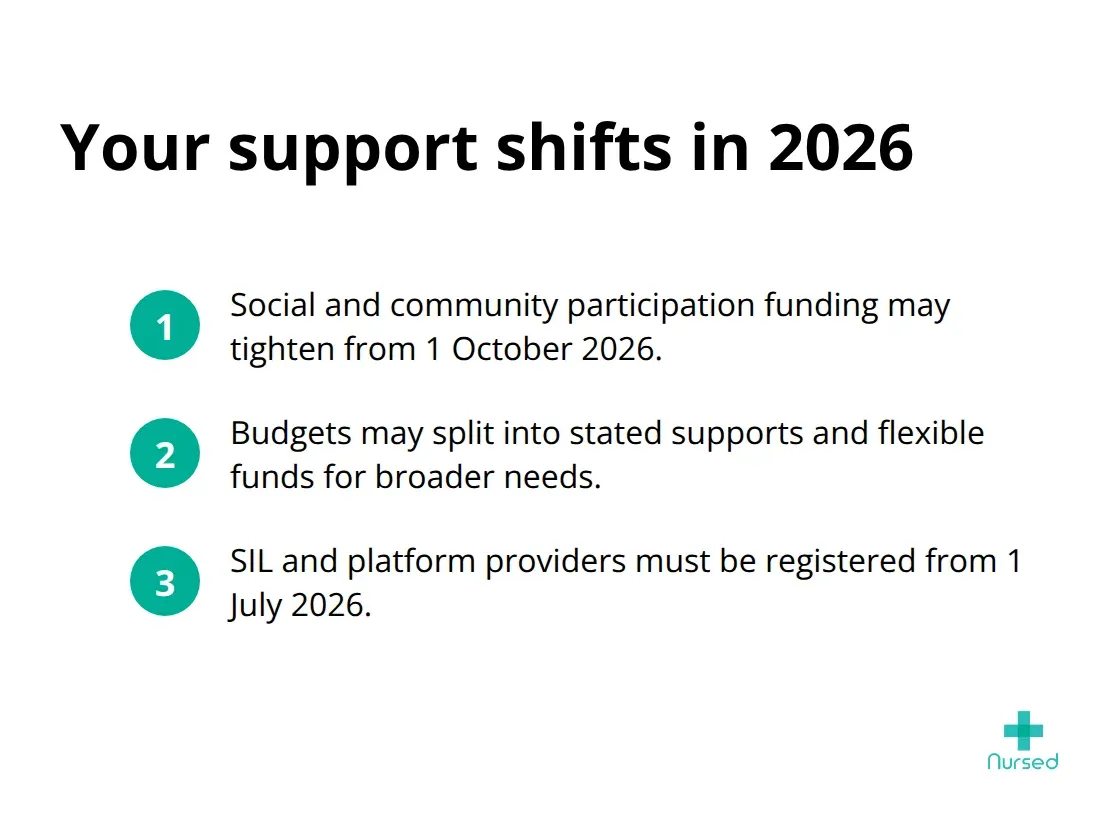
Your support package will shift in three concrete ways under 2026 reforms, and understanding each one helps you prepare. First, the NDIA will scrutinise whether your funded supports directly address what you struggle with daily. If you currently receive social and community participation funding, expect potential reductions starting from 1 October 2026 under NDIA’s cost adjustment framework. This doesn’t mean community access disappears entirely, but funding may tighten unless you document precisely how community participation improves your independence or daily functioning. Second, your plan may now split into stated supports for specific purposes alongside flexible budgets for broader needs, giving you more control over how you spend allocated funds rather than rigid category restrictions. Third, the registration requirement for Supported Independent Living providers and platform providers from 1 July 2026 means some service options may disappear if providers can’t meet compliance standards, while others will offer stronger safeguards and transparent pricing. Track which providers you currently use and ask them directly about their registration status before your plan review.
How Your Assessment Changes
The Support Needs Assessment now focuses on your actual daily life rather than diagnostic labels. A trained assessor meets you at a time and location you choose, often with family or carers present, and evaluates how disability impacts personal care routines, mobility, communication, and safety risks. This assessment includes discussion of informal supports already available through family or community, which means the assessor considers what you already receive before recommending funded supports. Prepare specific examples: how long dressing takes, whether you need prompts for meals, what prevents you accessing work or education, and documented incidents where lack of support created safety concerns. The assessor writes a detailed report directly informing your budget, so concrete evidence matters far more than diagnostic statements. If your current provider hasn’t helped you gather this evidence, that’s a gap worth addressing immediately with someone who understands both your daily needs and NDIS documentation standards.
What Goals Now Mean
The new framework requires you and the NDIA to discuss your goals in terms of real-life outcomes: employment, education, community participation, or increased independence in daily tasks. Vague goals like improved wellbeing won’t justify funding; specific goals like attending a community programme twice weekly or learning to prepare meals independently will. This shift means you articulate what independence or participation looks like for you personally, not what a generic support plan assumes you should want. If your current plan includes goals that feel disconnected from your actual life, the review presents an opportunity to reframe them. Document measurable progress on current goals with objective data such as attendance records, skill development milestones, or reduced support hours needed for specific tasks. This evidence strengthens your case when the NDIA assesses whether continued funding delivers real outcomes. The clearer your goals and the stronger your evidence of progress, the more difficult it becomes for the NDIA to reduce your funding without justification.
Building Your Evidence Now
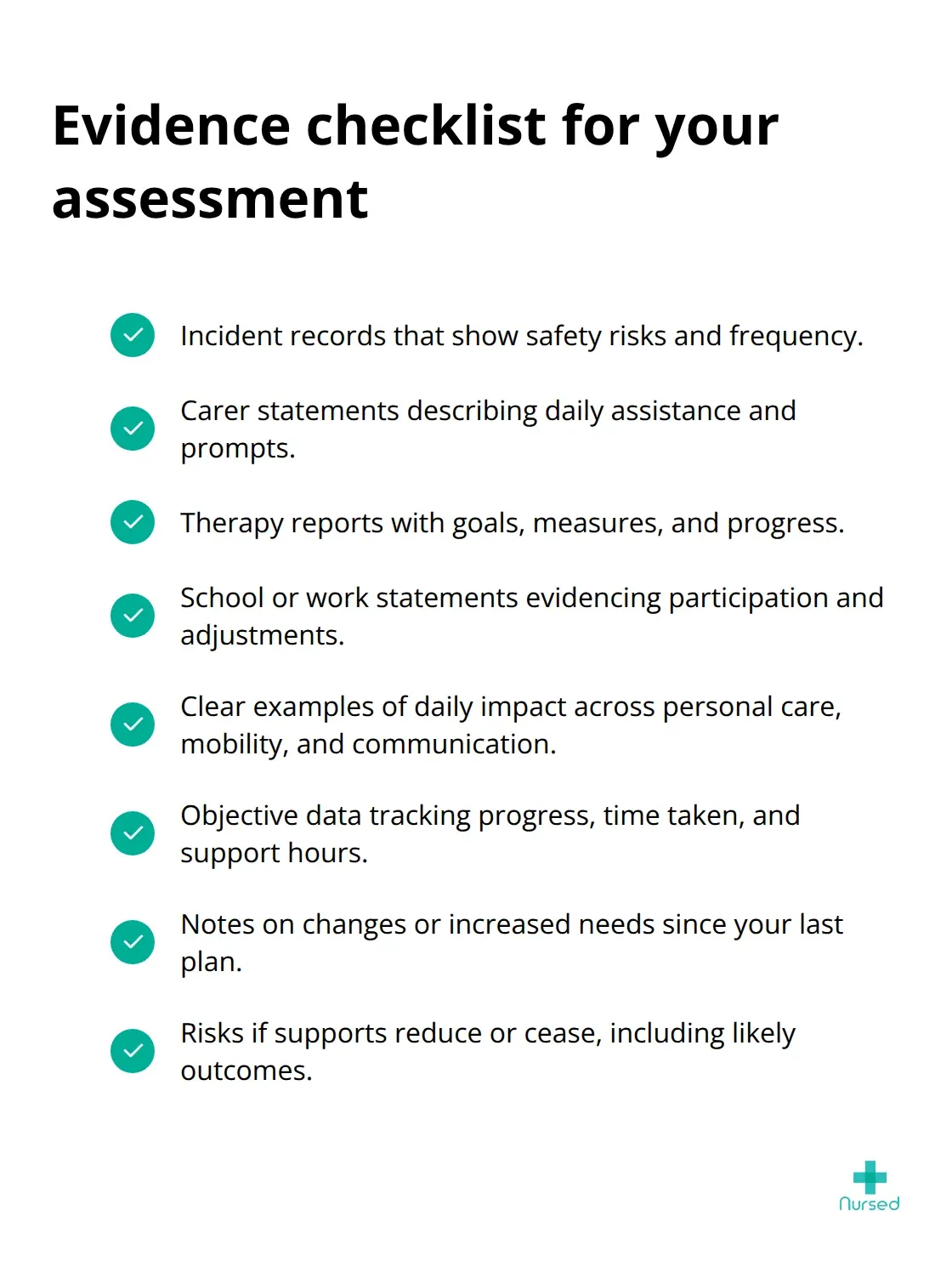
Start gathering documentation immediately to support your assessment and planning conversations. Collect incident records, carer statements, therapy reports, school or work statements, and clear examples of how disability impacts your everyday life. Track measurable progress with objective data, document changes or increased needs, and outline risks if current supports reduce or cease. This evidence prevents funding gaps when your plan shifts to the new framework.
The NDIA’s focus on reasonable and necessary criteria has tightened considerably, with cost scrutiny heightened across all plan categories. Proactive documentation positions you to communicate your requirements effectively and secure the supports that matter most to your daily life.
As these changes take effect, your relationship with your support provider becomes even more important-they can help you navigate assessments, gather evidence, and prepare for planning conversations that align with the new framework.
How Nursed Supports You Through the Transition
The 2026 NDIS changes create genuine friction for participants, and we won’t pretend otherwise. Registration requirements, tighter compliance, functional assessments, and stricter funding scrutiny reshape your support landscape into something more complex. This is exactly why your choice of provider matters now more than ever.
Compliance That Protects Your Continuity
We at Nursed have invested in compliance infrastructure because we view these changes as an opportunity to demonstrate that quality care and regulatory rigour work together. From 1 July 2026, when mandatory provider registration for Supported Independent Living providers begins, providers who’ve cut corners will face real consequences. We maintain detailed incident records, align every invoice precisely with NDIA pricing rules, and obtain informed consent for all services you receive. When the NDIA moves to electronic claiming systems designed to reduce fraud, we transition seamlessly because our financial tracking already exceeds these requirements. This matters practically: you won’t experience service gaps while your provider figures out new systems.
Understanding Your Functional Assessment
The functional capacity assessment framework that kicks in from 1 April 2027 requires providers who genuinely understand how disability impacts daily life. We don’t view these assessments as bureaucratic hurdles but as conversations that shape better support. When a trained assessor evaluates your personal care, mobility, communication, and safety risks, they need to understand not just what the NDIA requires but what actually works in your home and community.
We work backwards from your real needs, not forwards from funding categories. If you’re preparing evidence for your assessment, we help you document concrete examples: how long morning routines take, which tasks need prompts, where safety risks emerge. This isn’t theoretical positioning; it’s the difference between funding that reflects your actual support needs and funding that falls short because documentation missed the mark.
Building Evidence That Strengthens Your Funding
We track measurable progress on your goals with objective data such as attendance records and skill development milestones, which strengthens your funding case substantially when the NDIA reviews your outcome-focused funding documentation. Your goals shift toward employment, education, community participation, or increased independence, and vague aspirations won’t justify continued funding.
We help you articulate what independence looks like for you specifically and build evidence that demonstrates progress. The clearer your goals and the stronger your evidence, the harder it becomes for the NDIA to reduce your funding without justification. This approach (combining concrete documentation with clear goal articulation) positions you to communicate your requirements effectively when your plan transitions to the new framework.
Proactive Communication About Change
We maintain proactive communication about these changes because silence creates anxiety and missed opportunities. If your provider hasn’t discussed the July 2026 registration deadline, the new assessment approach, or how your plan might adjust under tighter scrutiny, that gap tells you something important about their engagement with your support. We communicate early, explain what changes mean for your specific situation, and help you prepare the documentation that prevents funding surprises when your plan transitions to the new framework.
Final Thoughts
The NDIS policy updates 2026 represent a genuine shift in how support allocation and delivery work across Australia. From mandatory provider registration on 1 July 2026 through to the new framework planning rollout from 1 April 2027, these changes demand your attention and preparation now. The move away from diagnosis-focused funding toward functional capacity assessment means you need concrete documentation of your daily support needs before your plan review arrives.
Staying informed matters because silence leaves you vulnerable to funding gaps and service disruptions. Official NDIA communications remain your most reliable source, but your support provider should actively explain what these changes mean for your specific situation. If your provider hasn’t discussed registration status, assessment changes, or how your plan might adjust under the new framework, that absence of communication tells you something important about their engagement with your support.
We at Nursed view these changes as an opportunity to demonstrate that quality personalised care and regulatory rigour work together. We’ve invested in compliance infrastructure, detailed record-keeping, and transparent financial practices because your continuity of support depends on providers who take these requirements seriously. When you’re ready to explore how Nursed can support you through this transition, we’re here to help you thrive at home and in your community.