


Living with an NDIS plan means having the freedom to choose support that works for your life. NDIS in-home care services give you exactly that-personalised assistance delivered right where you need it most.
At Nursed, we’ve seen firsthand how the right home support transforms independence and wellbeing. This guide walks you through what in-home care covers, how to find the right provider, and why tailored support makes all the difference.
What NDIS In-Home Care Actually Covers
The Practical Support NDIS In-Home Care Provides
NDIS in-home care delivers practical, everyday support that keeps you living independently at home rather than relocating to group accommodation or facilities. The NDIS funds personal care assistance, help with household tasks like cleaning and meal preparation, transport to medical appointments and social activities, medication management, and support with daily activities that would otherwise limit your independence. You also access allied health services delivered at home, including physiotherapy, occupational therapy, and speech pathology when these are reasonable and necessary to achieve your plan goals. Specialist supports cover condition-specific care for dementia, Parkinson’s, stroke recovery, cancer care, and palliative care.
How In-Home Care Differs from Other Support Options
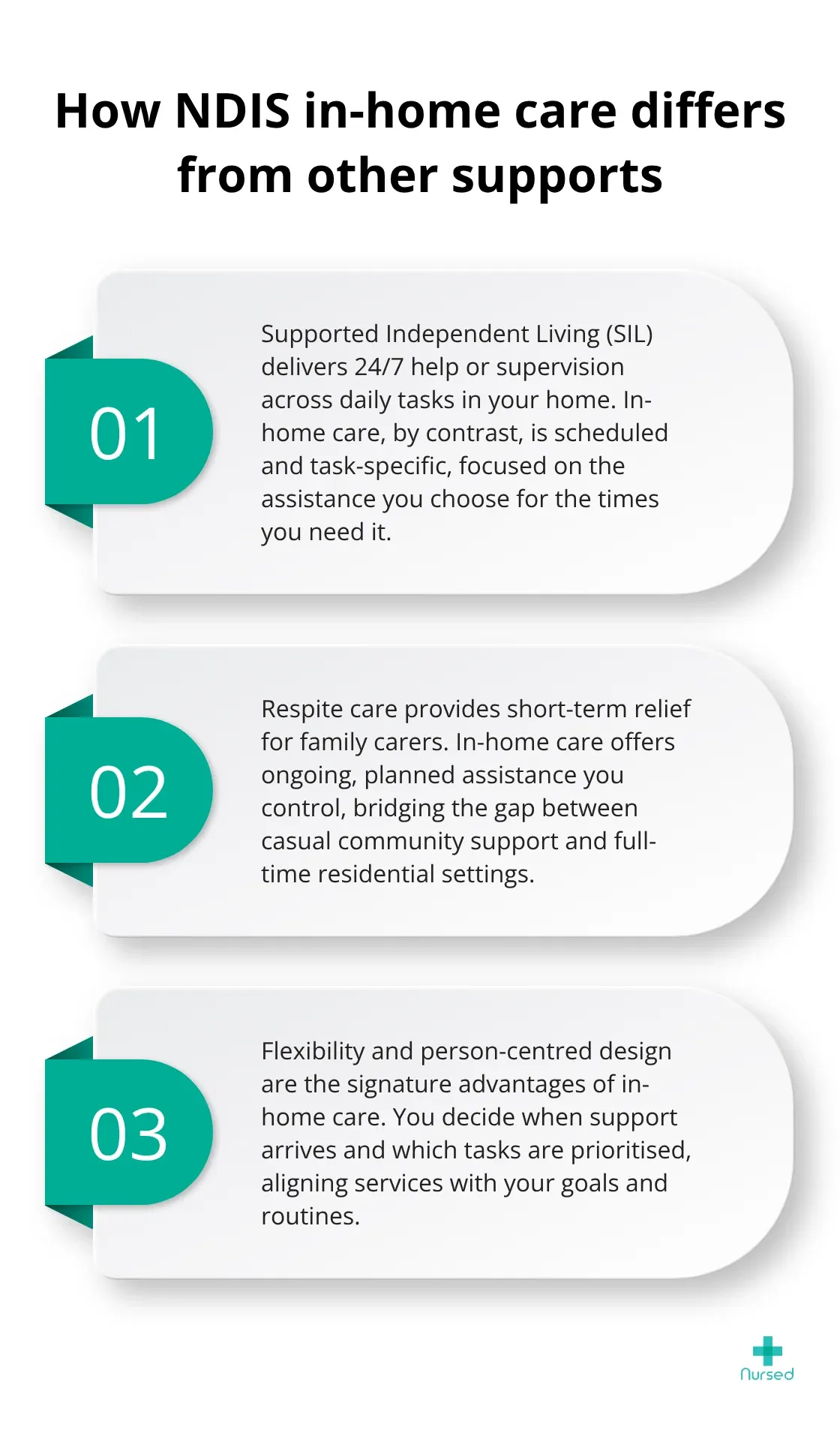
Importantly, the NDIS distinguishes in-home care from Supported Independent Living SIL, which provides support from a support worker who helps or supervises day-to-day tasks in your home, 24 hours a day, 7 days a week, and from respite care, which offers short-term relief for family carers. In-home care sits between casual community support and full-time residential arrangements, giving you control over when assistance arrives and what tasks get completed. What separates NDIS in-home care from other disability support options is flexibility and person-centred design.
Understanding Your NDIS Plan and Funding
Your NDIS plan approval happens before services start, meaning you know exactly what funding sits in your Core Supports budget for daily living assistance and your Capacity Building budget for skill development. You choose whether the NDIA manages your funds, you self-manage them, or a plan manager handles administration. This matters because it affects which providers you can hire: registered NDIS providers work with any funding arrangement, while platform or unregistered providers require either self-management or a plan manager.
Eligibility and the Access Process
Eligibility requires being under 65 years old with a significant or permanent disability that substantially reduces your functional capacity. The access process starts at ndis.gov.au where you complete an Access Request Form, often with support from your GP or Local Area Coordinator. Once approved, your planning meeting develops goals and allocates funding across your plan categories. Your plan runs for 12 months, reviewed six weeks before expiry to adjust for progress and changing circumstances.
This structured approach prevents gaps in support and keeps your funding aligned with what actually works in your daily life. Understanding these foundations sets you up to make informed choices about which provider can best deliver the support you need-and that’s where finding the right fit becomes essential.
How Personalised In-Home Care Transforms Daily Life
Meeting You Where You Actually Live
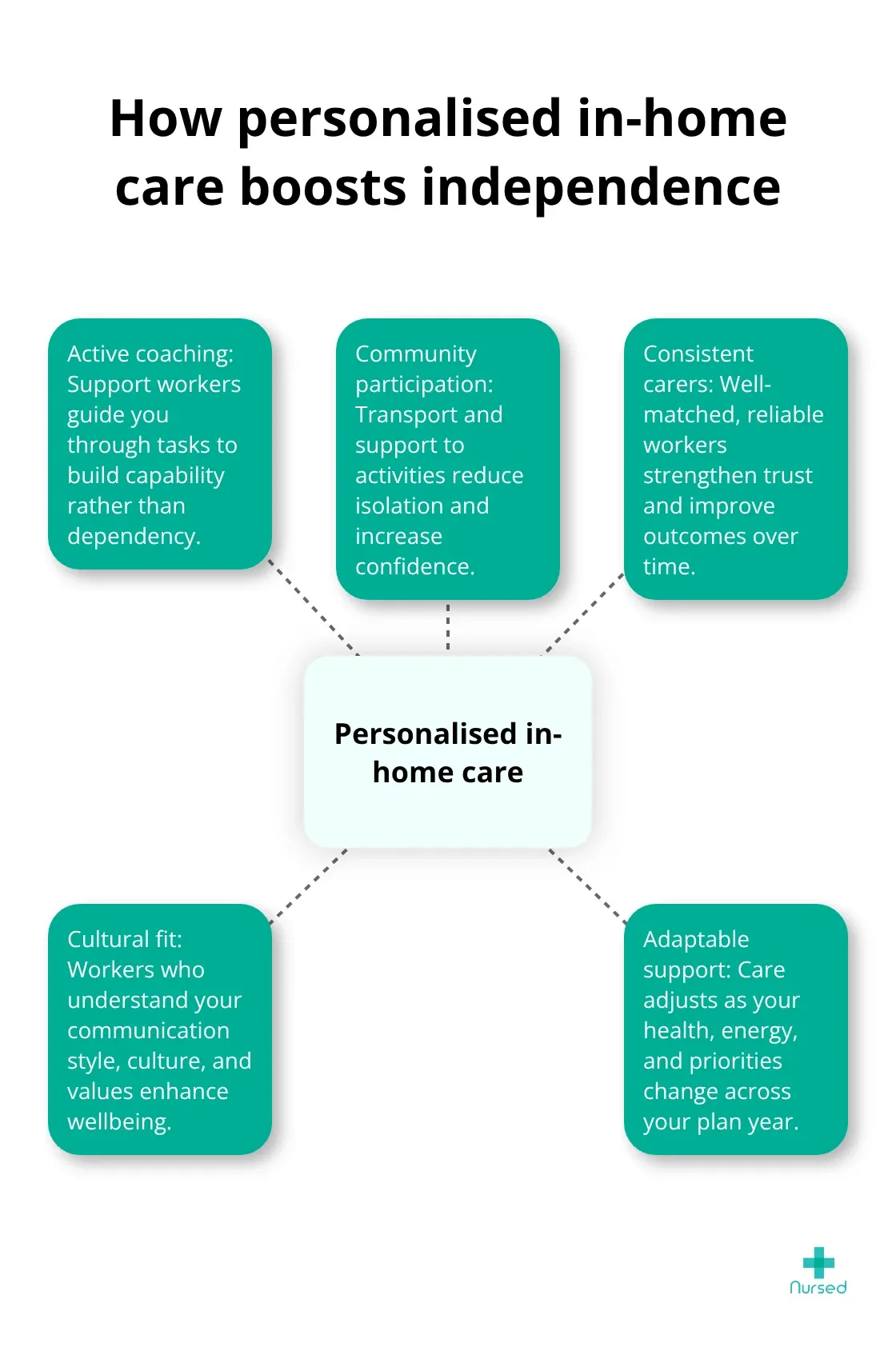
Personalised in-home care works because it meets you where you actually live, not in a generic support model designed for someone else. When a support worker understands your specific routines, goals, and preferences, the difference shows up immediately in what you can do independently. Someone recovering from a stroke needs very different assistance than a person managing Parkinson’s disease, yet both benefit from tailored support that builds on their existing strengths rather than focusing only on limitations.
Building Skills Through Active Support
The independence gains compound over time because skilled support workers actively coach you through tasks rather than simply doing them for you. If your goal involves managing household finances or preparing meals independently, your support worker structures assistance around gradual skill-building, not dependency. Research from the NDIS shows participants with consistent, well-matched support workers demonstrate measurable improvements in community participation and reduced reliance on crisis support.
Breaking Through Social Isolation
Social isolation drops significantly when in-home care includes transport assistance to local activities, classes, or appointments you actually want to attend, which directly combats the loneliness that often accompanies disability. Having someone reliable in your home who understands your communication style, cultural background, and personal values creates genuine wellbeing improvement. This human connection transforms support from a transactional service into meaningful assistance that respects who you are.
Adapting Support to Your Changing Life
Tailored support means your care plan adjusts when your circumstances change, whether that involves increased fatigue, new health developments, or shifting priorities around what independence means to you. This adaptability prevents the frustration of rigid support systems that ignore real-world changes in your life. The right provider recognises that your needs evolve, and your support arrangement must evolve with them-which is why choosing a provider who listens and responds matters far more than finding the cheapest option available.
Finding a Provider That Actually Listens to You
Verify Registration and Safety Standards
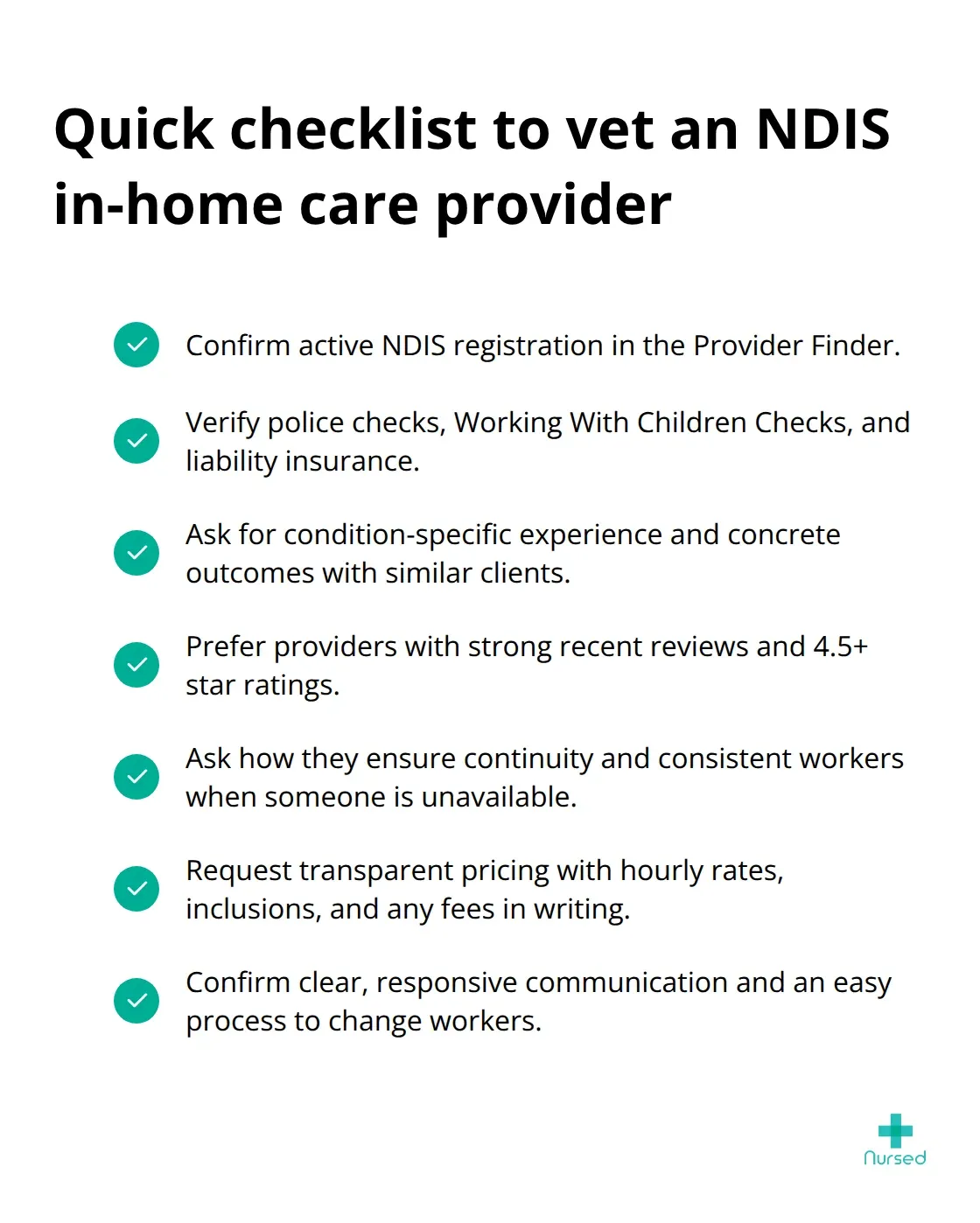
Choosing an NDIS in-home care provider matters far more than most people realise because the wrong fit wastes your funding, disrupts your independence goals, and leaves you frustrated. Start by verifying the provider holds active NDIS registration through the NDIS Provider Finder, which confirms they meet quality and safety standards set by the NDIS Quality and Safeguards Commission. Registered providers undergo police checks, Working With Children Checks, and maintain liability insurance for their support workers, which unregistered platform providers don’t guarantee.
Assess Experience With Your Specific Needs
Ask directly whether the provider has experience supporting people with your specific condition or disability type, then ask for concrete examples of outcomes they’ve achieved with similar clients, not vague promises about their approach. Experience with dementia care looks completely different from experience supporting someone with spinal injuries or autism, so generic experience tells you nothing useful. Check their Google rating and read recent reviews carefully, paying attention to comments about consistency, reliability, and whether support workers actually show up when scheduled. A provider rating below 4.5 stars signals systemic problems you’ll likely encounter yourself.
Ask the Questions That Reveal True Understanding
Ask how they handle continuity when your regular support worker becomes unavailable and whether they prioritise matching you with the same worker over time, because research shows consistent carers improve outcomes and reduce the time needed to build trust. Ask specifically how they manage plan reviews and adapt support when your circumstances change, then listen carefully to whether their answer focuses on flexibility or on rigid processes. Question their pricing transparency by requesting a detailed breakdown of hourly rates, any additional fees, and exactly what’s included in your plan allocation, because hidden costs destroy trust quickly.
Evaluate Communication and Problem-Solving
Ask how they handle communication if something goes wrong or you’re unhappy with a support worker, and whether switching workers happens smoothly or involves lengthy delays. The way a provider responds to these questions reveals whether they genuinely prioritise your needs or simply want your funding. Nursed, as a registered NDIS provider, prioritises consistency and person-centred support, matching you with support workers based on your age, interests, and preferences. All support workers hold current police checks and Working With Children Checks, with full liability insurance maintained throughout their employment. Personalised care spans daily living assistance, home modifications, and community participation support, adapting as your goals and circumstances evolve throughout your plan year.
Final Thoughts
NDIS in-home care services work because they respect your life as it actually is, not as someone else thinks it should be. The real benefit sits in independence that grows over time, wellbeing that improves when you’re supported by someone who understands your goals, and the freedom to stay in your home while receiving the assistance you need. When support workers show up consistently, listen to what matters to you, and adapt their approach as your circumstances change, the difference becomes visible in what you can do and how you feel about your daily life.
Choosing the right provider determines whether your NDIS funding transforms your independence or simply gets spent without meaningful results. A quality provider holds active NDIS registration, demonstrates genuine experience with your specific needs, maintains transparent pricing, and prioritises consistency in matching you with support workers. They communicate clearly when problems arise and respond quickly when you need adjustments to your support arrangement.
We at Nursed match you with support workers based on your interests and preferences, ensuring consistency that builds trust and improves outcomes. Our approach covers daily living assistance, home modifications, and community participation support, all tailored to your specific goals and circumstances. If you’re ready to explore how NDIS in-home care services can support your independence and wellbeing, visit Nursed to discuss your needs with our team.