


Managing your NDIS core supports doesn’t have to feel overwhelming. The right plan management option can give you genuine control over how your funding is used and who delivers your support.
At Nursed, we’ve seen firsthand how choosing between self-management, registered plan managers, and agency-managed support transforms people’s experiences with the NDIS. This guide walks you through each option so you can make a decision that actually fits your life.
What Plan Management Actually Does
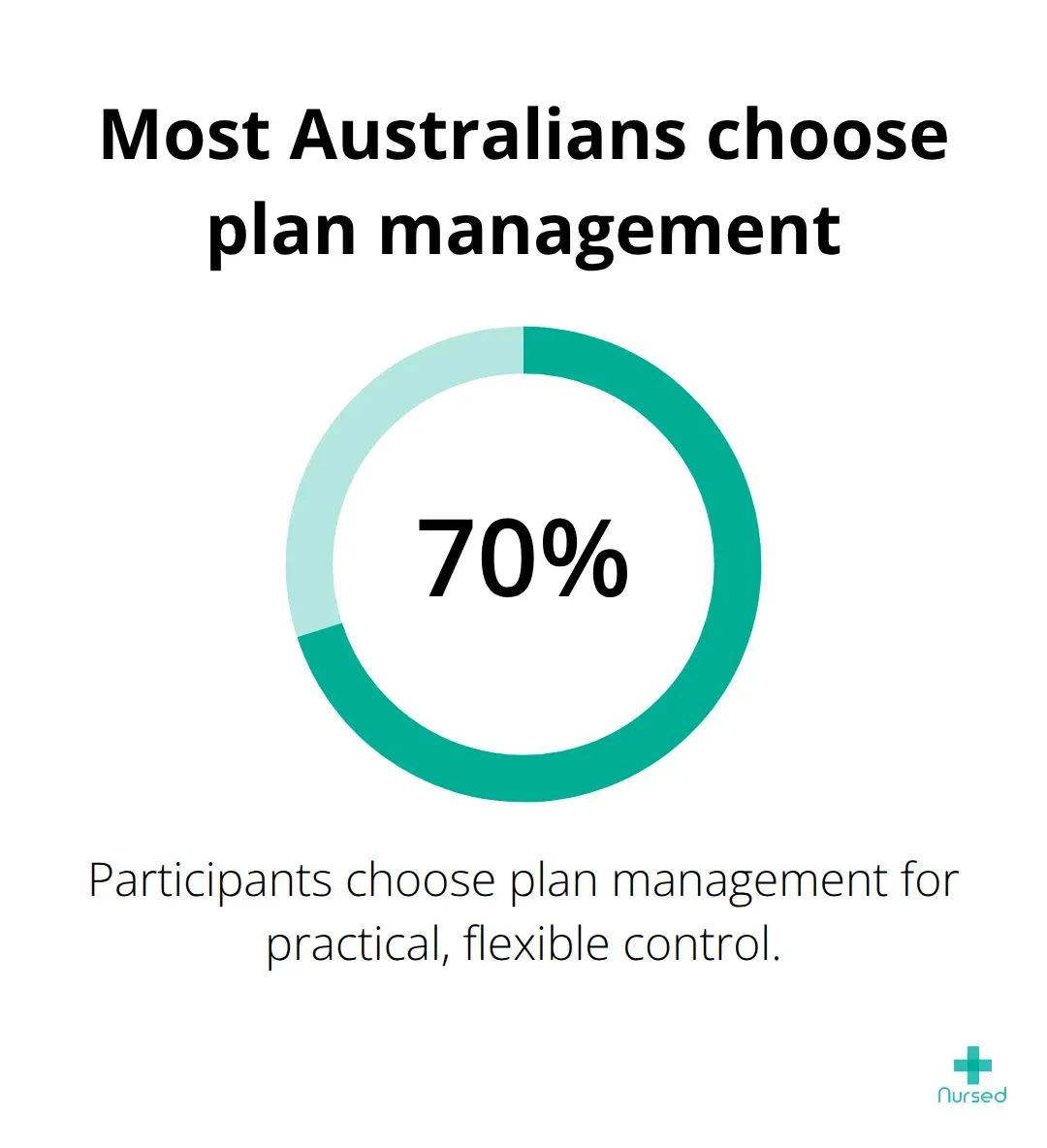
Plan management sits between you, your providers, and the NDIS as the financial backbone of your plan. It handles invoice processing, budget tracking, and compliance so you focus on your supports instead of paperwork. When the NDIA approves your plan, you receive three management options: self-management where you control everything, plan management through a registered provider who manages finances, or NDIA-managed where the scheme handles payments directly. Around 70% of participants choose plan management, which reflects how practical it proves compared to alternatives. The NDIS funds plan management directly under the Improved Life Choices category, so no out-of-pocket fees reduce your support budget.
The Real Difference Between Plan Management and NDIA-Managed Support
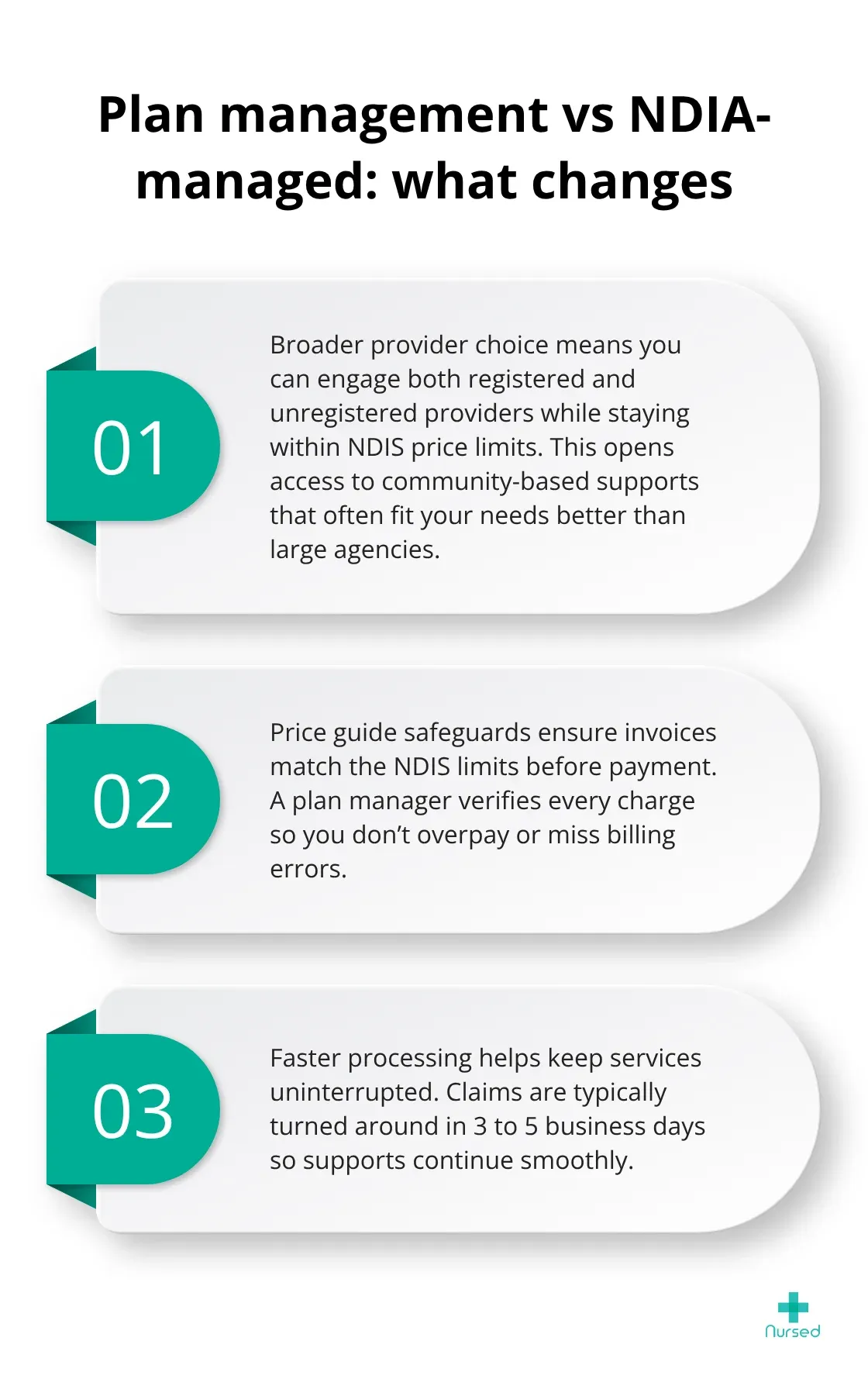
NDIA-managed support restricts you to registered providers only, which creates genuine problems in many areas where finding the right fit proves nearly impossible. Plan management lets you select from both registered and unregistered providers as long as their charges stay within the NDIS price guide. This matters because unregistered providers often include local, community-based supports that understand your specific needs better than large registered agencies. The 2026-27 NDIS price guide sets clear limits-weekday daytime support at $79.60 for high intensity, with weekend and public holiday rates reaching higher amounts per hour. A plan manager checks every invoice against these limits before payment, so you never overpay. They also process claims faster-typically within 3 to 5 business days-which keeps your supports running smoothly without interruptions.
How You Gain Control
Control with plan management means real choice about who delivers your support and how your budget flows. You can mix management types across different parts of your plan: self-manage your consumables to purchase continence products and low-cost assistive technology under $1,500 online at your own pace, use plan management for your daily living assistance where invoices need processing, and keep NDIA management for something else if it suits you. A good plan manager provides a live budget tracking dashboard showing exactly how much funding remains, what you’ve spent, and what’s coming up-visibility that changes how you actually use your money. You’re not trapped either; switching between plan managers costs nothing and takes around 15 to 30 days, with no penalties or hidden costs involved.
What Happens When Your Needs Change
Your NDIS plan isn’t fixed in stone. When your support needs shift, you can request a plan change to move funding between categories or adjust your management approach. If you started with NDIA-managed support but want more provider choice, you can switch to plan management at any time without cost. Plan managers help you navigate these transitions smoothly, ensuring your new arrangement starts without gaps in your supports. This flexibility matters most when your circumstances change-whether you need more community participation support, different daily living assistance, or access to providers outside the registered network.
Finding the Right Fit for Your Situation
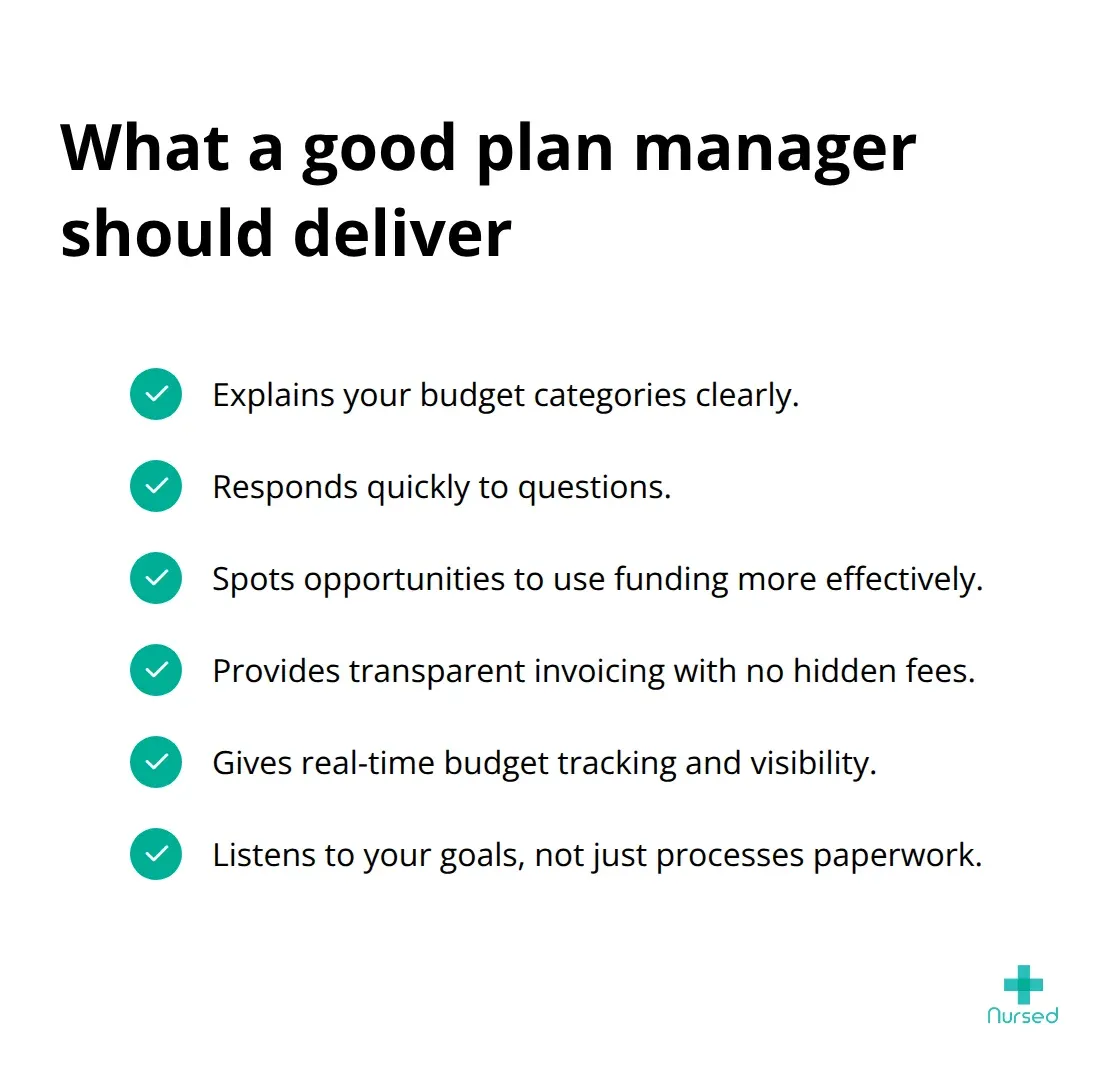
Choosing a plan manager requires looking at what matters most to your life. Some people prioritise fast invoice processing and budget tracking; others need someone who understands their regional area or offers dedicated support coordination. The best plan managers explain your budget categories clearly, respond quickly to questions, and help you spot opportunities to use your funding more effectively. You should expect transparent invoicing with no hidden fees, real-time budget tracking, and someone who actually listens to your goals rather than just processing paperwork. With the right plan manager supporting your core supports, you move from managing finances to managing your life-which is exactly where your energy should go.
Your Three Real Management Choices
Self-management hands you complete control but demands serious time investment. You receive your NDIS funding and pay providers directly, keeping all invoices and receipts for NDIA reporting. This works well if you possess strong organisational skills, maintain stable support arrangements, and track spending monthly across your Core supports categories. The NDIA may restrict self-management if they assess your risk as unacceptable, particularly if you have complex needs or vulnerability concerns. When self-management works, it offers genuine freedom-you choose any provider, pay them however suits your arrangement, and avoid middleman fees. However, you handle every invoice, every receipt, every budget calculation, and every compliance report yourself. Many participants find this creates stress rather than freedom, especially when managing multiple providers or when unexpected changes occur.
Plan management through a registered provider sits between self-management and NDIA control. You maintain provider choice-selecting from both registered and unregistered providers-while a dedicated plan manager handles invoicing, budget tracking, and NDIA compliance. This matters practically because unregistered providers often deliver better outcomes than registered agencies in many regions. The plan manager verifies every invoice against the NDIS price guide before payment, preventing overpayment and catching billing errors before money leaves your account. Processing typically takes three to five business days, keeping your supports uninterrupted. You gain access to a real-time budget dashboard showing your exact spending position, upcoming invoices, and remaining allocation across your Core supports sub-categories.
Administrative Burden Across Each Approach
Self-management requires you to become proficient at NDIS budgeting rules, price guide compliance, and claim documentation. You must track spending across three Core sub-categories: assistance with daily life, consumables under $1,500, and social and community participation. Missing invoices, losing receipts, or misallocating spending creates compliance problems during plan reviews. NDIA-managed support removes this burden entirely but restricts you to registered providers, which creates serious limitations in regional areas where registered agencies simply don’t operate effectively. Plan management offers the practical middle ground-you retain genuine choice about who delivers your support while someone else manages the financial administration that most people find tedious rather than empowering.
When Your Needs Shift
Your NDIS plan isn’t fixed in stone. When your support needs shift, you can request a plan change to move funding between categories or adjust your management approach. If you started with NDIA-managed support but want more provider choice, you can switch to plan management at any time without cost. A plan manager helps you navigate these transitions smoothly, ensuring your new arrangement starts without gaps in your supports. When your circumstances change-whether you need more community participation support, different daily living assistance, or access to providers outside the registered network-your management option can adapt with you.
What Actually Matters When Deciding
Your capacity to manage administration determines fit more than anything else. If you work full-time, manage complex health needs, or coordinate supports across multiple providers, self-management creates genuine stress. If you value knowing exactly who delivers your support and want that person to be someone local or community-based rather than a registered agency, plan management provides that access. If administrative detail feels overwhelming, plan management removes it without sacrificing choice. The strongest indicator that plan management suits your situation is wanting more provider flexibility than NDIA-managed support offers but less administrative responsibility than self-management demands-a reality that describes most participants’ actual needs.
With your management option selected, the next step involves finding the right plan manager who aligns with your goals and supports your journey forward.
Choosing the Right Plan Manager for Your Situation
Start with an honest assessment of your actual administrative capacity, not what you think you should have. If you manage multiple providers, coordinate complex support schedules, or work full-time, plan management oversight demands minimal time compared to self-management. Most participants underestimate how much effort NDIS budgeting requires until they track spending across three Core sub-categories, reconcile invoices monthly, and prepare compliance documentation. A practical test involves asking yourself whether you currently track personal finances in detail, maintain organised filing systems, and enjoy administrative tasks. If the answer is no, plan management removes genuine friction from your life rather than adding unnecessary expense. The 70% of participants who choose plan management have recognised that their energy works better on actual goals than on financial administration that someone else can handle more efficiently.
What Responsiveness Reveals About a Plan Manager
Responsiveness matters more than you’d think because NDIS administration doesn’t follow predictable schedules. When a provider sends an unexpected invoice, your support arrangement relies on quick processing to avoid payment delays that interrupt services. Contact the plan managers you’re considering and time how quickly they respond to basic inquiries; if they take more than two business days to answer, they’ll likely frustrate you during urgent situations. Ask specifically about their invoice processing timeframe and whether they process claims outside standard business hours, since real emergencies don’t wait for Monday mornings. Check whether they offer multiple contact methods-phone, email, SMS, and portal messaging-because different situations require different communication speeds. A plan manager who accepts only email creates unnecessary delays when you need urgent budget clarification or invoice approval. Verify that they provide real-time budget visibility through a dashboard or portal, not monthly statements that leave you guessing about your spending position. Request to see their actual portal interface during initial conversations; if they hesitate to show you, that signals a significant concern about transparency.
Understanding Your Regional Context
If you live outside major cities, provider scarcity makes plan management genuinely essential rather than simply convenient. Registered NDIS providers concentrate heavily in metropolitan areas, leaving regional and remote participants with limited options under NDIA-managed support. Plan managers access both registered and unregistered providers, which means they can connect you with community-based supports, local allied health practitioners, and informal arrangements that registered-only restrictions prevent. Ask potential plan managers specifically about their experience supporting participants in your region and request examples of unregistered providers they’ve worked with in your area. This question separates plan managers with genuine regional knowledge from those offering generic national services. If you’re in a regional area and a plan manager cannot name specific local providers they’ve supported, their regional knowledge is probably theoretical rather than practical. A plan manager familiar with your local disability services landscape spots opportunities and solutions that national providers miss entirely.
How Local Knowledge Translates to Better Outcomes
Regional plan managers understand which unregistered providers actually deliver quality support in your area, not just which ones exist on paper. They know which community organisations offer social and community participation activities that suit your interests, which local allied health practitioners work within NDIS price limits, and which informal support arrangements the NDIA accepts as claimable. This knowledge saves you months of trial and error trying to find providers who understand your specific needs and location. A plan manager who has supported dozens of participants in your region can recommend solutions within days that you might spend weeks searching for independently. They also understand regional pricing variations and can advise whether certain support types cost more or less in your area compared to metropolitan rates. This practical intelligence transforms how effectively you use your Core supports budget.
Questions That Reveal True Regional Expertise
Ask potential plan managers to name three unregistered providers they’ve worked with in your specific suburb or region. If they hesitate or provide vague answers, they lack the local knowledge you need. Try asking about their experience with specific support types in your area-for example, how they’ve helped other participants access community participation activities or find personal care workers in your region. A plan manager with genuine regional expertise answers these questions immediately with concrete examples. They can also tell you whether certain support categories face supply challenges in your area and suggest alternative approaches that work within local constraints. This level of specificity indicates someone who actually understands your region rather than someone applying national templates to local situations.
Final Thoughts
Plan management options exist because one size doesn’t fit anyone’s actual life. Self-management demands serious administrative capacity that most people underestimate until they track spending across three Core sub-categories monthly. NDIA-managed support removes paperwork but locks you into registered providers, which creates genuine problems outside major cities. Plan management sits in the practical middle-you keep real choice about who delivers your support while someone else handles invoicing, budget tracking, and compliance.
Your decision comes down to honest assessment of your circumstances. If you work full-time, manage complex support arrangements, or live in a regional area where registered providers don’t operate effectively, plan management removes friction without sacrificing control. If you possess strong organisational skills and genuinely enjoy financial administration, self-management offers complete autonomy. When you’ve chosen your approach, finding the right plan manager matters more than the approach itself-responsiveness, regional knowledge, and transparent communication separate plan managers who genuinely support your goals from those simply processing paperwork.
At Nursed, we work alongside participants using all three management approaches to deliver the actual support your plan funds. Whether you choose plan management or another option, your NDIS funding should support your independence and community participation, not create administrative stress. Explore how Nursed can support your goals through personalised daily living assistance, home modifications, and community participation that align with your plan.