


Caring for someone else is rewarding, but it’s also exhausting. Without regular breaks, even the most dedicated carers face burnout that affects their health and their ability to provide quality support.
Respite care for carers isn’t a luxury-it’s a necessity. At Nursed, we’ve seen firsthand how the right respite support transforms both carers and the people they care for.
Understanding Respite Care and Its Role for Carers
What Respite Care Actually Means for NDIS Participants
NDIS respite care is a support designed to give informal carers a planned break while ensuring the participant continues to receive safe, appropriate care. It’s funded support that gives primary carers genuine time away while the person you support receives quality care from trained professionals. The NDIS recognises that unpaid carers-often family members-carry an enormous load, and respite is built into funding plans to acknowledge this reality. When respite is arranged through an NDIS provider like Nursed, a qualified support worker comes to your home or takes your loved one to a community activity, handling personal care, meals, medication reminders, and companionship. This isn’t theoretical relief; it’s practical freedom to attend medical appointments, handle household tasks that pile up, or simply rest without guilt. The key difference is that NDIS respite is individualised to match the person’s routines, preferences, and goals rather than a one-size-fits-all service. Many carers delay accessing respite because they assume it’s complicated to arrange, but NDIS participants can include respite as a line item in their plan, making it straightforward to book when needed.
Why Carers Collapse Without Regular Breaks
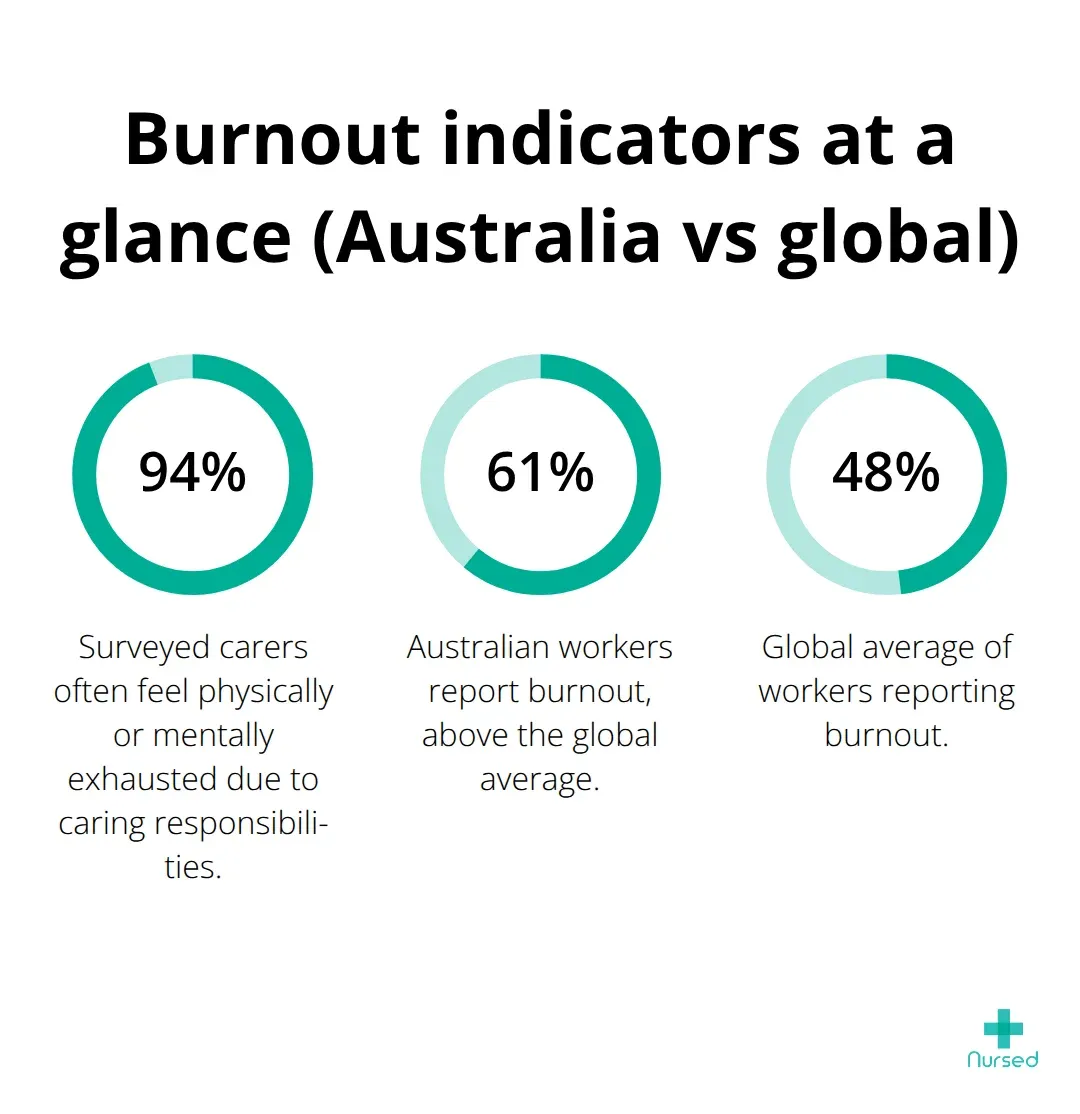
94% of surveyed caregivers said they often feel physically or mentally exhausted due to their caregiving responsibilities, a statistic that reveals how widespread carer burnout has become. Without respite, this exhaustion compounds-sleep becomes interrupted, stress hormones stay elevated, and the person doing the caring gradually loses capacity to provide quality support. Carers face even steeper odds because their work has no off switch; they remain on call constantly. Physical symptoms appear first-headaches, stomach issues, persistent fatigue-but mental health deteriorates alongside it. Loss of enjoyment, increased cynicism, and social isolation follow. The brutal truth is that without respite, carers don’t just suffer; the quality of care they provide declines. A carer running on empty makes more errors, loses patience faster, and struggles to maintain the emotional presence that makes caregiving feel connected rather than obligatory. Respite breaks this cycle by restoring physical energy and mental space, which directly improves both carer wellbeing and care quality.
How Respite Strengthens Both Sides of the Relationship
Respite doesn’t just benefit the person doing the caring; it actively improves outcomes for the person receiving support. When a trained support worker takes over, the care recipient receives fresh social interaction, new activities tailored to their abilities and interests, and time outside their normal routine. This reduces isolation and provides stimulation that matters for wellbeing and independence. For the carer, respite creates space for personal priorities-work commitments, medical appointments, time with other family members, or simply uninterrupted sleep. Plan respite early, before exhaustion becomes overwhelming, rather than waiting until crisis hits. The relationship between carer and care recipient also improves when regular breaks exist.
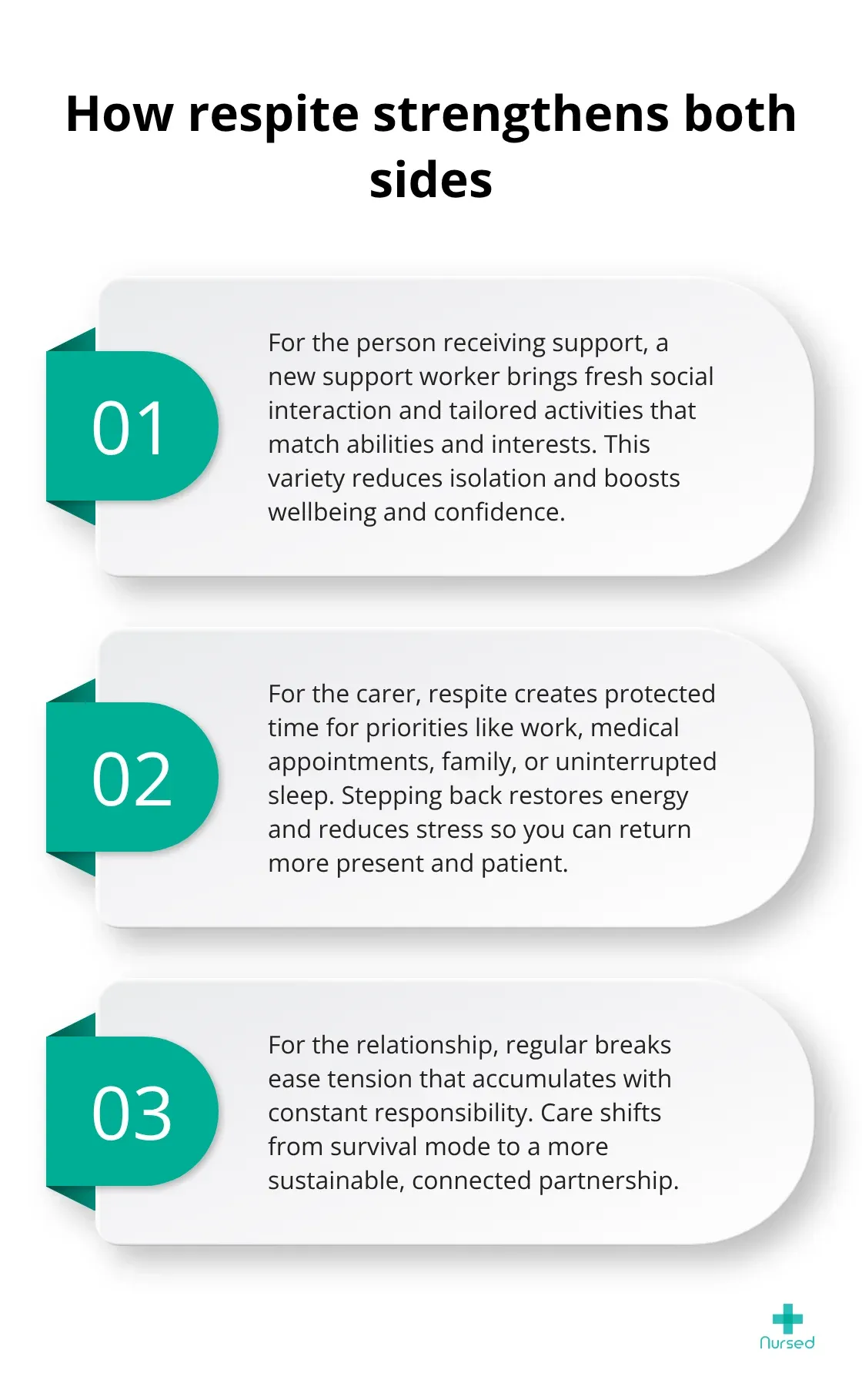
Without respite, tension builds from constant proximity and responsibility, which strains even strong relationships. When both people know respite is part of the plan, the caregiving dynamic shifts from survival mode to something more sustainable and connected. This foundation of regular breaks and restored wellbeing positions carers to make informed decisions about the respite options that work best for their situation.
The Real Impact of Carer Burnout Without Respite Support
Physical and Mental Health Consequences for Unpaid Carers
Burnout in carers isn’t gradual wear and tear that sneaks up slowly. It’s a collision between endless responsibility and depleted reserves, and it hits hard. According to Mental Health First Aid Australia burnout statistics, 61% of Australian workers report burnout, a figure significantly higher than the global average of 48%. For unpaid carers, the numbers are starker. More than 90% of primary carers in Australia report physical or mental exhaustion, underscoring just how pervasive this crisis has become.
The physical toll emerges first: persistent headaches, stomach issues, interrupted sleep, and a fatigue that sleep alone cannot fix. Mental health consequences compound faster than most carers anticipate. Loss of enjoyment in activities that once mattered, social withdrawal, increased cynicism, and a creeping sense of hopelessness follow. The research is unambiguous: untreated burnout leads to anxiety, depression, and serious physical health issues that extend far beyond temporary fatigue.
How Burnout Affects the Quality of Care Provided
Carers experiencing burnout make more errors in medication management and daily support tasks, lose patience faster with the person they care for, and struggle to maintain emotional presence. This matters because quality of care directly correlates with carer wellbeing. A carer running on empty cannot provide the attentive, compassionate support that sustainable caregiving requires.
The relationship between carer and care recipient deteriorates under constant stress. Tension builds from unrelenting proximity and responsibility, and what started as meaningful support transforms into survival mode. Carers who delay accessing respite don’t save time or resources; they lose capacity. They lose the ability to think clearly about decisions, to communicate effectively with family members, and to maintain their own health.
Why Early Respite Planning Changes Everything
The cost of waiting until crisis hits is always higher than the cost of planning respite early. Respite care interrupts the burnout trajectory by restoring physical energy and creating mental space for priorities beyond caregiving. When respite is integrated into a care plan from the start (rather than accessed only when exhaustion becomes unbearable), carers maintain better health outcomes and provide more consistent, higher-quality support.
This isn’t about guilt or selfishness; it’s about recognising that sustainable caregiving requires regular breaks, just as any demanding role requires recovery time. Carers who access respite early protect their own health and strengthen their capacity to provide quality support over the long term. The evidence shows that carers who plan respite proactively experience fewer health crises and maintain stronger relationships with the people they support.
Understanding the real cost of burnout makes the case for respite clear. The next step is exploring how respite options can fit into your life and support both your wellbeing and the independence of the person you care for.
Making Respite Work for Your Life
Timing Respite Around Your Actual Needs
Respite only delivers real benefits when it fits into how you live. Generic respite packages fail because caregiving isn’t generic-your schedule, the person you support, and your priorities are entirely specific to your situation. You need respite that adapts to your reality, not the other way around.
This means choosing when respite happens. Some carers need regular weekly breaks to attend work or manage medical appointments; others need intensive support for a fortnight while they handle a family crisis or take overdue leave. Respite can occur during times when you actually need relief, not when a provider has availability. This might mean your respite worker arrives on a Tuesday morning while you attend physiotherapy appointments, or takes your loved one to community activities on Thursday afternoons so you can work without constantly checking your phone. The flexibility prevents respite from becoming another obligation on your calendar.
Research shows carers who access respite consistently maintain significantly better physical and mental health than those who wait until exhaustion forces their hand. The timing matters enormously because it interrupts the burnout cycle before it accelerates.
Building Trust Through Consistent Support Workers
Respite quality depends on whether the support worker understands the person you care for as an individual. Generic companionship doesn’t work. A respite worker who knows your loved one’s preferences provides support that feels natural rather than disruptive.
Consistency matters-the same support worker visiting regularly builds trust and reduces anxiety for the person receiving care. You gain peace of mind knowing someone familiar is providing support. For carers, this consistency also eliminates the exhausting task of repeatedly explaining everything from scratch. The person you support feels more comfortable, and you experience less stress about whether their needs are being met properly.
Planning Respite That Actually Works
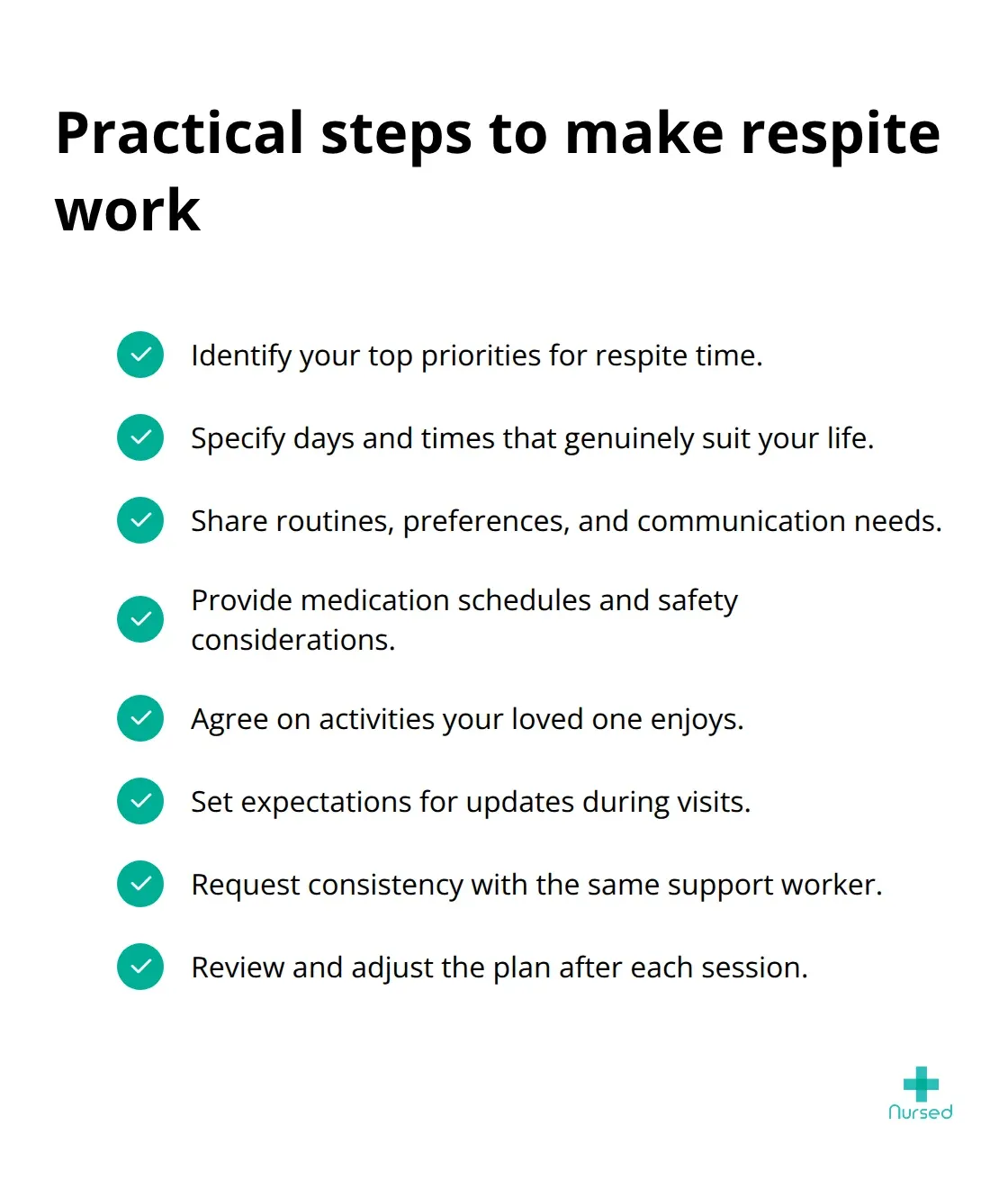
Practical planning transforms respite from something that sounds good in theory to something that actually works. Start by identifying exactly what you need respite to accomplish. Do you need time for medical appointments, work hours, household maintenance, or simply uninterrupted sleep? Be specific about your priorities.
Then communicate these priorities clearly to your respite provider before the first visit. Discuss what activities your loved one enjoys, any safety considerations, medication schedules, and how you want to be kept informed. The first respite visit should never be a surprise for either party.
When everyone knows what to expect, respite becomes genuinely restorative rather than stressful.
Clear communication before respite starts-including routines, preferences, contact points, and concerns-helps everyone feel comfortable. You’ll experience less anxiety, and the person you support will settle into the respite arrangement more easily. This foundation of clear expectations makes the entire experience more effective for both of you.
Final Thoughts
Respite care for carers isn’t something to consider once burnout arrives-it’s a foundation for sustainable caregiving that protects both your health and your ability to provide quality support over years, not weeks. When you prioritise your own wellbeing through regular breaks, family relationships strengthen and the tension that builds from constant caregiving responsibility dissolves. You stop operating in survival mode and start operating as a team again.
The first step toward better balance means being honest about what you need. You don’t need permission to take respite, and you don’t need to wait until exhaustion forces your hand-identify what respite would actually accomplish for you, whether that’s attending medical appointments without stress, maintaining work commitments, or simply sleeping through the night. Then communicate those needs clearly to your provider so respite becomes genuinely restorative rather than another obligation.
At Nursed, we understand that respite support works best when it adapts to your situation and the preferences of the person you care for. Contact us at nursedcare.com.au to discuss how respite can fit into your care plan and your life, and we’ll help you take the next step toward the balance you deserve.