

Community access under the NDIS opens doors to meaningful activities, social connections, and greater independence. Whether you’re looking for hobby groups, volunteer work, or sports programs, there are countless ways to get involved in your local community.
At Nursed, we know that finding the right community access ideas for NDIS participants can feel overwhelming. That’s why we’ve put together this guide to help you explore your options and make the most of your funding.
What is Community Access Under the NDIS
Community access under the NDIS funds your participation in social, recreational, educational, and community-based activities that align with your goals. The scheme distinguishes between two funding types: Core Supports cover the immediate costs of attending activities, such as a support worker’s time or transport, while Capacity Building Supports target skill development so you can participate more independently over time. Community participation and choice rank among the top life-domain priorities for NDIS participants, indicating how valuable this funding is for quality of life. The NDIS doesn’t fund the activity itself-swimming lessons, for example-but it does fund a support worker to accompany you to the pool or transport assistance to get there. This distinction matters when you plan your spending, because it shapes what you request at your plan meeting.
How to Choose Activities That Support Your Goals
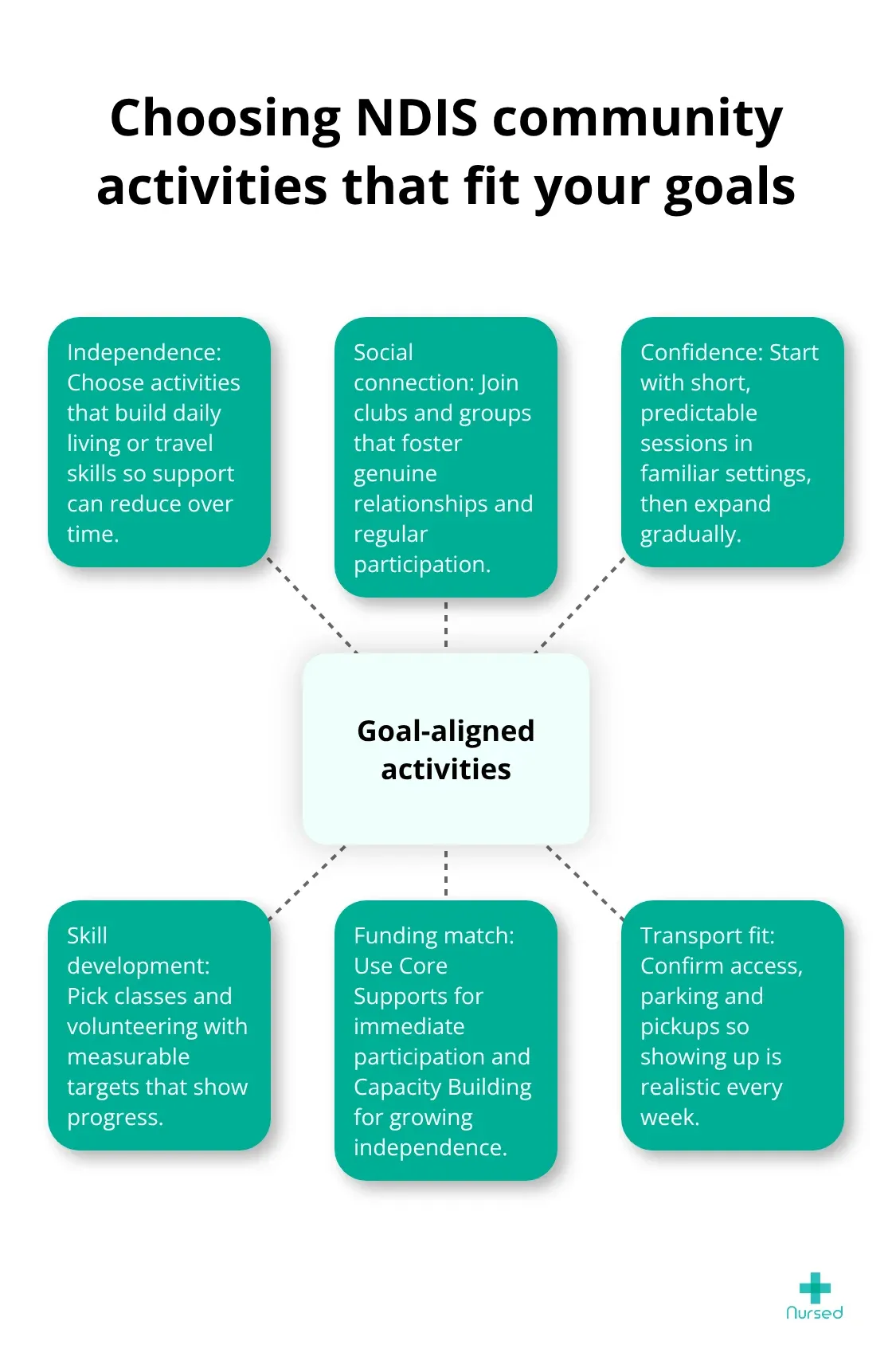
The activities you choose should directly support your independence, social connection, confidence, or skill development. Social clubs, adaptive sports programs, arts workshops, cooking classes, and volunteering opportunities all qualify for funding if they’re reasonable and necessary to meet your plan goals. If your goal is to reduce reliance on paid support, Capacity Building funding works best when you have measurable targets for skill and independence development. For immediate participation, Core Supports make sense when you need staff accompaniment or transport logistics arranged. Start by mapping your personal interests and any skills you want to develop, then bring this to your Support Coordinator or Plan Manager. They can identify local programs that match both your interests and your NDIS objectives, removing the guesswork from the search process.
Common Activities People Access Through NDIS Funding
Adaptive sports programs with transport and equipment, art classes with attendance support, social clubs where staff facilitate outings, volunteering roles with coaching, and cooking classes that build daily living skills all represent common funded activities. Some participants attend multiple activities each week; others prefer one regular commitment while they build confidence. The flexibility remains yours to decide.
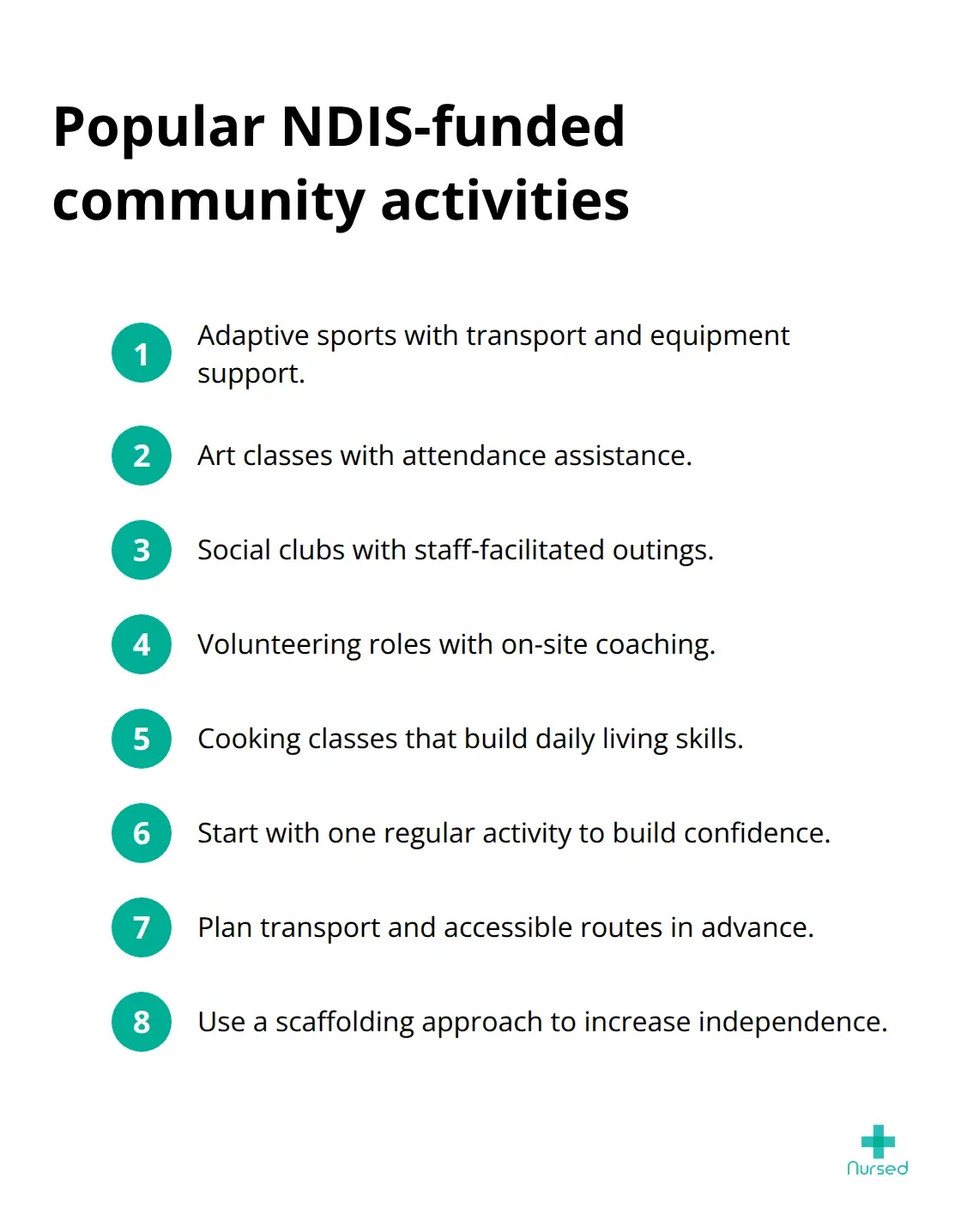
Transport planning matters significantly-many people don’t attend activities because getting there feels complicated, so discussing accessible routes and pickup arrangements with your support worker removes a major barrier. If you start out, try short, predictable activities in familiar settings, then gradually expand as your confidence grows. This scaffolding approach, where your support worker gradually reduces prompts and you take on more independence, works better than jumping straight into demanding group settings.
What Comes Next in Your Community Access Journey
Once you understand what the NDIS funds and which activities suit your goals, the next step involves finding the right programs and support to make participation happen. Local resources, online directories, and your Support Coordinator all play a role in connecting you to opportunities that fit your interests and location.
Creative Community Activities and Programs
Start With Activities You Actually Enjoy
Hobby and interest-based groups offer the fastest path to sustained community participation because they tap into what you already enjoy. Art classes, music sessions, photography groups, gardening clubs, and craft workshops all qualify for NDIS funding when a support worker helps you attend. The key is selecting activities where your existing interests matter more than prior experience. If you’ve always wanted to try pottery but never had the chance, an adaptive arts program with staff support removes the barrier. Many participants find that starting with one activity they genuinely care about builds momentum faster than trying multiple unfamiliar programs.
Transport often determines whether you actually show up, so confirm that your chosen activity has accessible parking, wheelchair access if needed, or that your support worker can arrange pickup. This practical step prevents frustration before it starts.
Volunteering and Employment Create Real Purpose
Volunteering and employment pathways deserve serious consideration because they offer purpose alongside social connection. Community organisations, local charities, environmental projects, and festivals all need volunteers, and NDIS supports can cover coaching and on-site support to help you contribute meaningfully. Some participants start with a few hours weekly and gradually increase their role as confidence grows.
Work experience programs, often paired with job coaching through Capacity Building supports, create genuine pathways to paid employment rather than just keeping you occupied. This distinction matters-you’re building real skills that lead somewhere, not simply filling time.
Sports and Recreation Deliver Health Benefits
Sports and recreation programs deliver measurable health benefits that extend beyond social participation. Adaptive swimming, gym sessions, walking groups, and accessible sports clubs help participants maintain physical fitness while building confidence in public spaces. Research consistently shows that regular physical activity improves mental health outcomes for people with disabilities, yet many participants overlook these options because they assume standard sports programs won’t accommodate their needs.
Specialised adaptive programs exist specifically because staff understand accessibility requirements and can modify activities on the spot. The difference between programs that work and those that don’t comes down to flexibility and genuine participant choice.
How to Choose What Fits Your Life
A program that listens to what you want to do matters far more than one that pushes you toward activities the provider thinks are good for you. Try listing five activities you’d actually enjoy, then ask your Support Coordinator which ones have accessible local options with trained staff available. This approach puts your preferences first and removes the pressure to fit into someone else’s idea of what participation should look like.
Once you’ve identified activities that genuinely appeal to you, the next step involves finding the right local programs and connecting with support workers who can help you access them.
How to Find and Access Community Programs in Your Area
Connect With Your Support Coordinator First
Your Support Coordinator holds the key to connecting you with real programs in your area, not generic options from an online directory. They know which local organisations have trained staff, accessible facilities, and genuine flexibility around participant goals. When you meet with your coordinator, bring a list of five activities you actually want to try, details about your transport needs, and any accessibility requirements specific to your situation. This conversation works best when you’re specific rather than vague-saying you want to volunteer at a local animal shelter matters more than saying you want community involvement.
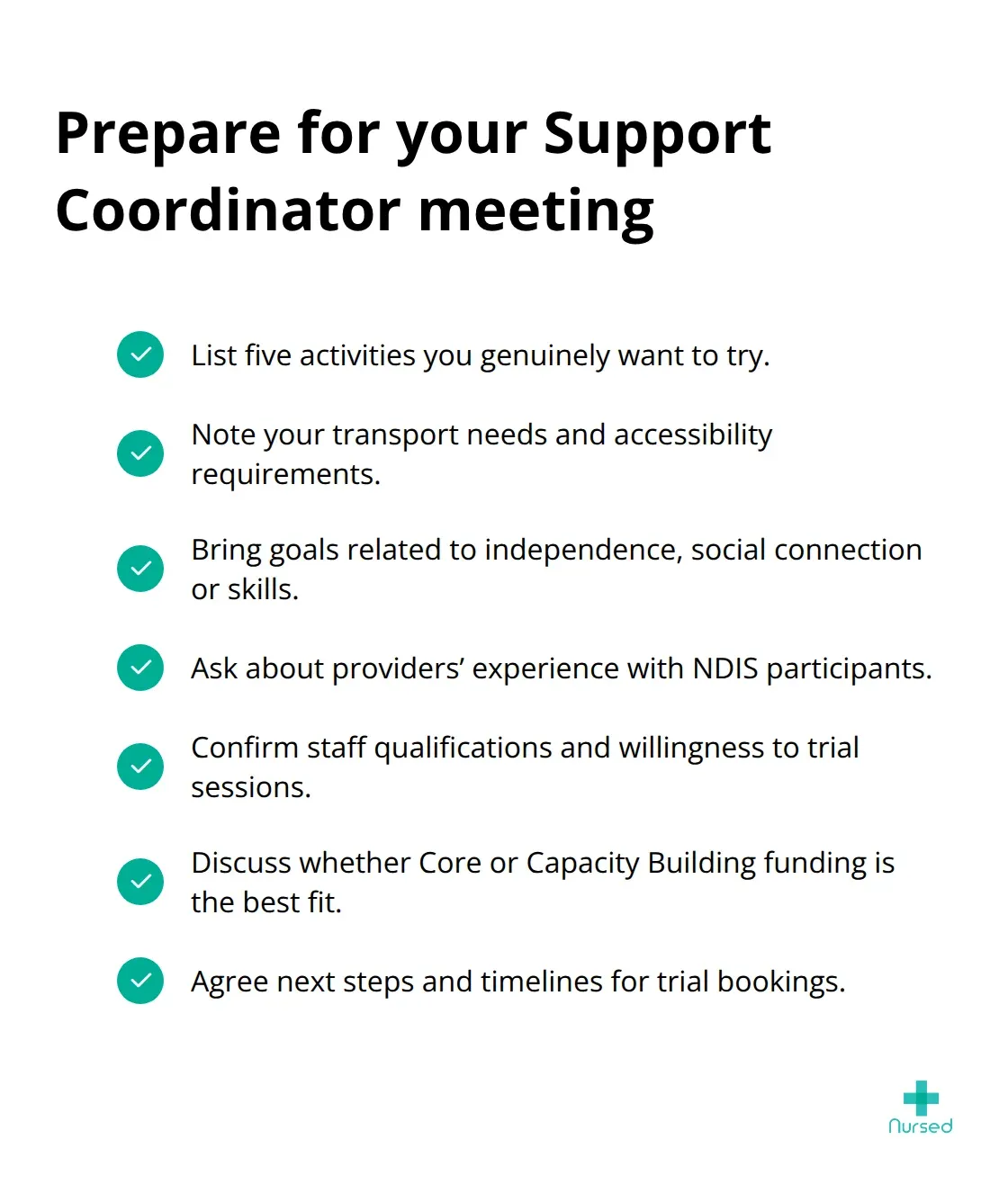
Your coordinator then contacts organisations, confirms they’ve worked with NDIS participants before, and arranges trial sessions so you experience the program before committing funding. This approach saves time and prevents wasted funding on programs that don’t fit.
Verify Programs Before You Commit
Online directories and local community centres help identify options, but verification matters more than quantity. Call programs directly and ask whether they’ve supported NDIS participants, what staff qualifications they hold, and whether they’re willing to trial sessions before full commitment. Quality coordination looks like person-centred support that aligns your plan goals with real activities. Your Plan Manager can also help-they understand your funding limits and can guide whether Core or Capacity Building supports suit your chosen activities.
Plan Transport Logistics Separately
Transport logistics require separate planning because accessibility barriers often sit outside the activity itself. Confirm whether your chosen program has wheelchair accessible parking, whether staff can support you on-site, and whether your support worker can arrange pickup from home. Some activities fail not because they’re poorly run but because getting there feels impossible, so solving transport first removes a genuine barrier to participation.
Understand Your Funding and Local Resources
If you’re unsure whether your plan includes community access funding, check your plan document or contact your Plan Manager directly-many participants miss opportunities because they don’t realise they have capacity available. Local Area Coordinators also connect participants to mainstream community options that don’t require NDIS funding, which stretches your budget further. This dual approach (funded and unfunded activities) maximises what you can access with your available resources.
Start Small and Build Momentum
Start with one activity per week rather than overcommitting, then expand as you build confidence and understand what works. This measured approach prevents burnout and helps you identify which activities genuinely sustain your interest versus those that sounded good initially. Once you’ve accessed one or two programs successfully, you’ll understand how the system works and can explore additional options more confidently.
Final Thoughts
Community access through the NDIS transforms how people with disabilities engage with their local area, build meaningful relationships, and develop genuine independence. The activities you choose-whether hobby groups, volunteer roles, or sports programs-directly shape your quality of life and sense of belonging. When you start small with activities that genuinely interest you, work with your Support Coordinator to remove practical barriers like transport, and gradually build confidence, participation becomes sustainable rather than overwhelming.
The community access ideas NDIS participants explore often lead to unexpected benefits that extend far beyond the original goal. Someone who joins a cooking class to build daily living skills might discover a passion for hospitality, while a volunteer at a local animal shelter might develop job skills that lead to paid work. These outcomes happen because you participate in real community settings where your contributions matter, not in isolated programs designed only for people with disabilities.
Your next step is straightforward: identify one activity you actually want to try, contact your Support Coordinator with specific details about what interests you, and arrange a trial session before committing funding. At Nursed, we work alongside NDIS participants to remove barriers to community participation through tailored daily living assistance, home modifications, and coordinated support that helps you access the activities that matter most. Our team prioritises your independence and community connection as core elements of quality life.