


Starting your NDIS journey can feel overwhelming, but it doesn’t have to be. This NDIS intake guidance walks you through each stage, from checking your eligibility to setting up your first plan.
At Nursed, we’ve supported countless people through this process. We know what questions come up and where people often get stuck, so we’ve created this guide to make your path clearer.
Who’s Eligible for the NDIS
The NDIS isn’t open to everyone with a disability. You need to meet three specific criteria, and most people don’t realise how strict these actually are.
Age and Residency Requirements
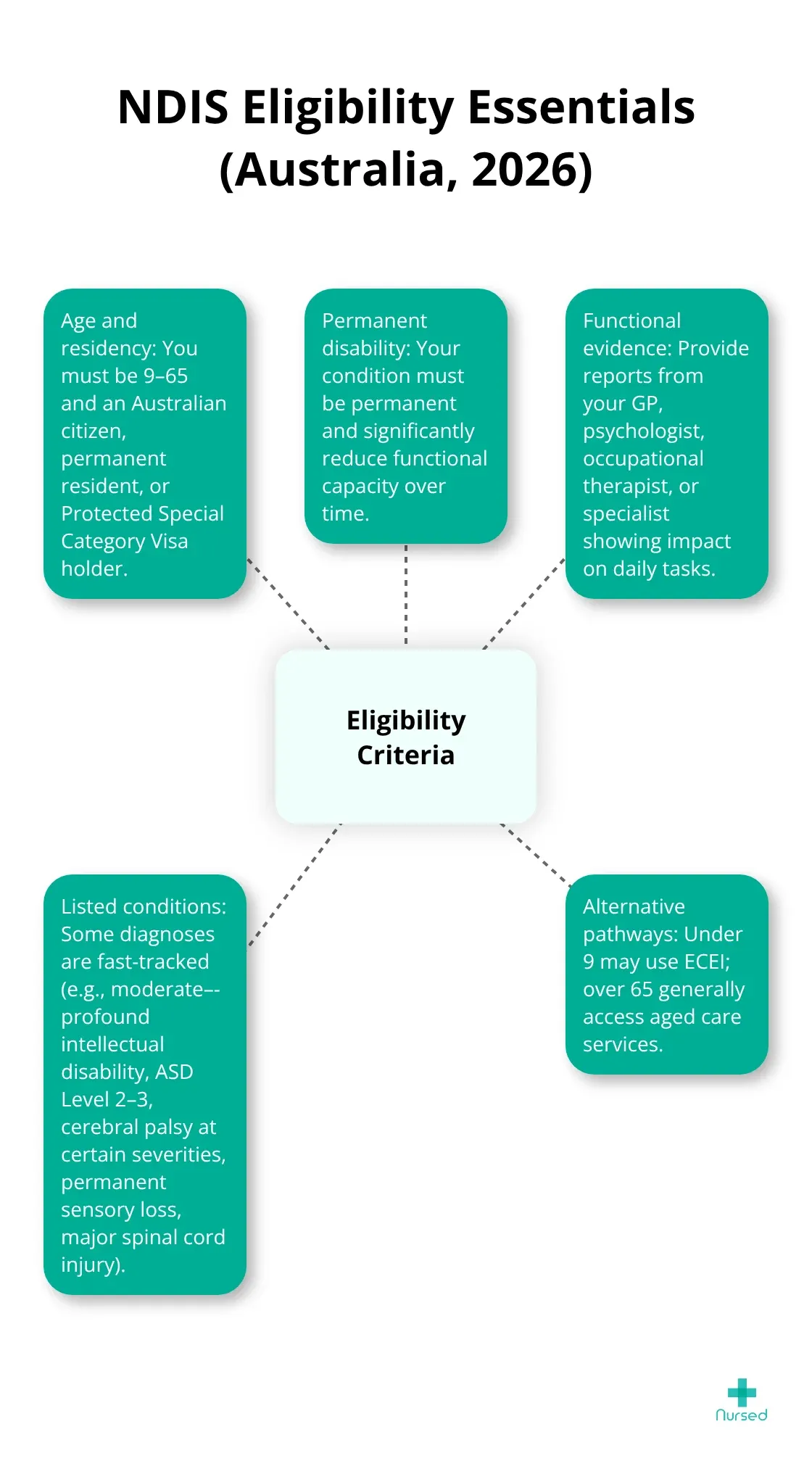
First, you must be between 9 and 65 years old. If you’re under 9, you might qualify through the Early Childhood Early Intervention pathway, which is faster and designed specifically for younger kids. If you’re over 65, the NDIS generally won’t fund you-the system assumes you’ll access aged care instead. Second, you need to be an Australian citizen, a permanent resident, or hold a Protected Special Category Visa. Your residency status matters more than most people think, so check this box early.
Permanent Disability and Functional Impact
Third, and this is the critical part, your disability must be permanent and significantly reduce your functional capacity. The NDIA doesn’t fund temporary conditions or disabilities that might improve over time. They want evidence that you’ll need support for life, not just for the next few months.
Conditions That Meet NDIS Criteria
The NDIA has specific lists of conditions they consider automatically eligible. If you have moderate to profound intellectual disability, Autism Spectrum Disorder at Level 2 or 3, cerebral palsy at certain severity levels, permanent sensory loss, or a spinal cord injury with major impairment, you’re almost certainly eligible. But here’s what catches people out: if your condition isn’t on these lists, you still might qualify if you can prove the disability substantially affects your daily life and functioning.
Building Your Evidence for Application
The NDIA focuses on functional impact, not just a medical diagnosis. This means you need evidence from your treating professionals-your GP, psychologist, occupational therapist, or specialist-showing exactly how your disability stops you from doing everyday tasks. Vague statements won’t work. You need specific examples of what you can’t do independently. The strongest applications describe both usual days and difficult days, showing the full scope of challenges rather than cherry-picking your best moments.
What’s Changing in 2026
The NDIA is rolling out the I-CAN assessment system from mid-2026, which is designed to make eligibility decisions fairer and more consistent across Australia. This means the process is actually improving, and your application will be assessed against clearer standards. Once you understand whether you meet these eligibility requirements, the next step involves gathering the right documentation and preparing for your intake appointment.
Preparing for Your NDIS Intake Appointment
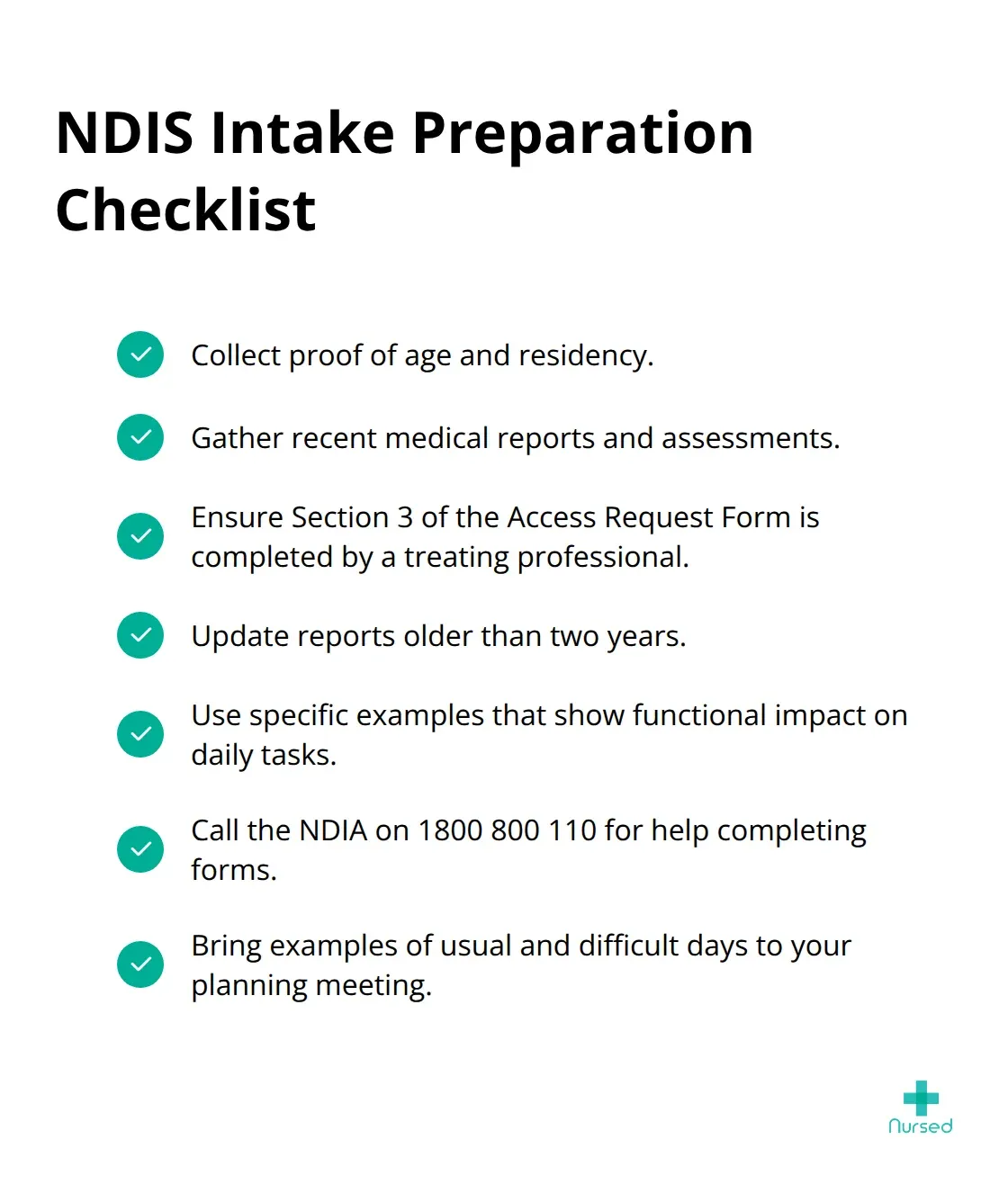
Preparation separates people who move through intake smoothly from those who face delays and requests for more information. The NDIA aims to make an eligibility decision within 21 days once they have everything they need, but most applications stall because applicants submit incomplete paperwork. Start by collecting proof of your age and residency-a passport, driver’s licence, or visa document works. Next, gather every medical report, assessment, and letter from treating professionals that shows how your disability affects daily life. This includes reports from your GP, psychologist, occupational therapist, physiotherapist, or specialist. The NDIA specifically wants documentation that explains functional impact, not just a diagnosis.
Collecting the Right Medical Evidence
If you’ve had recent assessments, these are gold. If your reports are older than two years, consider getting an updated one because the NDIA questions outdated evidence. A treating professional must complete Section 3 of your Access Request Form, so choose someone who knows you well and understands your day-to-day challenges. If paperwork feels overwhelming, call the NDIA on 1800 800 110-their admin staff can complete forms with you over the phone, which removes a major barrier many people face.
Defining Your Support Goals
Your support goals aren’t abstract wishes. They’re specific outcomes you want to achieve that your NDIS plan will fund. Think about what stops you from doing things at work, school, home, or in your community. Do you need help with showering and dressing? Do you want to access employment? Do you need transport to get to activities? The strongest goals focus on independence and participation, not just managing your disability. When you attend your planning meeting, bring examples of difficult days alongside your typical days-this shows the real scope of what you need.
Preparing for Your Planning Meeting
You can bring a family member, advocate, or friend to your planning meeting, and having someone in your corner helps you articulate your needs clearly and ensures nothing gets missed. The planner will ask you what’s working and what’s missing, so prepare honest answers. If you have an existing care plan or reports from other services, bring those too-your planner can help fill gaps where other systems don’t cover your needs.
What Happens During Intake
Your intake appointment typically starts with a quick call or online form, and intake staff often contact you the same day. The experience is designed to be calm and clear. You’ll receive upfront notification if a wait exists for a clinician, so you can plan with certainty rather than wondering what comes next. Once you register, a suitable provider will match with you and a service agreement will be set up. The first session can happen in person or online, and most people move from first contact to first session within a couple of weeks. This is where you translate your goals into a clearer plan, piece by piece, which reduces uncertainty about what support actually looks like. Once your plan receives approval, you’ll move into the phase where you access your approved supports and start working with service providers to bring your goals to life.
Using Your NDIS Plan in Real Life
Your plan arrives as a document that outlines your goals, funded supports, plan dates, and the dollar amount you can spend. Most people open it and feel confused because the document itself doesn’t tell you how to actually use the money. After approval, the real work starts: turning those words on a page into actual support happening in your home and community.
Understanding Your Funded Supports
Your plan specifies which supports the NDIA funds and at what level. You might have funding for daily living assistance, home and living supports, day programs, respite care, or a combination of these. The key is understanding that your plan isn’t a shopping list you tick off passively. It’s a tool you control, and how you use it depends entirely on which plan management option you choose at your planning meeting.
Choosing Your Plan Management Option
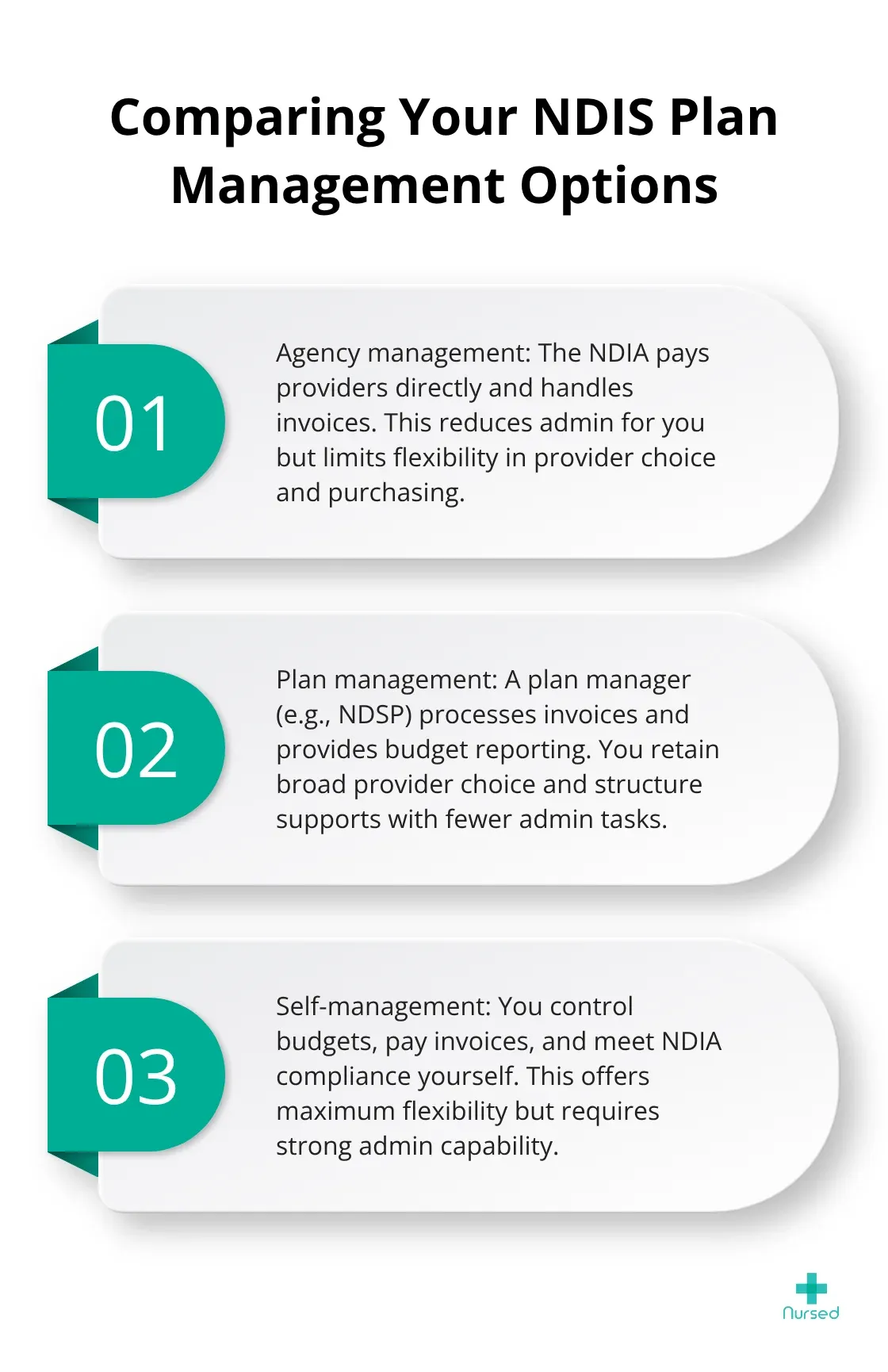
You have three management options, and this choice affects everything about how your plan works. With agency management, the NDIA handles invoicing and payments directly to providers, which means less admin work for you but less flexibility in how you spend your funding. With plan management, you hire a plan manager like NDSP who handles the financial administration, invoice processing, and monthly reporting while you retain more control over which providers you work with and how you structure your supports. NDSP charges a percentage of your plan funding but removes the headache of tracking budgets and ensuring providers get paid correctly. With self-management, you handle everything yourself, which gives you maximum flexibility but requires you to manage invoices, payments, and compliance with NDIA requirements.
Finding the Right Balance for You
Most people starting out find plan management strikes the right balance, though this depends on your comfort with administration and how complex your support needs are. Your choice doesn’t affect the quality of support you receive from providers like Nursed, who work with participants across all three management types. What matters is selecting the option that fits your capacity and preference, then sticking with it long enough to understand how it works before making changes. When you attend your planning meeting, tell the planner your preference upfront so they can set it up on the day your plan receives approval.
Final Thoughts
Your NDIS intake guidance journey starts when your plan receives approval, not when it ends. The real measure of success isn’t holding a document with funding attached-it’s whether that funding translates into genuine independence and participation in your community. Contact your chosen service providers within the first few weeks, discuss how they’ll support your specific goals, and establish clear expectations about what support looks like week to week.
We at Nursed work with participants to translate NDIS funding into practical daily living assistance, home modifications, day programs, and respite care that genuinely improve quality of life. Whether you need help with personal care, want to engage in community activities, or need respite support for your carers, the right provider partnership makes all the difference. If you selected plan management, work closely with your plan manager to understand your budget and how to access it; if you chose agency management or self-management, familiarise yourself with the invoicing process and payment timelines so there are no surprises.
Your NDIS plan isn’t fixed-if your needs change or a support isn’t working, you can request modifications. Stay connected to your Local Area Coordinator, maintain regular contact with your providers, and review your progress toward your goals every few months. Learn more about how Nursed can support your NDIS goals.