


Living with an NDIS plan means you have access to support that fits your life. NDIS home care supports help you manage daily tasks, from personal care to household management, so you can stay independent at home.
At Nursed, we work with participants every day to connect them with the right support. This guide walks you through what’s available, how to choose a provider, and how to get started.
What Your NDIS Plan Actually Covers for Home Support
NDIS home care supports fall under a category called Assistance with Daily Life, or ADL, which sits within your Core Supports budget. This is the most flexible part of your plan, meaning you can move funds between different types of support unless your plan specifically restricts it. ADL funding pays for a support worker to help with everyday tasks at home and in the community that relate to your disability.
Understanding ADL Costs and What They Cover
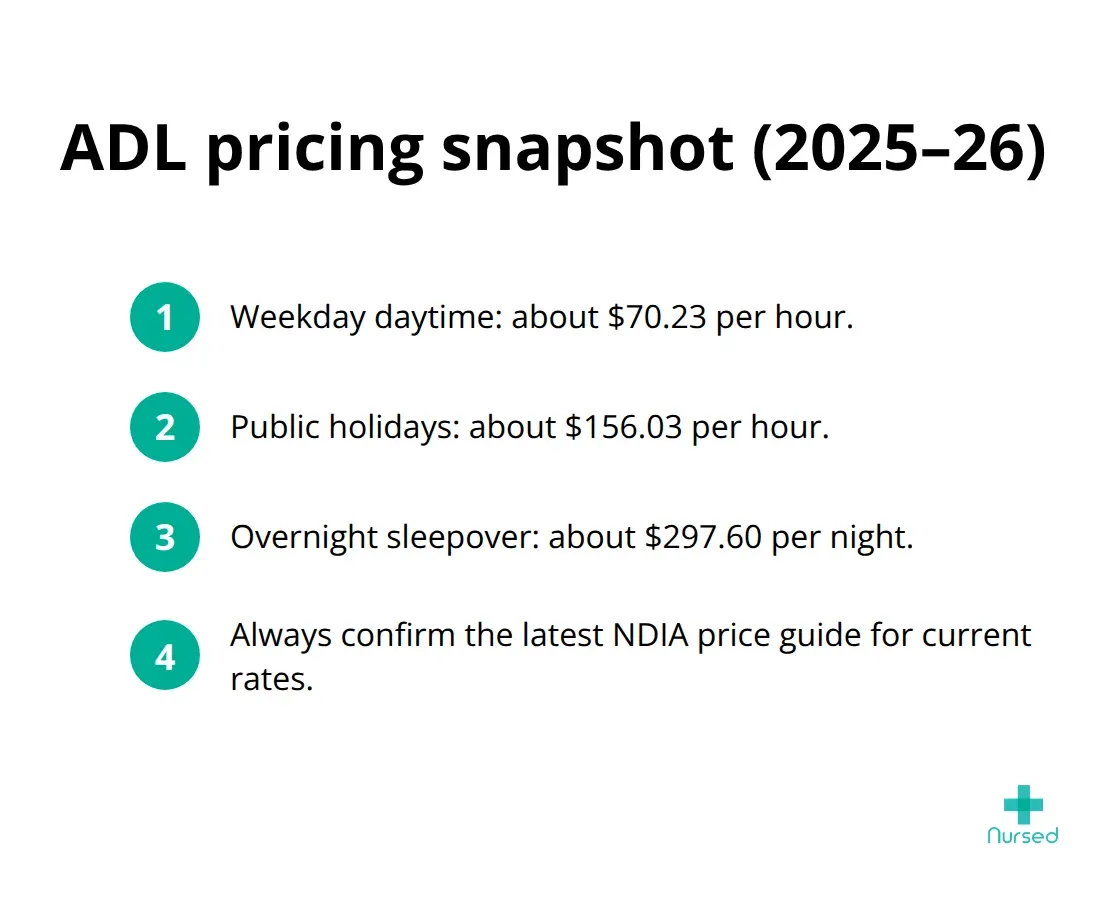
According to the NDIA, standard weekday daytime ADL costs around $70.23 per hour, with public holidays at approximately $156.03 per hour and overnight sleepover support at $297.60 per night as of 2025-26. Personal care covers everyday support like showering, bathing, grooming, dressing, toileting and continence support, mobility and transfers, and help with meals.
So do practical household tasks such as meal preparation, cleaning, laundry, and grocery shopping. You can also use ADL funding to access medical appointments, use public transport, and participate in community activities tied to your daily routines.
Overnight sleepover support is available if your plan approves it, and short-term supports for transitions like moving house or recovery after surgery can be included when deemed reasonable and necessary. However, ADL does not cover everyday living costs such as groceries, rent, or bills themselves, nor does it fund clinical medical treatment or purely social and recreational outings unrelated to your daily living goals. If you are unsure whether a task falls under ADL or another budget category, consult your support coordinator or plan manager before booking a worker.
Your Eligibility Starts with Your Permanent Disability
To access NDIS home care supports, you need an approved plan showing that you have a permanent and significant disability affecting your daily life. Generally, this applies to participants under 65 at first application, though people over 65 can access the NDIS if their disability began before that age. The NDIA will assess how your disability impacts your ability to perform everyday tasks and will request evidence from clinicians such as occupational therapists, physiotherapists, or psychologists to justify the level of support you need.
Your plan review or reassessment may happen to reflect changing needs and align funding with what you actually use. If your circumstances shift significantly-such as a hospital stay, new diagnosis, or move to independent living-you can request a plan change. This is fundamentally different from aged care support. The Support at Home Program targets people experiencing age-related decline after 65, while the NDIS funds disability-related needs regardless of age. The key distinction is that NDIS supports try for long-term independence and capacity building, whereas aged care focuses on maintaining safety as people age.
Why ADL Stands Apart from Other NDIS Budgets
Your NDIS plan contains three separate budgets: Core Supports (most flexible), Capacity Building (therapy and skill-building), and Capital (equipment and home modifications). ADL sits firmly within Core Supports, which means it has the broadest flexibility compared to other budget types. Unlike Capacity Building, which funds therapists to design and deliver interventions, ADL funds the support worker who implements daily routines and carries therapy strategies into real life.
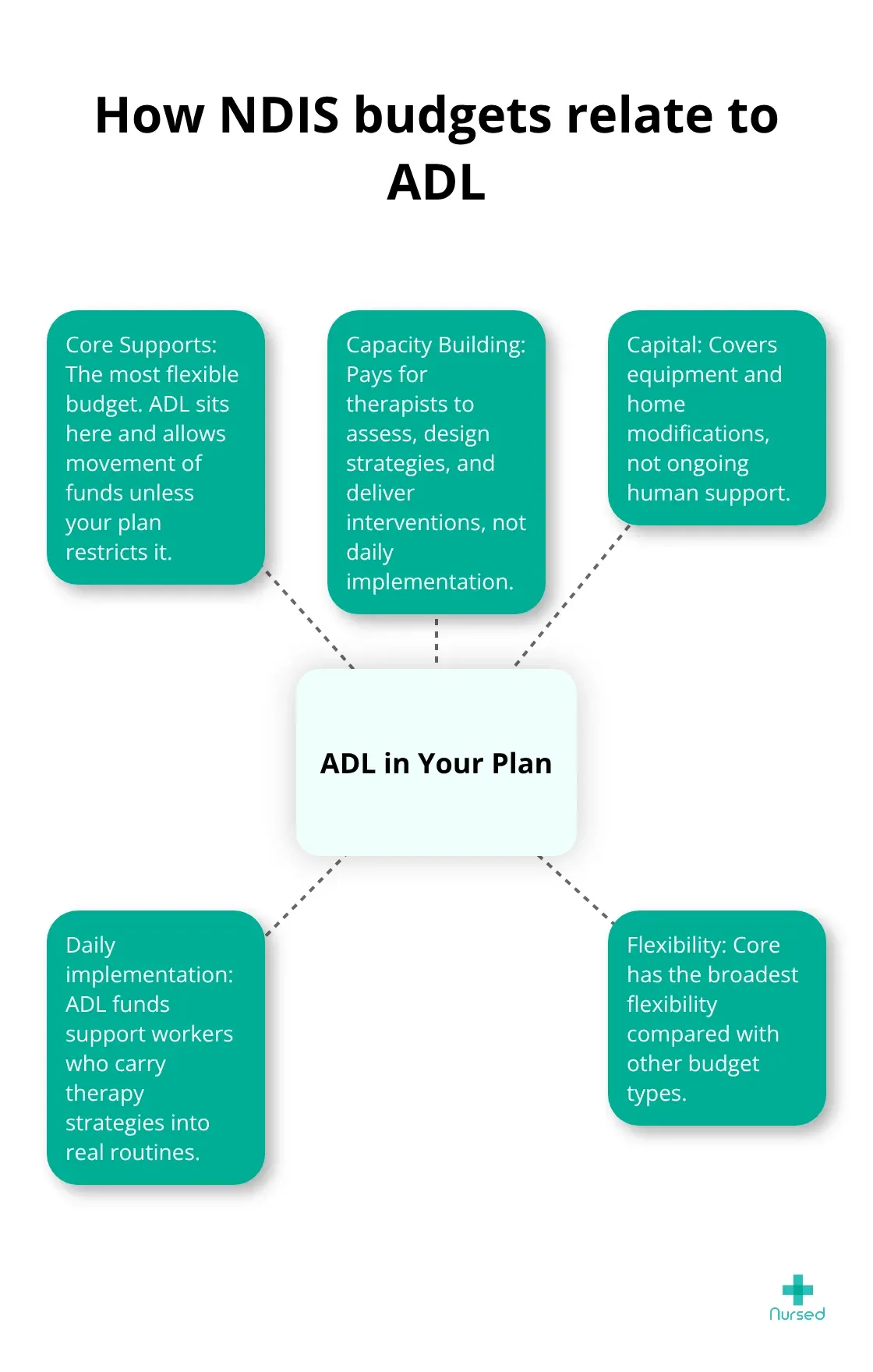
This coordination between your therapist and support worker matters significantly. An occupational therapist might design a morning routine strategy, and your ADL support worker puts it into practice every day. Capacity Building budgets also face reductions under 2026 NDIS reforms, dropping by 10%, but ADL funding for daily living and personal care is explicitly protected from these cuts. This protection reflects that everyday assistance is non-negotiable for people with disabilities living at home. Capital funding covers one-off costs like home modifications or assistive technology, whereas ADL covers the human support needed to use those modifications safely and effectively.
Finding the Right Support Worker Match
Selecting a support worker who fits your needs and preferences sets the foundation for quality daily living assistance. You should look for reliability, clear communication, respect for your boundaries and culture, relevant experience, and a willingness to build skills over time. Agency-based providers offer screening, training, insurance, and backup staff; independent workers may offer more flexibility but require you to manage risk and administration yourself.
The NDIS Quality and Safeguards Commission handles safety and quality concerns, and you can request changes to workers or providers as needed. Once you identify a suitable provider, you will set up a service agreement and care roster with hours, rates, cancellation policy, and review dates. Invoices must stay within price limits set by the NDIA. With the right support worker in place, you can now explore how to structure your daily living assistance to match your specific routines and goals.
What ADL Actually Pays For in Daily Life
Personal Care and Morning Routines
Personal care and morning routines sit at the heart of what ADL funding covers, and it extends far beyond basic hygiene. Your support worker helps with showering, bathing, grooming, dressing, toileting and continence support, mobility transfers, and positioning throughout the day. The NDIA recognises that these tasks directly affect your ability to stay safe and independent at home.
Morning routines deserve particular attention because they set the tone for your entire day. A structured morning with support reduces stress, improves punctuality for appointments, and creates stability that carries through to evening. Your worker helps you wake at a consistent time, manage hygiene, prepare breakfast, and organise your schedule so you start each day with confidence rather than scrambling. This consistency matters more than most people realise.
Household Tasks and Home Safety
Household tasks and home safety form the second major category, covering cleaning, laundry, dishes, decluttering, and removing trip hazards to keep pathways clear and safe. Many participants find that support with these tasks frees mental energy for activities that matter more to them, like work, study, or spending time with family. Your worker tailoring the level of hands-on help to your abilities, adjusting as your skills grow and your confidence builds.
Meal Preparation and Building Kitchen Skills
Meal preparation and nutrition support rounds out the core areas. Your worker plans meals with you, creates shopping lists, accompanies you to the shops, and provides step-by-step guidance while cooking. The goal here is not just to eat, but to build your cooking skills and confidence over time so you gradually take on more independence in the kitchen. Kitchen safety and proper food storage are built into this support, making sure you handle food correctly and avoid health risks.
Community Access and Essential Errands
ADL also covers getting out and about to medical appointments, using public transport, attending therapy sessions, and handling essential errands that connect directly to your daily routines. These activities enable you to participate in your community while maintaining the support you need to do so safely and confidently.
How ADL Funding Works in Practice
What makes ADL different from other support types is that it funds the ongoing human assistance you need every single day, not one-off interventions. If your therapist designs a morning routine strategy, your ADL worker implements it daily until it becomes second nature. The NDIA pricing for 2026-27 sets support worker rates at $73.58 per hour, which means a two-hour morning support session costs roughly $147 before any agency markup. Overnight sleepover support runs at higher rates, making it accessible for participants who need overnight assistance due to safety concerns or medical needs.
Your support worker tailors every task to your abilities and preferences, adjusting the level of hands-on help as your skills grow. Some participants start needing full assistance with dressing and gradually learn to select their own clothes with just a verbal prompt. That progress happens because your worker shows up consistently and knows exactly where you are in that learning journey. The key is matching your funding to the tasks that genuinely affect your independence and daily well-being, then reviewing how those hours work at your plan reassessment so unused funds don’t get reduced. With a clear picture of what ADL covers and how it works, you’re ready to explore how to choose a provider who understands your specific needs and routines.
Finding a Provider Who Understands Your Daily Needs
What Sets Quality Providers Apart
Selecting an ADL provider shapes your entire experience of daily living support. The difference between a mediocre provider and a strong one shows up in small moments: whether your worker remembers how you like your coffee, if they prompt you to complete tasks rather than doing everything for you, or whether they actually listen when you say something isn’t working. Agency-based providers handle screening, training, insurance, and backup staffing, which means you have protection if your regular worker becomes unavailable. Independent workers sometimes offer more flexibility around scheduling and personalised attention, but you carry the responsibility for managing employment checks, insurance gaps, and finding coverage when they’re sick. Most participants find agency-based support more reliable for ongoing daily assistance because consistency matters when someone helps you shower, prepare meals, or manage your morning routine five days a week.
Screening and Worker Credentials Matter
When you contact potential providers, ask directly about their screening process. All NDIS workers must hold an NDIS Worker Screening Check, but quality providers go further by checking references, verifying qualifications, and assessing cultural fit with participants. Ask how the provider handles worker changes-do they notify you in advance, do they introduce new workers before your regular person leaves, and do they take feedback seriously if a match isn’t working? Reliability matters enormously; a provider who frequently cancels shifts or sends different workers without notice disrupts your routine and undermines the independence you’re building.
Questions to Ask Before You Commit
The questions you ask before committing reveal whether a provider truly understands your needs. Inquire about their experience supporting your specific disability type: someone with autism needs different approaches than someone managing a spinal cord injury, and providers who’ve worked with your demographic know the nuances. Ask whether they coordinate with your therapists-if you have an occupational therapist designing strategies, does the ADL provider actually implement those strategies daily, or do they just show up and complete tasks? Ask about their approach to building your independence: are they comfortable stepping back as your skills grow, or do they prefer to maintain full control of tasks?
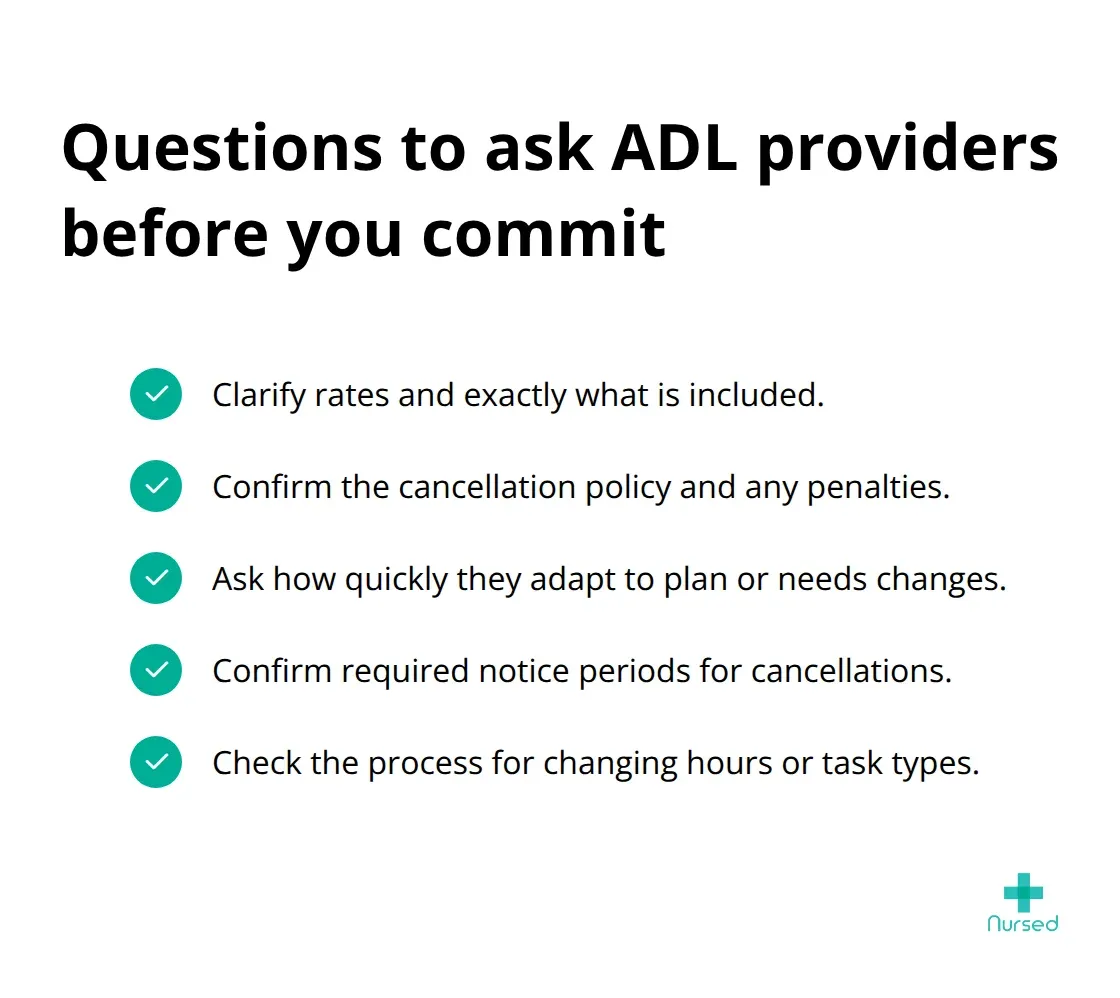
Request clarity on rates and what’s included. Confirm the cancellation policy in writing-what happens if you need to cancel a shift, how much notice is required, and are there penalties? Ask how they handle plan changes: if your needs shift and you require different hours or task types, can they adapt quickly or is there bureaucratic delay?
Invoicing and Evidence of Support
Find out their invoicing process and whether they provide detailed records showing which tasks were completed each session. At your plan reassessment, you’ll need evidence that your funded hours were genuinely used and that the support made a measurable difference to your independence. Detailed documentation protects you by showing exactly how your ADL funding supported your daily living goals. This record becomes invaluable when you meet with your plan manager or support coordinator to review what worked and what needs adjustment for your next plan period.
Wrapping Up
NDIS home care supports work best when you match the right provider to your specific daily living needs and goals. Quality support goes beyond task completion to build your independence over time, with a provider who listens to how you want to live, coordinates with your therapists, and adjusts their approach as your skills grow. They show up reliably, respect your preferences, and provide detailed records so you can track progress at your plan reassessment.
Start by reviewing your current NDIS plan to identify which daily tasks genuinely affect your independence, then contact providers who have experience supporting your disability type. Ask the hard questions about screening, coordination with therapists, cancellation policies, and invoicing before you commit. Request a trial period of four to six weeks so you can assess whether the match works in practice, paying attention to whether your worker builds your confidence or creates dependency.
Contact Nursed to discuss your needs with our team and find out how we can help you live more independently at home.