

Your home is where independence matters most. Small changes-like grab bars in the bathroom, better lighting in the kitchen, or ramps at your entryway-make a real difference in how safely and confidently you move through your space.
At Nursed, we’ve seen how the right home modification ideas transform daily life for people who want to stay active and self-reliant in their own homes. This guide walks you through practical upgrades across every room.
Bathroom Modifications for Safety and Accessibility
Installing Grab Bars and Handrails
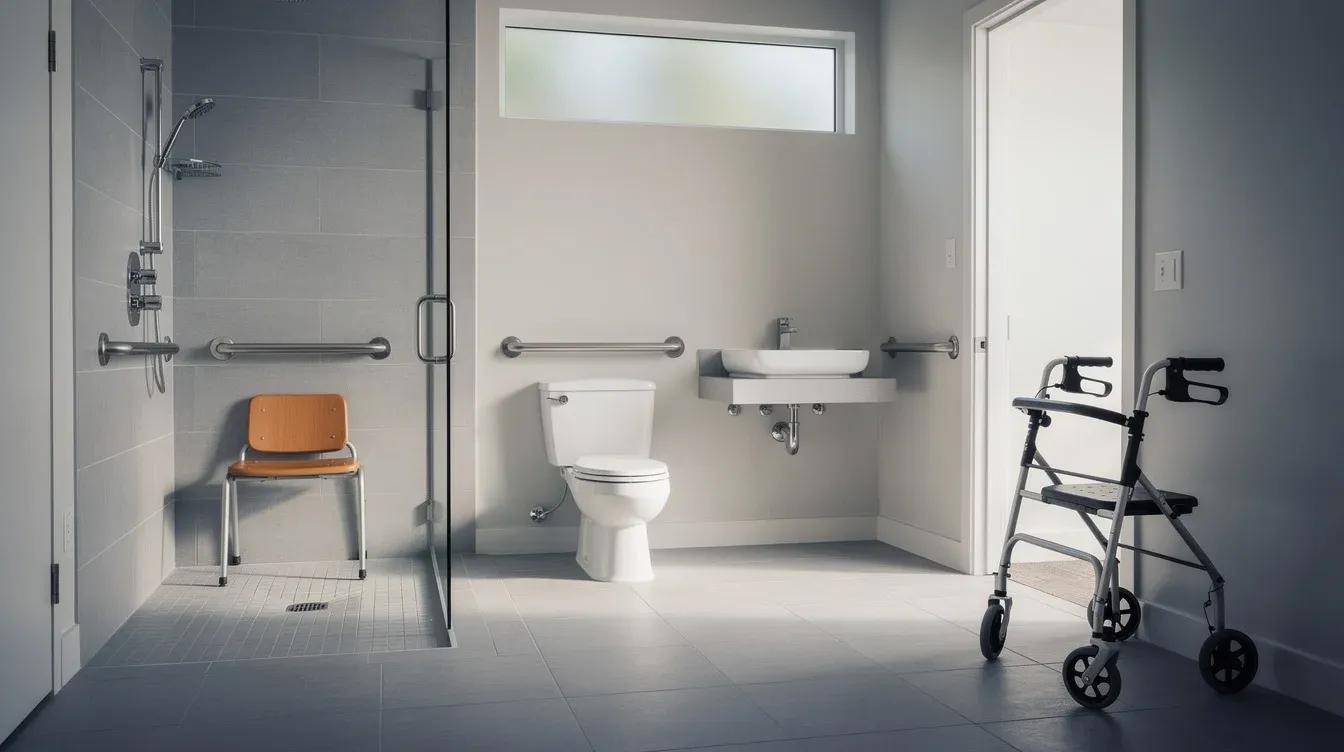
The bathroom is where falls happen most, and grab bars are your first line of defence. Installation matters as much as the bars themselves-they need to anchor into wall studs or secure with heavy-duty fasteners that handle your full body weight without shifting. Standard rails hold 110 kg, but bariatric rails are built to hold 200 kg to over 300 kg, and positioning them at consistent heights across the toilet, shower, and bathtub areas creates muscle memory for safe movement. Most people install horizontal bars at 85 centimetres above the floor near the toilet and vertical bars inside the shower enclosure.
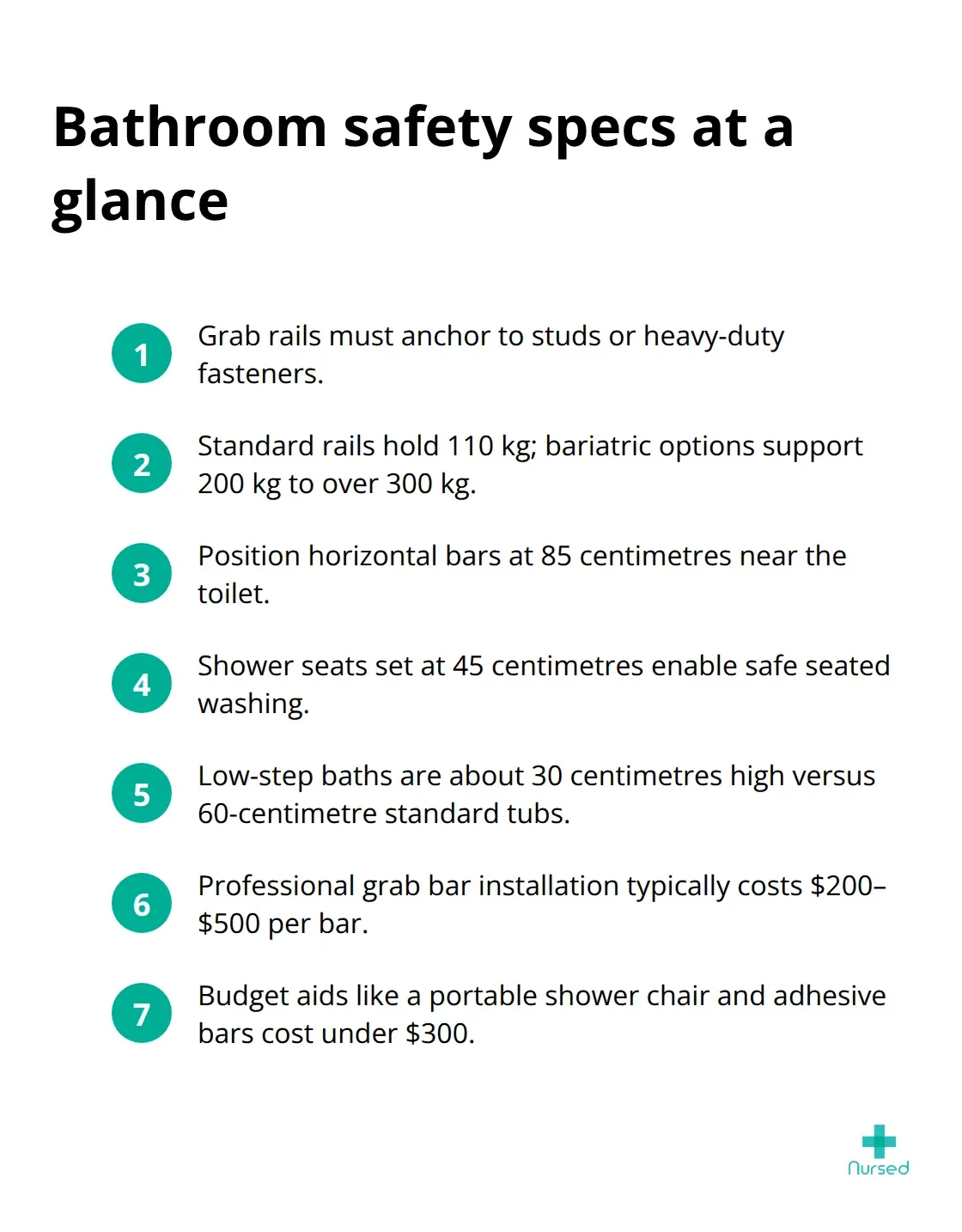
The cost runs between $200 and $500 per installation when done properly by a licensed plumber or electrician, which we recommend over DIY attempts because incorrect anchoring leaves you more vulnerable than having nothing at all.
Walk-In Showers and Low-Step Bathtubs
Walk-in showers with level entry eliminate the step-over barrier that causes most bathroom falls. Costs typically start around $20,000–$25,000 for a small bathroom with basic accessibility features, and can reach $40,000+ for premium options. The investment pays off because you avoid the awkward balancing act of stepping over a tub rim while wet. Inside the shower, a fixed seat at 45 centimetres high lets you shower seated or standing with support, and a hand-held showerhead mounted on a sliding rail gives you control without reaching. Low-step bathtubs sit only 30 centimetres high compared to standard 60-centimetre tubs, cutting the lift needed to get in and out by half. If a full bathroom renovation isn’t possible right now, a portable shower chair and adhesive-backed grab bars cost under $300 and work in any existing bathroom setup.
Raised Toilet Seats and Accessible Vanities
Raised toilet seats add 10 to 15 centimetres of height, dramatically reducing the strain on your knees and hips when sitting and standing. Combined with armrests on both sides, a raised toilet seat transforms toileting from a risky squat into a supported transfer. Installation takes minutes and costs $150 to $400 depending on whether you choose a basic seat or one with built-in grab rails. Accessible vanities with open knee space underneath let you approach the sink without your legs hitting cabinetry, and lowering the countertop to 75 centimetres instead of the standard 90 centimetres makes washing your hands and face easier without bending.
These modifications work together to create a bathroom where you manage personal care independently and safely. Your next step involves looking beyond the bathroom-the kitchen and bedroom present equally important opportunities to strengthen your daily independence.
Kitchen and Bedroom Upgrades for Daily Living
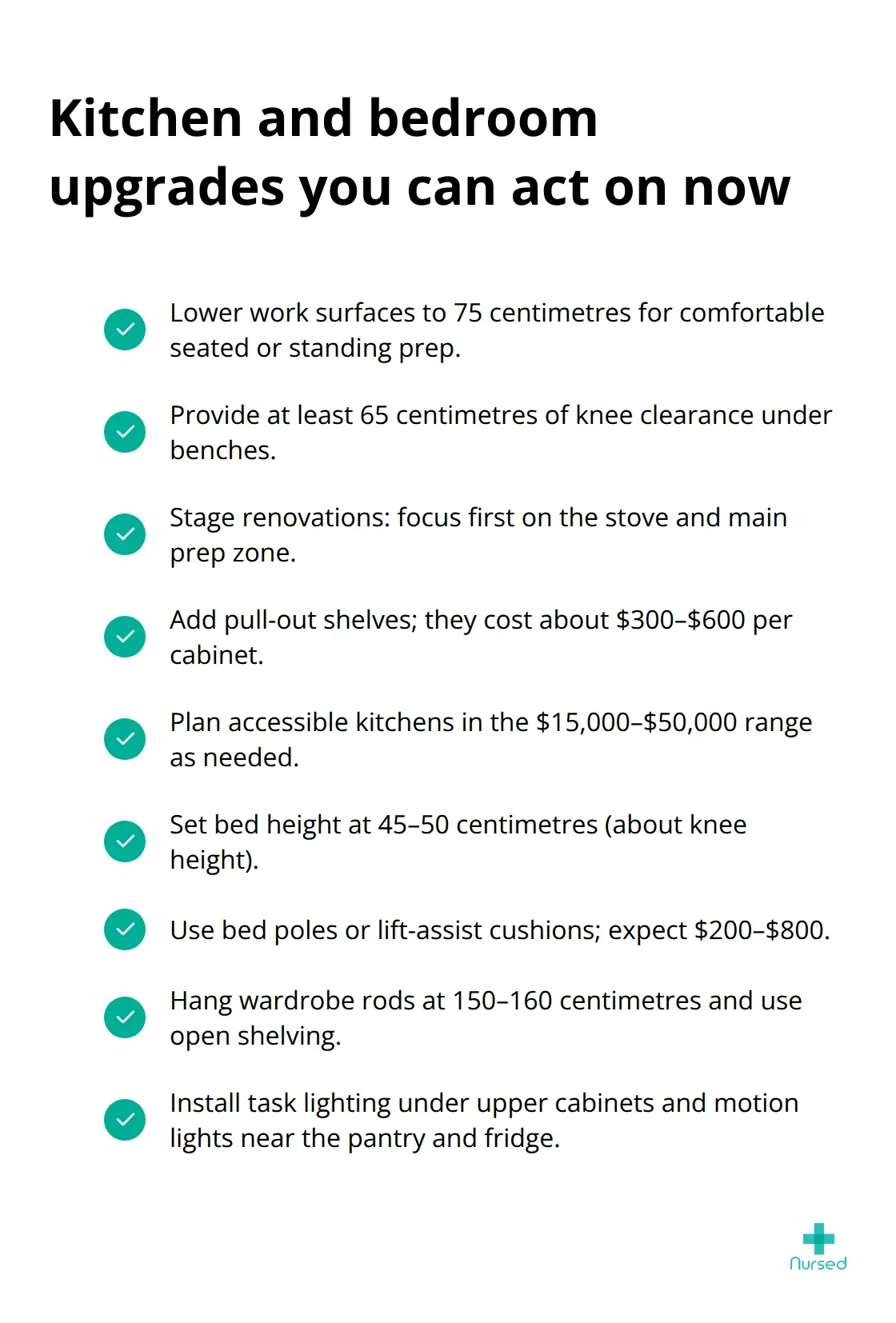
Your kitchen and bedroom are where daily routines happen, and small design changes make independence possible without constant help. A standard kitchen counter sits at 90 centimetres, which forces you to reach up or bend down depending on your height and mobility. Lowering work surfaces to 75 centimetres transforms food prep from a strain into something you can manage seated or standing comfortably.
Lowered Cabinets and Adjustable Countertops
Open space under the counter-at least 65 centimetres of knee clearance-lets you roll a wheelchair or walker close enough to work without awkward reaching. Accessible kitchens typically cost between $15,000 and $50,000 depending on how much you change, but you don’t need to renovate everything at once. Start with the countertop near your stove and prep area, then add pull-out shelves and lowered cabinets over time. Pull-out shelves cost around $300 to $600 per cabinet and let you access items without climbing or stretching into deep spaces.
Improved Lighting and Easy-to-Reach Storage
Lighting in the kitchen matters more than most people realise. Harsh shadows under overhead lights create trip hazards and make it hard to see what you’re chopping. Install task lighting under upper cabinets so light falls directly on your work surface, and add motion-activated lights near the pantry and fridge so you navigate without fumbling in the dark.
Accessible Wardrobes and Bed Height Adjustments
A bed that sits too low forces an awkward transfer; the ideal bed height is 45 to 50 centimetres from floor to mattress top, roughly knee height when you’re standing. Bed poles or lift-assist cushions reduce strain on your hips and knees during transfers, and they cost between $200 and $800. Your bedroom wardrobe should have hanging rods at 150 to 160 centimetres high instead of the standard 180 centimetres, and open shelving instead of deep cabinets means you see and reach everything without digging. These changes work quietly in the background-visitors won’t notice your bedroom looks different, but you’ll feel the difference every time you get dressed or lie down.
With your kitchen and bedroom now supporting independent daily living, your entryways and mobility pathways throughout the home need the same attention to keep you moving safely.
Entryways, Flooring, and Mobility Solutions
Your entryway and the pathways through your home determine whether you move independently or need help with every trip. A single step at your front door or a narrow hallway can trap you inside, and most people don’t realise how much a slippery bathroom floor or steep stairs limit what you can actually do. The good news is that fixing these problems costs far less than constant support, and the changes work immediately.
Ramps and Level Thresholds
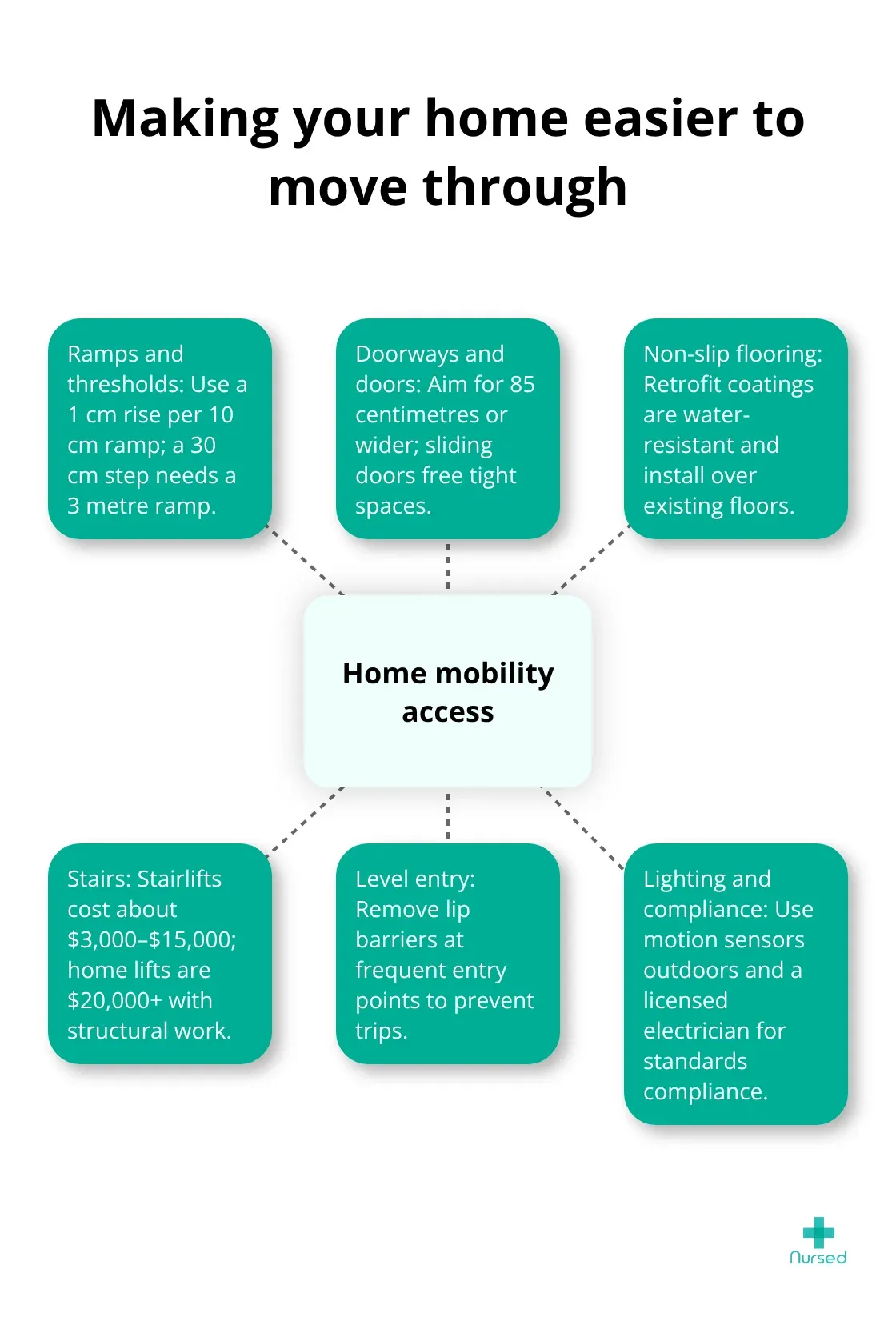
Ramps and level thresholds are non-negotiable if you use a walker or wheelchair. A standard exterior ramp needs a gradient of one centimetre of rise per ten centimetres of ramp length, which means a 30-centimetre step requires a three-metre ramp. Timber, rubber, and aluminium ramps are all available, with costs varying by material and length. Level-entry solutions remove the barrier that forces you to navigate an awkward threshold every time you leave home, and this matters especially if you live somewhere with multiple entry points or frequent visitors.
Doorway Width and Interior Access
Interior doorway widening typically costs $3,000 to $4,000 when no structural walls move, though removing walls for better flow pushes costs higher and affects flooring and tiling. Wide doorways at 85 centimetres or more let walkers and wheelchairs pass through without scraping walls or getting stuck, and this matters more than people think because a 75-centimetre doorway forces you sideways. Sliding doors free up space in tight areas like bathrooms and bedrooms because they don’t swing out into your path, and they’re worth the investment if you manage mobility aids in confined spaces.
Non-Slip Flooring Solutions
Non-slip flooring is where most people make their biggest mistake-they wait until after a fall to add it. Non-slip flooring solutions bathroom safety are water-resistant and easily replaceable, offering a cost-effective solution to mitigate slip hazards in frequently wet areas. The coating sits on top of existing floors, so you don’t need to rip anything out. This single upgrade transforms your bathroom from a hazard into a space where you move with confidence.
Stairlifts and Multi-Level Access
Stairlifts solve the problem of multi-level homes without forcing you to abandon upstairs bedrooms or living areas. Compact models fit tight staircases and cost between $3,000 and $15,000 depending on whether your stairs are straight or curved. Home elevators are the premium option for serious multi-level access but cost $20,000 and up, requiring structural work that straight stairlifts avoid. The real value comes from staying in your home instead moving to a single-level rental.
Outdoor Lighting and Professional Installation
Outdoor and garden lighting with motion sensors prevents falls around your property after dark, and this matters especially if you live somewhere with long evenings or frequent cloud cover. Professional installation by a licensed electrician ensures safety and compliance with Australian electrical standards, which DIY attempts often miss. Nursed, as a registered NDIS provider, works with you to identify which modifications unlock the most independence for your specific home layout and mobility needs, and helps navigate funding through the NDIS so cost doesn’t stop you from making changes that matter.
Final Thoughts
Home modification ideas work because they address the real barriers that stop you from moving independently. Grab bars in the bathroom, lowered countertops in the kitchen, ramps at your entryway, and non-slip flooring throughout your home transform your daily routine into something you can manage without constant help. These changes compound-a raised toilet seat helps, but combined with grab bars and better lighting, it transforms your entire bathroom experience, and when your bedroom bed height is also adjusted, the benefits multiply across your whole home.
Independence means doing what matters to you without waiting for help. When your bathroom is safe, your kitchen accessible, and your pathways clear, you reclaim time and energy for activities that actually matter. Start with the area causing you the most trouble right now-if bathroom falls worry you, install grab bars and non-slip flooring first, and small wins build momentum to tackle other spaces.
We at Nursed help you navigate home modifications that fit your specific needs and budget as a registered NDIS provider. Contact Nursed to explore how personalised support and tailored home modifications can strengthen your independence and quality of life at home.