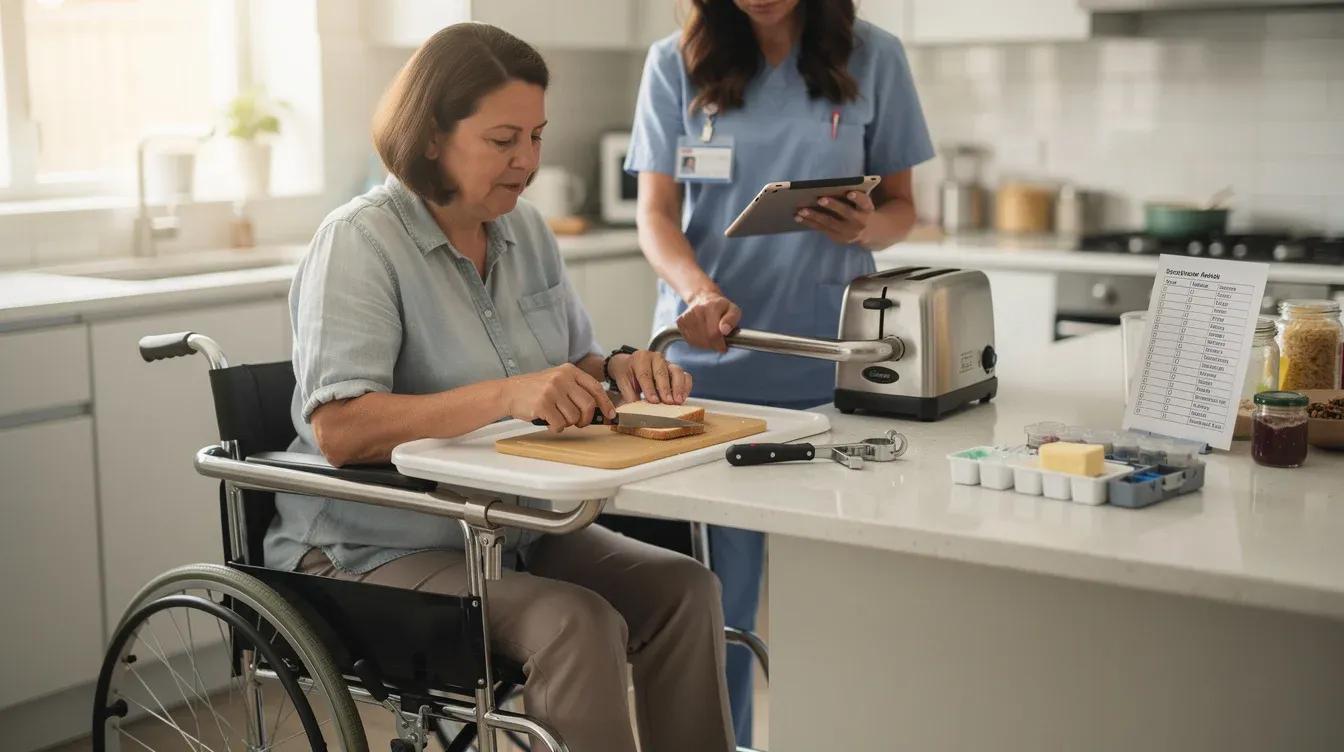


Independence matters. It’s about doing the things you want, when you want, without unnecessary barriers holding you back.
Core supports for daily living are designed to help you build exactly that. At Nursed, we’ve seen how the right assistance with personal care, meals, and household tasks transforms people’s lives-not by doing everything for them, but by helping them do more for themselves.
What Core Supports Actually Cover in Daily Life
Core Supports funding through the NDIS covers the support worker’s time to help you with everyday tasks, not the cost of goods or services themselves. This distinction matters because it shapes what you can actually access.
Personal Care and Daily Tasks
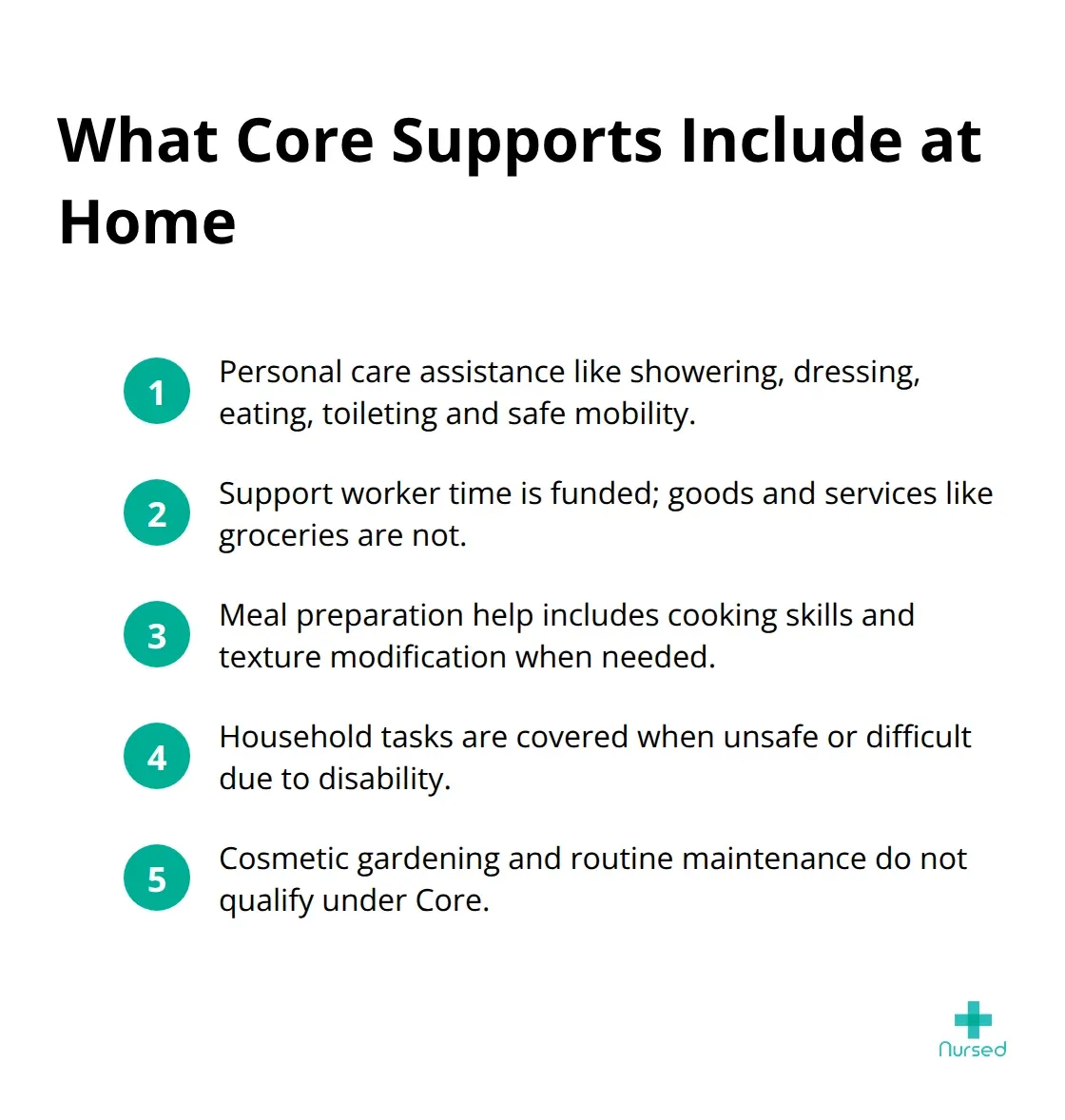
Personal care assistance includes showering, dressing, eating, using the toilet and moving around safely, along with assistance transferring between locations at home. The NDIS Price Guide for 2026-27 sets standard weekday daytime rates at around $79.60 per hour for one-to-one support, with higher rates for evenings and weekends. Your Core budget pays for the skilled person who helps you maintain hygiene and manage personal routines, enabling you to stay safe and independent at home.
Food Preparation and Household Support
Meal preparation support covers a support worker who teaches you to cook safely, helps with food preparation, or assists with modified textures if you have swallowing difficulties. The actual groceries remain your responsibility, not NDIS-funded. Household tasks like cleaning, laundry, and basic yard work qualify when your disability makes these tasks unsafe or genuinely difficult to manage alone. Cosmetic gardening or routine maintenance that anyone without disability would handle doesn’t qualify, but keeping your home accessible and safe absolutely does.
Making Your Core Budget Work Harder
The flexibility within Core Supports allows you to move funding between Assistance with Daily Life, Consumables, and Assistance with Social and Community Participation without a formal plan review. If you need more support hours one quarter for recovery after surgery or a health change, you can reallocate accordingly. Track your spending monthly through your NDIS plan statements or the NDIA app to stay within limits and catch overspending early.
Many participants front-load hours in the first months, then run short later in the year when rates jump for weekends and public holidays. Planning around these higher-rate periods helps stretch your budget further. Underspending carries no benefit; unused funds don’t roll over, and consistent underspending can trigger future budget reductions. If you’re not using your allocation, discuss adding supports with your plan manager to meet your actual goals rather than letting money disappear.
The real power of Core Supports emerges when you understand how to build independence through consistent, tailored assistance-which brings us to how the right support structure actually develops your life skills and self-reliance.
Building Independence Through Structured Support
How Support Workers Develop Your Skills
Independence doesn’t happen by accident. It develops when support workers intentionally build skills through repetition, clear feedback, and gradually reducing assistance as confidence grows. Participants who progress fastest are those whose support workers treat each session as a teaching opportunity, not just a task completion.
When a support worker helps you prepare a meal, they simultaneously teach food safety, portion control, and decision-making. When they assist with personal hygiene, they reinforce routines that become automatic over time. The NDIS Price Guide 2026-27 rates standard weekday daytime support at around $79.60 per hour, which means every hour counts toward building capability.
Participants who document what they’ve learned-whether it’s managing medication timing, operating household appliances, or navigating public transport-create a record of progress that shapes future support needs. Most participants underestimate how much skill transfer happens through Improved Daily Living Skills supports including assessment, training, or therapy. The key is working with a support worker who understands your specific goals and adjusts the level of hands-on help as your confidence increases.
Some tasks you’ll master completely; others you’ll always need assistance with, and that’s entirely reasonable. This distinction matters because it prevents support from becoming either too controlling or too withdrawn.
Why Consistent Routines Build Real Independence
Routines are where real independence takes root. When you shower at the same time each morning, prepare breakfast using the same sequence, or complete household tasks on predictable days, your brain requires less cognitive effort to execute these activities safely. Routine Reduces Reliance on support when a person has a well-established daily routine, needing less prompting, fewer reminders, and less hands-on assistance.
Your Core budget allows flexibility to adjust hours between quarters, but a stable weekly routine maximises the independence-building effect of each support hour. If your plan includes 15 hours per week of assistance with daily living, structure those hours around consistent times and tasks rather than scattering them randomly. This approach produces measurable improvements in self-reliance.
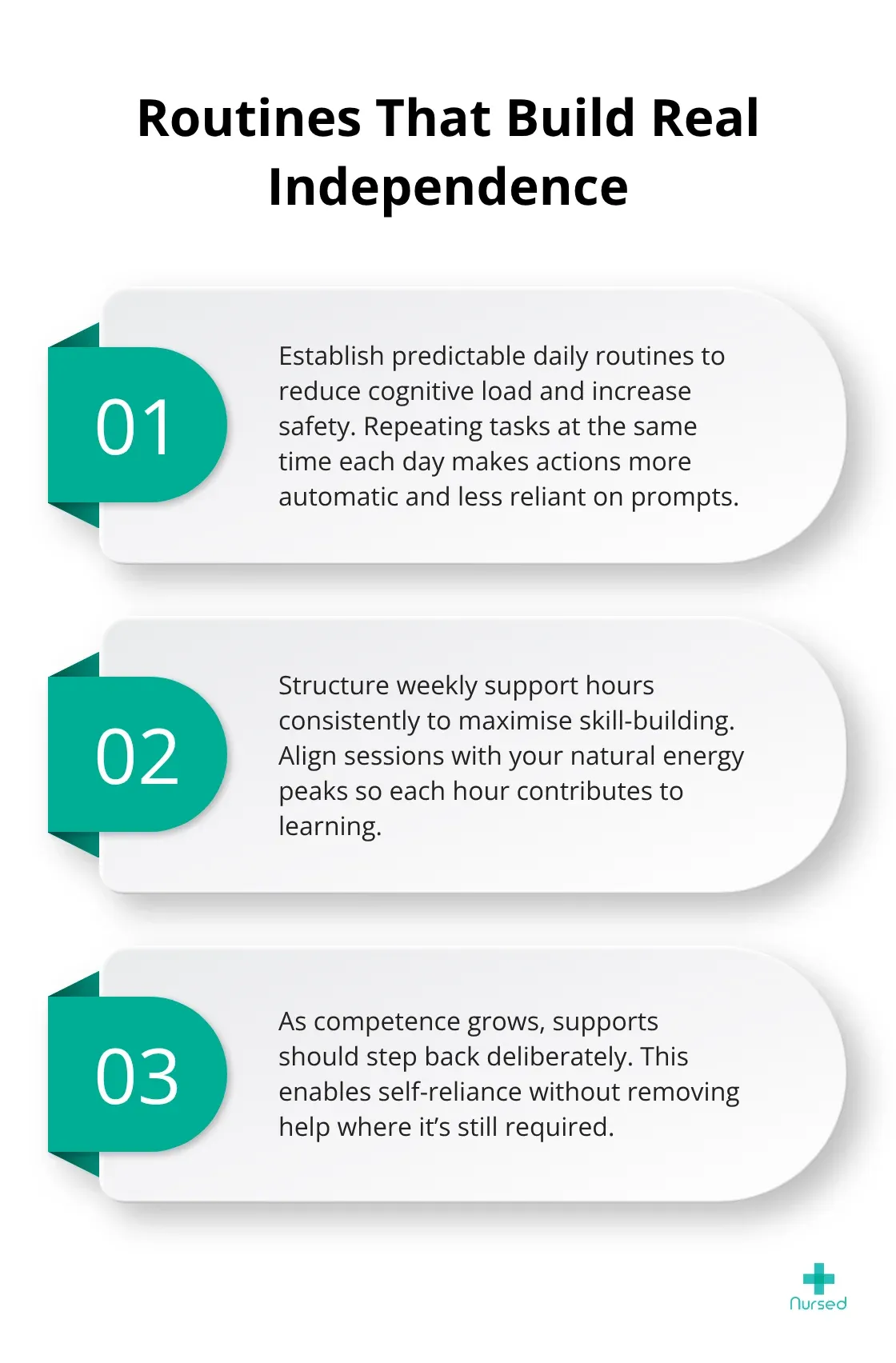
Participants working toward specific independence goals-such as managing morning routines alone or preparing simple meals without prompting-benefit from support workers who actively step back once competence is demonstrated. This isn’t neglect; it’s deliberate skill-building.
Aligning Support With Your Actual Goals
Tailoring your support to genuine goals rather than generic assistance matters enormously. If your goal is returning to part-time work, your support should prioritise energy management and morning preparation routines over activities you don’t actually need help with. If your goal is community participation, your support should include practising public transport navigation or building confidence in social settings, not just household tasks.
The NDIA framework emphasises reasonable and necessary supports, which means your plan should reflect what actually matters to your independence, not what a provider finds easiest to deliver. This support structure determines whether you move toward greater self-reliance or remain dependent on assistance for tasks you could eventually manage yourself.
The right support worker recognises this distinction and works with you to identify which tasks deserve intensive skill-building focus and which require ongoing hands-on help. This targeted approach transforms your Core budget into a genuine independence-building tool rather than a simple service delivery mechanism. Understanding how to assess and select the right support worker-one who shares your vision for independence-becomes the next critical step in maximising what your Core Supports can achieve.
What to Expect From Nursed’s Core Supports
Personalised Assessment and Planning
A detailed assessment maps your actual daily living needs against your independence goals. This process isn’t a generic checklist; it involves understanding which tasks matter most to you, where you struggle most, and what genuine independence looks like in your situation. The NDIS Price Guide 2026-27 standard weekday daytime rates at $79.60 per hour means assessment quality directly affects how effectively your budget translates into real progress.
The assessment identifies gaps between your current capability and your goals, then designs a support structure that closes those gaps systematically. Many participants receive support that simply maintains their current state rather than building toward greater self-reliance. A proper assessment reverses this by establishing baseline competency in key daily tasks, then creating measurable milestones for skill development across the weeks and months ahead.
Flexible Scheduling to Fit Your Lifestyle
Your support hours matter far less than how those hours are structured across your week. Effective scheduling places support around your natural routines and energy patterns rather than fitting you into convenient provider slots. If you’re sharpest in the morning, your skill-building support for meal preparation or personal care happens then, not at 3 pm when cognitive fatigue reduces learning capacity.
If you have work or study commitments, your support schedule should build around those priorities, ensuring your Core budget directly supports your actual life direction. Tracking monthly spending through your NDIS plan statements confirms you’re tracking appropriately for the year ahead, preventing the common mistake of exhausting your budget in the first quarter then facing insufficient funds for later needs. Flexible scheduling also means adjusting support intensity when circumstances change-recovering from illness, managing a temporary health setback, or increasing community participation-without waiting for formal plan reviews.
Professional Support Workers Who Understand Your Needs
The individual who delivers your support matters more than their credentials alone. The right match considers personality fit, communication style, and genuine commitment to your independence goals, not just availability. A support worker who treats each session as task completion creates dependency; one who actively steps back as your confidence grows builds genuine independence.
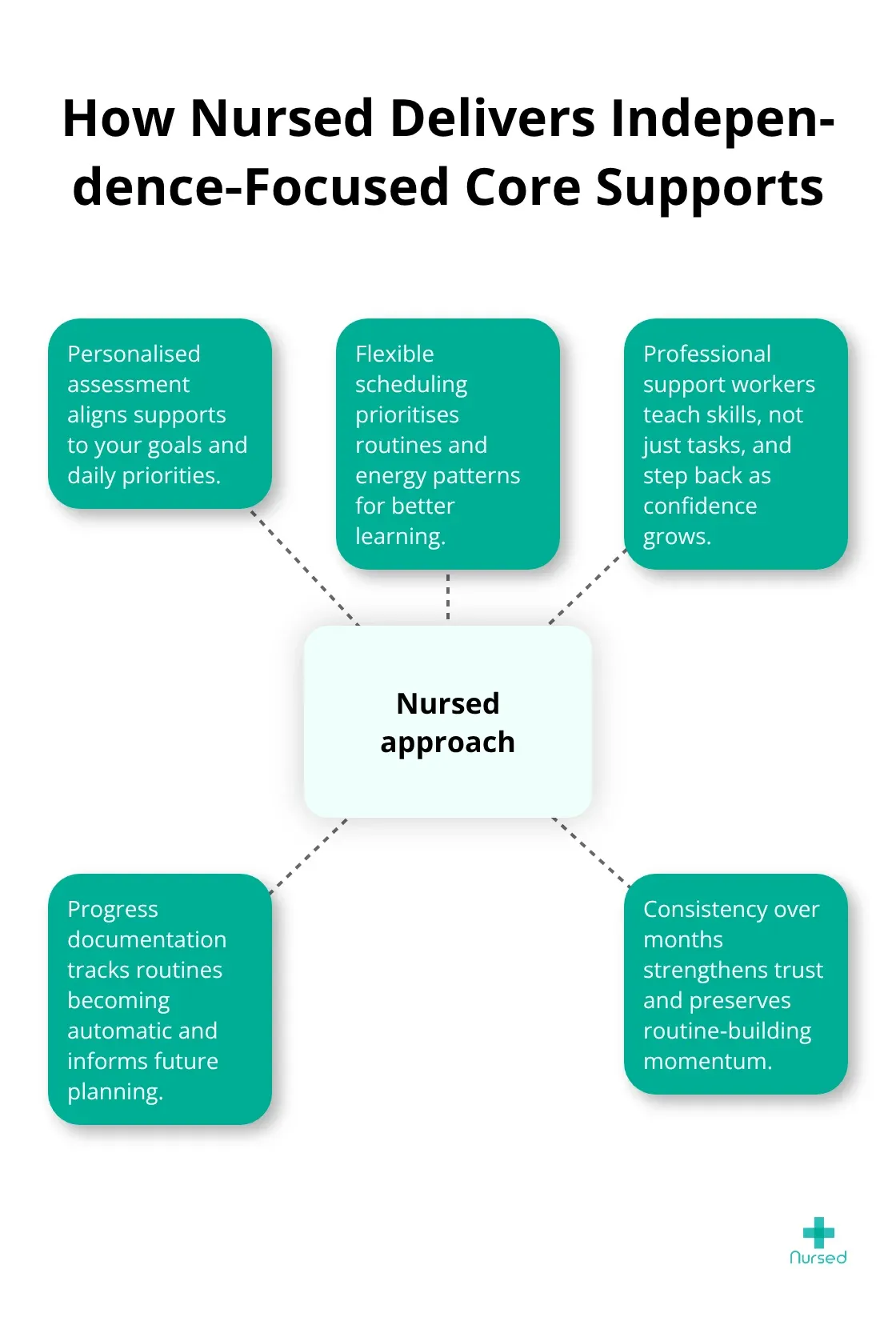
Support workers trained in skill-building techniques understand how to teach rather than simply assist. They document progress in your daily tasks, track which routines have become automatic, and identify which areas need continued hands-on support. This documentation shapes future planning conversations and demonstrates progress to your plan manager or support coordinator. Consistency and reliability matter enormously, knowing that changing support workers frequently disrupts the routine-building that independence requires. When you work with the same skilled person over months, they understand your preferences, your triggers, and the specific adjustments that help you succeed.
Final Thoughts
Core supports for daily living form the foundation of genuine independence, but only when they’re structured around your actual goals and delivered by people who understand what independence means to you. The difference between support that maintains dependency and support that builds capability lies entirely in how those hours are used and who delivers them. A support worker who treats each session as a teaching opportunity, who documents your progress, and who deliberately steps back as your confidence grows creates measurable change.
We at Nursed understand this distinction because we’ve built our approach around personalised support that prioritises your goals over convenience. As a registered NDIS provider, we work with you to identify which daily living tasks deserve intensive skill-building focus and which require ongoing hands-on assistance. Our support workers recognise when you’re ready to manage something independently and when you need continued guidance.
Contact us to discuss your current situation, your independence goals, and how core supports for daily living can work specifically for you. We’ll conduct a detailed assessment, design a support structure that actually moves you forward, and match you with a support worker who understands your needs and shares your vision for independence. Visit Nursed to learn how personalised daily living support can transform your independence and quality of life.