


Community participation isn’t a luxury-it’s a fundamental part of living a fulfilling life. Yet many NDIS participants struggle to find their place in local activities, groups, and services that matter to them.
An NDIS community participation plan gives you a structured way to identify what you want to do, overcome the barriers stopping you, and actually get involved. At Nursed, we’ve seen how the right plan transforms isolation into genuine connection.
What Is an NDIS Community Participation Plan
An NDIS community participation plan operates differently from general support services. It allocates funding across two distinct categories within your plan: Core Supports under Social and Community Participation, and Capacity Building funds that develop long-term independence skills. Core Supports pay for the direct assistance you need to attend activities-a support worker accompanies you to a local sports club, helps with transport, or provides one-on-one guidance during outings. Capacity Building covers the skill-development side, funding things like transit coaching to teach you route planning and digital fare payments, or tuition for workshops in cooking, budgeting, or digital photography. Community participation funding differs from other NDIS supports because it focuses on building real-world connections and skills, not just managing daily care. While your daily living supports might address personal care or household tasks, community participation funding exists specifically to connect you with your local area, people, and activities that matter to you.
What the NDIS Funds and What It Doesn’t
The NDIS Price Guide 2026 clarifies that funding decisions follow an individualised framework rather than a fixed price, which means your allocation depends entirely on how each activity connects to your plan goals. This distinction causes confusion for many people. The NDIS does not fund entry tickets to events, gym memberships, meal costs during outings, or standard craft materials-these remain your responsibility. What it does fund is the support worker’s time to help you get there, the coaching to build skills, and the tuition for courses. If you want to join an adaptive swimming program, Core funding covers your support worker’s wages during the training session, but you pay the pool entry fee yourself.
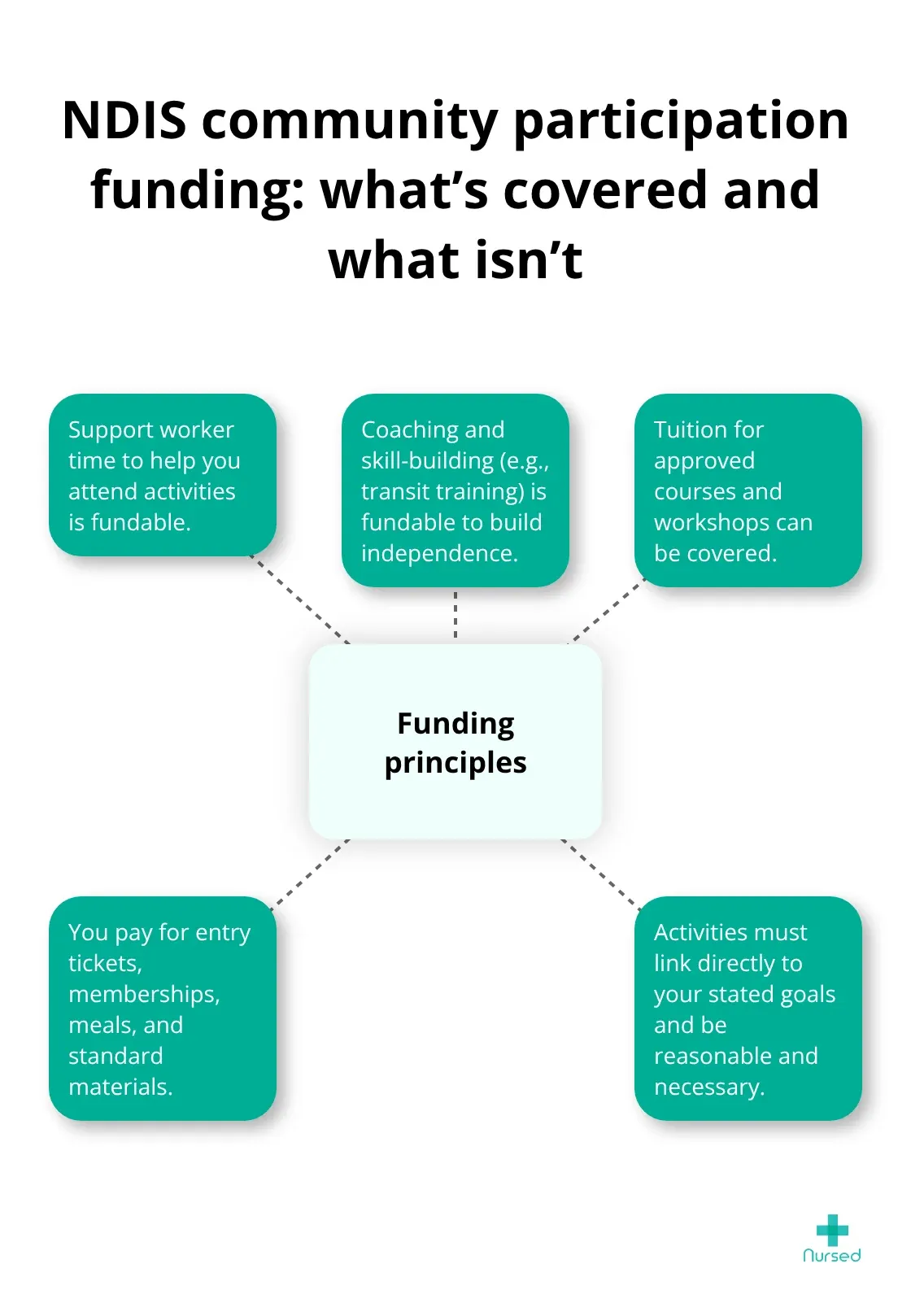
Similarly, if you take a pottery class funded under Capacity Building, the tuition is covered but you purchase your own materials. Transport illustrates how costs split clearly: a support worker’s time to coach you on public transit is funded, but your daily bus or train fares are out-of-pocket. To justify any activity in your plan review, you must link it directly to a goal-whether that’s expanding your social networks, building independence, developing employment skills, or improving daily living abilities. Activities must be reasonable and necessary supports aligned with your disability and your aspirations, not simply things you’d like to do.
Assessing Your Starting Point
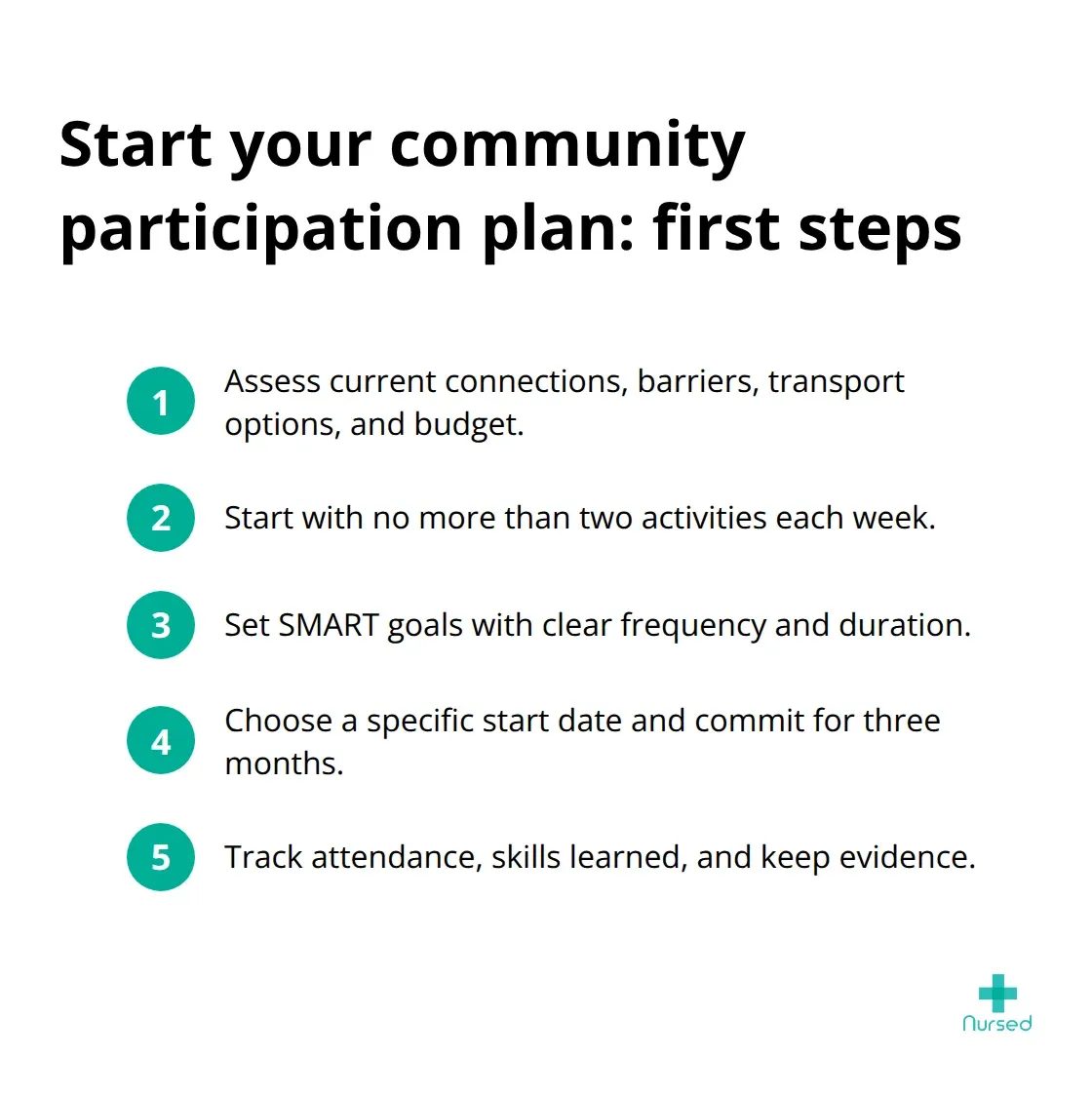
An effective community participation plan starts with honest assessment of where you are now: your current social connections, what accessibility barriers you face, your transport options, and your realistic budget. Many participants select too many activities at once, then become overwhelmed. Start small-perhaps two activities per week that genuinely interest you-then gradually add more as you build confidence and track progress. Set SMART goals rather than vague aspirations: instead of saying you want to be more social, commit to attending a local group twice weekly for three months. Document everything as you progress-photos, certificates, attendance records, and notes on skills learned-because this evidence becomes essential when you discuss plan reviews with your coordinator.
The Role of Your Support Worker and Local Resources
The relationship with your support worker matters enormously. A matched, passionate support worker who understands your strengths and preferences transforms an activity from something you tolerate into something genuinely meaningful. Work with your Local Area Coordinator to identify what’s actually available in your area. Many regions have adaptive sports groups, art classes, volunteer opportunities, and skill-building workshops specifically designed for people with disabilities. If you live in a remote area, tailored support services improve accessibility to local opportunities and help you connect with what matters most. The goal isn’t activity for activity’s sake-it’s building real pathways to friendships, employment prospects, greater independence, and a stronger sense of belonging in your community. With this foundation in place, you’re ready to move forward and identify the specific goals and personal interests that will shape your community participation strategy.
Building Your Community Participation Strategy
Identify What Actually Matters to You
Your goals determine everything about your plan. Before you contact a Local Area Coordinator or commit to any activities, spend time identifying what actually matters to you rather than what you think should matter. Many participants fail because they chase activities that sound impressive on paper but bore them within weeks. If you hate team sports, joining an adaptive football club wastes both your funding and your support worker’s time. Instead, ask yourself what you enjoyed before barriers appeared, what you’ve always wanted to try, or what skills would genuinely improve your life. These answers become your foundation.
Write down three to five specific activities, not vague goals. Rather than saying you want to be more social, name the actual activity: a photography group, a cooking class, volunteer work at a community garden, or digital skills training. This specificity matters because when you sit down with your coordinator, you’ll have concrete examples to discuss and link to your plan goals. If independence matters to you, transit training makes sense because it directly builds that skill. If employment is your focus, volunteer work at a local charity or a business skills course creates real pathways forward.
Search Your Local Area Actively
Finding what exists in your area requires active searching, not passive waiting. Search your local area actively by contacting local sports organisations and clubs to inquire about their adaptive sports programs. Many regions offer adaptive swimming programs, art classes, sports clubs, and skill workshops designed for people with disabilities, but they’re not always advertised loudly. Check local council websites, community centres, and volunteer organisations directly. If you live outside major cities, accessibility improves dramatically when you work with a support provider who knows the area and has existing relationships with local services.
Create a Realistic Timeline and Track Progress
Once you’ve identified activities that genuinely interest you, create a realistic timeline. Start with one or two activities per week maximum, not five. This approach lets you build confidence gradually and gives your support worker time to understand what works best for you. Set a specific start date rather than saying you’ll start sometime soon, and commit to at least three months before deciding whether something fits.
Track your attendance and document what happens: skills you learned, people you met, confidence changes. This evidence becomes essential for your plan review and shows your coordinator exactly what’s working. Most importantly, your timeline should account for real life. If you work part-time, don’t schedule activities during those hours. If you tire easily, don’t pack activities into consecutive days. A realistic plan you actually follow beats an ambitious plan you abandon within a month.
Align Activities with Your Disability Support Needs
Your support worker relationship matters enormously. A matched, passionate support worker who understands your strengths and preferences transforms an activity from something you tolerate into something genuinely meaningful. Work with your Local Area Coordinator to identify what’s actually available in your area and how disability-specific supports can help you participate. The goal isn’t activity for activity’s sake-it’s building real pathways to friendships, employment prospects, greater independence, and a stronger sense of belonging in your community.
With your goals identified, your local opportunities mapped, and your realistic timeline in place, you’re ready to address the barriers that often stop people from following through. The next section tackles the practical obstacles you’ll face and how to overcome them.
Overcoming Barriers to Community Participation
Transport: The Biggest Obstacle and How to Solve It
Transport remains the single biggest barrier preventing NDIS participants from joining community activities. Many people assume they must solve transport independently, but the NDIS Price Guide 2026 clarifies that support worker time for transport is a fundable cost. If your plan includes community participation goals, you can fund a support worker to accompany you to activities and help with navigation. The NDIS also covers transit coaching under Capacity Building, which teaches route planning, digital fare payments, and problem-solving for emergencies. This coaching builds real independence rather than creating dependency.
Start with one-on-one transit training focused on a single route you’ll use repeatedly, then gradually expand to other routes as confidence grows. Many participants fear public transport because they’ve never practised it with proper support, not because they’re incapable.
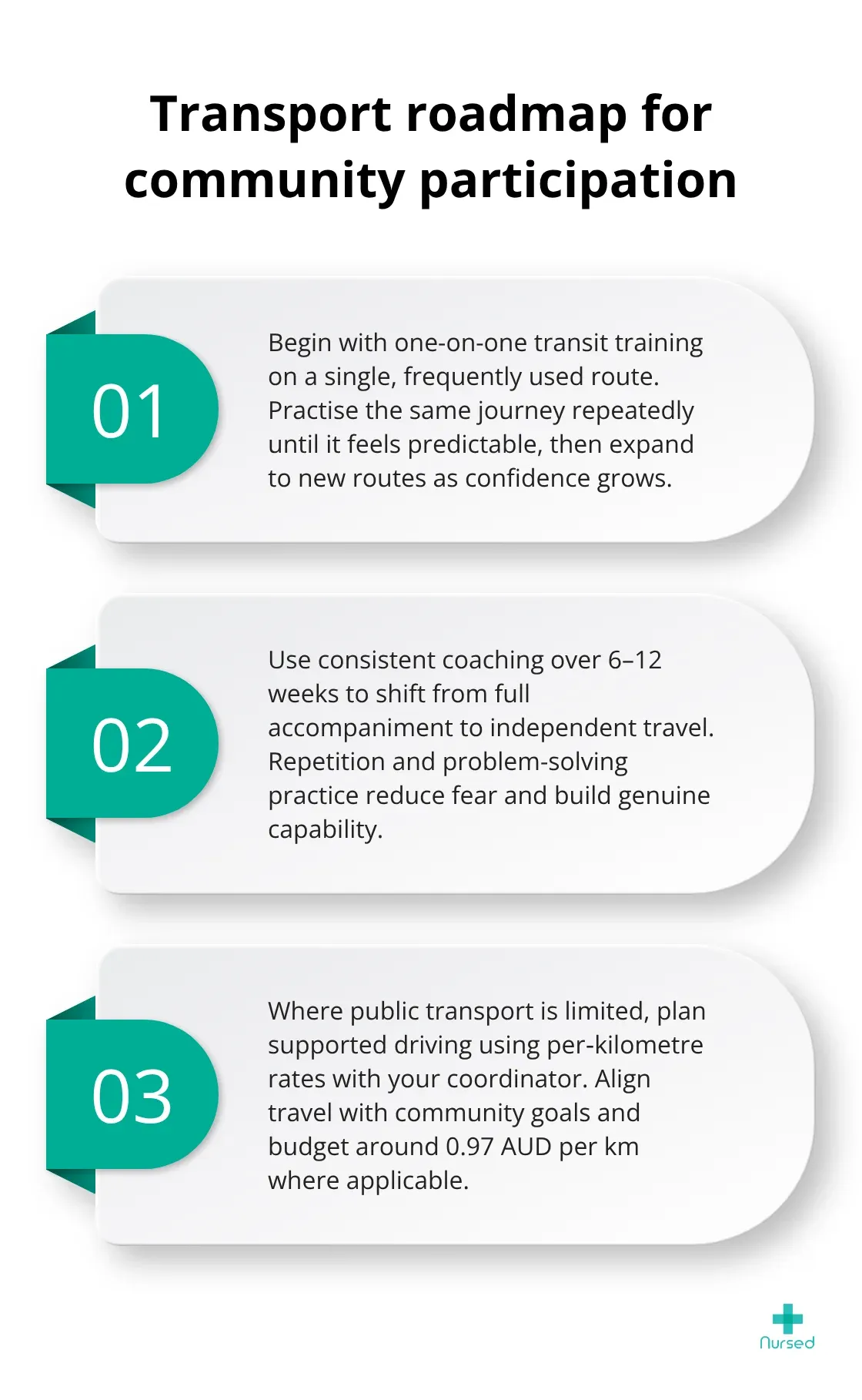
After six to twelve weeks of consistent coaching on the same route, most people move from needing full accompaniment to managing independently. Document this progress carefully because it demonstrates genuine skill development during plan reviews. If your area lacks reliable public transport, discuss per-kilometre rates with your coordinator-the NDIS currently recognises around 0.97 AUD per kilometre for transport to funded activities, which can cover support worker travel costs when driving you to local services.
Separating What the NDIS Funds from What You Pay
Cost confusion derails many participation plans before they start. You must separate what the NDIS funds from what you pay. Your support worker’s time is funded. The activity tuition or coaching is funded. Your entry ticket, gym membership, meal costs, and craft supplies are not. This split feels unfair, but it reflects the NDIS principle that funding supports your participation, not the activity itself.
Budget realistically by listing every activity you want to try, then calculate true monthly costs including tickets, materials, and meals. Many participants discover they can afford two quality activities monthly rather than five rushed ones. This approach prevents overspending and ensures you actually enjoy what you’ve committed to rather than abandoning activities due to financial stress.
Building Confidence Through Graduated Social Exposure
Social anxiety and confidence barriers require a graduated approach, not avoidance. Start with one-on-one activities where you control the social environment completely, then move to small group settings with your support worker present, then finally to larger community settings. This progression takes months, not weeks. Your support worker should actively participate in early sessions, then gradually step back as your confidence grows.
If anxiety spikes during an activity, pause rather than forcing through-taking a two-week break and restarting is far better than abandoning the activity entirely. Track confidence changes alongside attendance because measurable improvements in comfort levels matter during plan reviews and demonstrate why ongoing funding is reasonable and necessary. Many participants underestimate how much their confidence shifts over time when they have consistent, supportive accompaniment to activities they genuinely care about.
Final Thoughts
An NDIS community participation plan transforms isolation into genuine connection by building real skills, developing meaningful relationships, and creating pathways to independence that wouldn’t exist otherwise. Participants who commit to structured community participation report stronger social networks, improved physical health, increased confidence, and measurably better quality of life. The evidence shows that regular participation fundamentally changes how people see themselves and their role in their community.
Review your current NDIS plan and check your allocations in Core Category 04 for direct support hours and Capacity Building Category 09 for skill development. Identify two or three activities that genuinely interest you, then contact your Local Area Coordinator to map what’s available locally. Work with a support provider to pair yourself with a dedicated support worker who understands your goals and preferences.
We at Nursed empower individuals with disabilities to thrive at home and in their community through personalised care and tailored support that prioritises independence and personal growth. Whether you need help planning your NDIS community participation strategy, building confidence through graduated social exposure, or managing transport to activities, our team works alongside you to turn your goals into reality. Contact Nursed today to start your community participation journey.