


The NDIS landscape is shifting, and support coordinators need to stay ahead of these changes. At Nursed, we’ve created this support coordinators guide to help you understand what’s different and why it matters for your participants.
Your role is more important than ever as policies evolve and new requirements take effect. This guide walks you through the practical steps to adapt your approach and keep your participants supported through the transition.
What’s Actually Changed in the NDIS Framework
The NDIS has introduced several concrete amendments that affect how support coordinators operate day-to-day. The most significant shift involves stricter documentation requirements around what qualifies as reasonable and necessary support. The NDIA now requires coordinators to provide detailed justification for every support category included in participant plans, moving away from the more flexible approach of previous years. You’ll need to document the participant’s specific goals, their current functional capacity, and exactly how each support item addresses their disability-related needs.
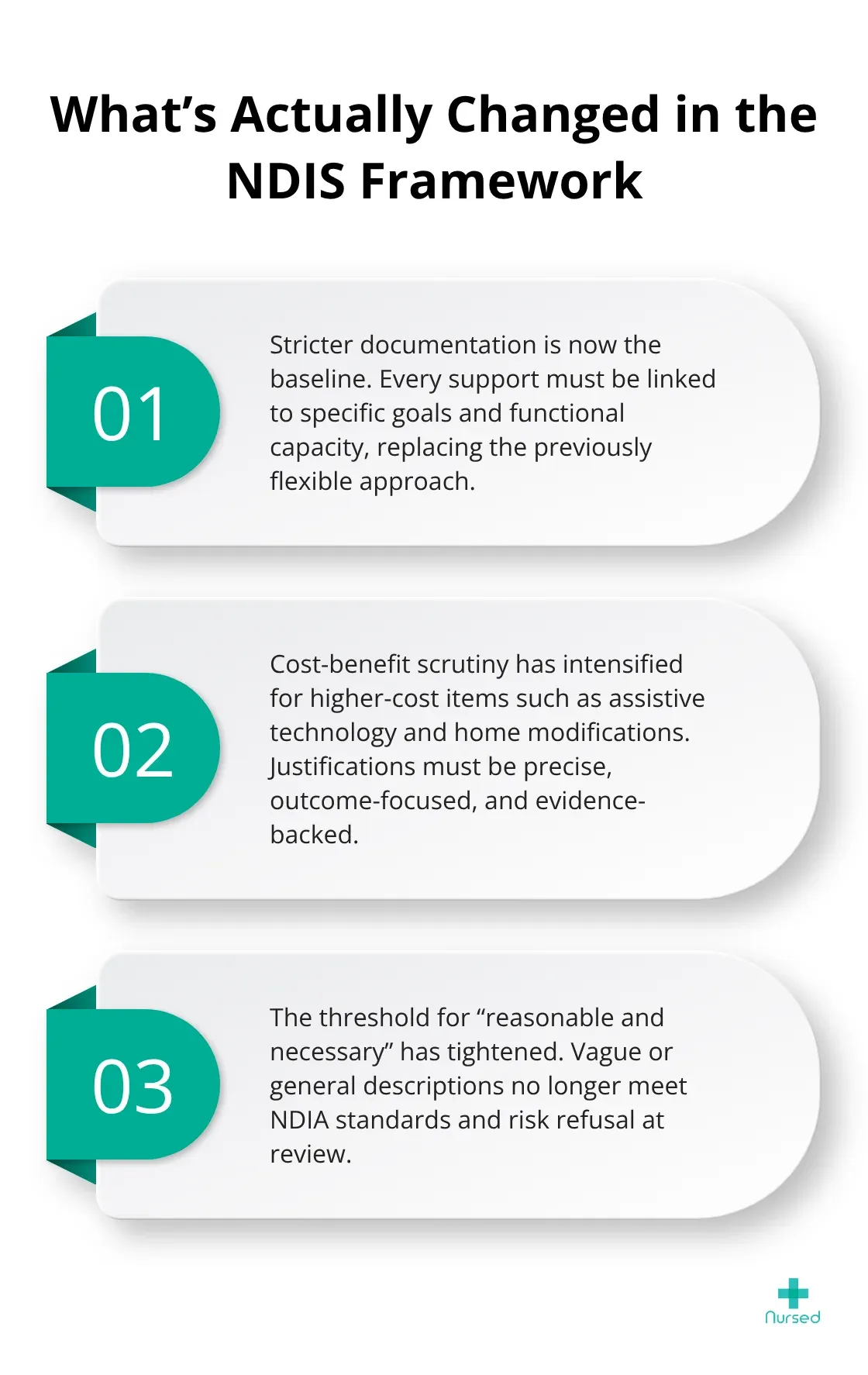
The threshold for what counts as reasonable and necessary has tightened considerably, and vague descriptions no longer pass NDIA scrutiny.
Budget Adjustments and New Assessment Standards
Participant budgets have shifted as a result, with many experiencing reductions in certain areas like informal support funding or capacity building activities that previously received broader interpretation. The NDIA applies more rigorous cost-benefit analysis before approving assistive technology and home modifications, which typically represent expensive items. You’ll see these changes reflected across participant plans, particularly in areas where previous coordinators used broader language to justify support categories. The new framework demands specificity at every stage, from initial plan development through to annual reviews.
Plan Review Cycles and Timeline Pressures
Plan review cycles have become more structured and less flexible than before. The NDIA now conducts more frequent desktop reviews of existing plans, examining whether current support levels still align with updated guidelines. You should prepare participants for potential plan variations at each review point rather than assuming stability. Documentation from allied health professionals and medical practitioners carries significantly more weight in justifying continued or increased funding, so you’ll benefit from building strong relationships with these practitioners. The NDIA has also introduced clearer timelines for plan amendment requests, typically requiring decisions within 28 days, which compresses your coordination window considerably.
Navigating Budget Reductions with Participants
Many participants will experience plan adjustments that feel restrictive, and your communication approach here matters significantly. Rather than viewing the new requirements as barriers, frame them as opportunities to redirect funding toward supports that demonstrably improve outcomes. If a participant’s budget decreases in one area, work with them to identify alternative approaches that still address their goals but fit within the new guidelines. Participants often benefit from understanding the specific reasoning behind changes rather than receiving vague explanations about policy updates. You should schedule dedicated conversations before plan reviews happen so participants aren’t surprised by adjustments.
Documentation as Your Protection
You must maintain detailed records of all participant requests, your recommendations, and the NDIA’s responses, as this documentation becomes valuable if participants want to appeal plan decisions or seek clarification on funding rationale. These records also protect you professionally when decisions become contested. The specificity you bring to your coordination work-capturing functional limitations with concrete evidence rather than general statements about disability impact-directly influences how the NDIA assesses participant needs. As these new requirements take hold, your ability to manage participant expectations and coordinate effectively with providers becomes the foundation for successful plan implementation.
Support Coordinator Responsibilities Under New Guidelines
Document Every Decision with Precision
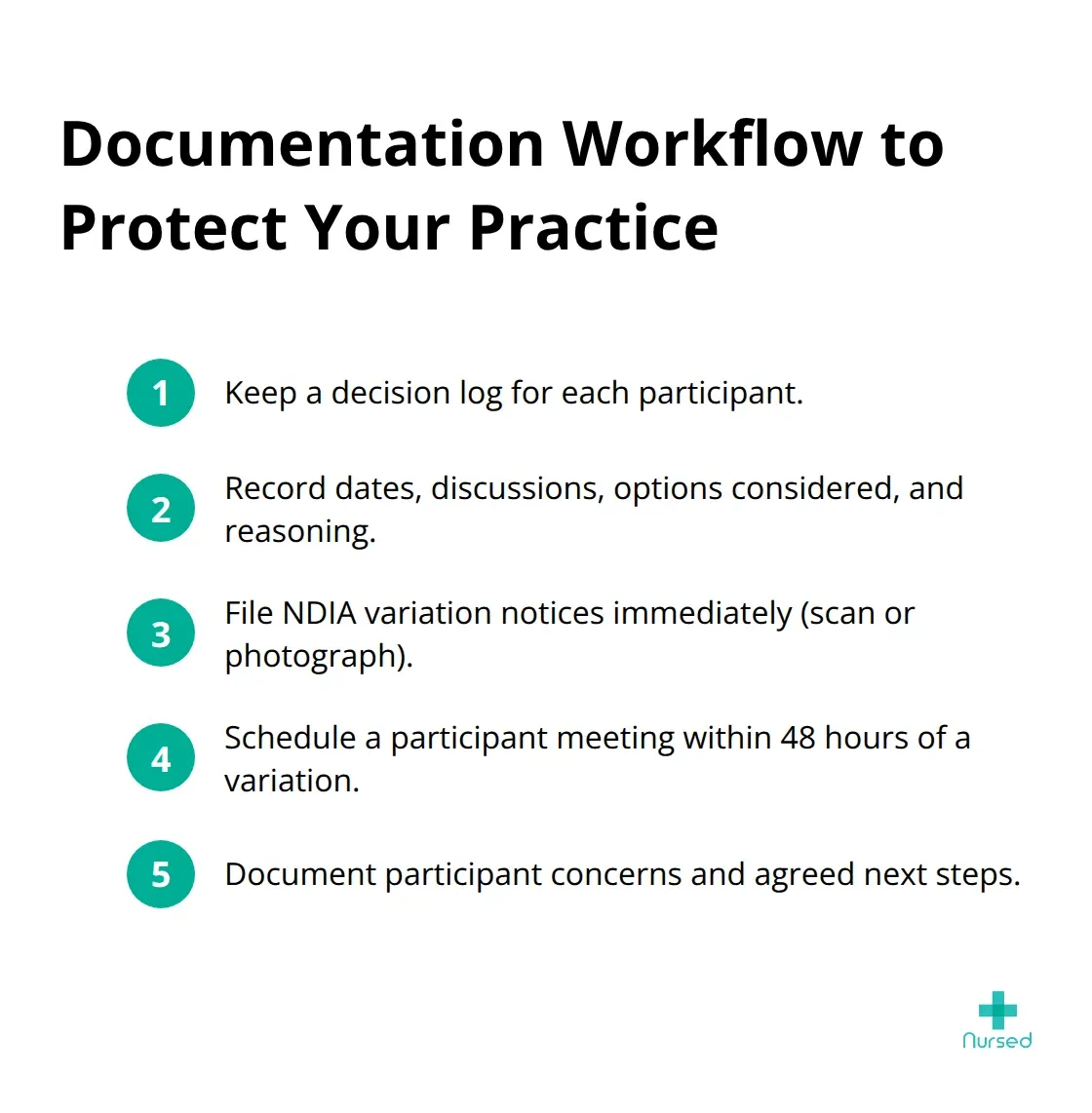
The NDIA’s tightened requirements mean your paperwork now carries legal and professional weight it didn’t before. Every decision you make needs a paper trail that proves why you recommended specific supports and how they connect to participant goals. You should maintain a decision log for each participant where you record the date of conversations, what was discussed, which supports were considered, and your reasoning for recommendations that made the final plan. This log becomes invaluable if the NDIA questions your judgement or if a participant appeals a funding decision.
When you receive a plan variation notice from the NDIA, photograph or scan it immediately and file it with the participant’s records, then schedule a meeting within 48 hours to explain the changes before the participant hears about it secondhand. You should document what the participant said during this conversation, what concerns they raised, and what alternative approaches you discussed moving forward.
Communicate Budget Changes with Honesty
Managing participant expectations requires brutal honesty about what the new framework means for their funding. You must stop softening the language when budgets decrease, because vague explanations fuel frustration and distrust. Instead, you should explain the specific policy change that triggered the reduction and show the participant exactly which part of their plan no longer qualifies under current guidelines. If their assistive technology funding dropped because the NDIA now requires more rigorous cost-benefit analysis, you can walk them through that analysis and identify whether a lower-cost alternative achieves the same outcome.
Align Provider Arrangements with Updated Guidelines
When you coordinate with providers, you should send written confirmation of every support arrangement, including frequency, duration, and cost. You then need to follow up with the provider two weeks before the plan review period to confirm nothing has changed. Providers operating under the old NDIS framework may still submit invoices for supports that no longer qualify under new guidelines, so you need to flag these misalignments before they create billing disputes. You should request that providers confirm in writing which supports they’re delivering align with the updated plan, and keep this confirmation on file.
Your role now includes being the translator between the NDIA’s stricter interpretation of reasonable and necessary and the participant’s lived reality of needing those supports. This translation work-moving from policy language to practical implementation-shapes how successfully participants navigate the transition ahead.
Adapting Your Coordination Systems to Stricter NDIS Requirements
Build a Single Reference System for Each Participant
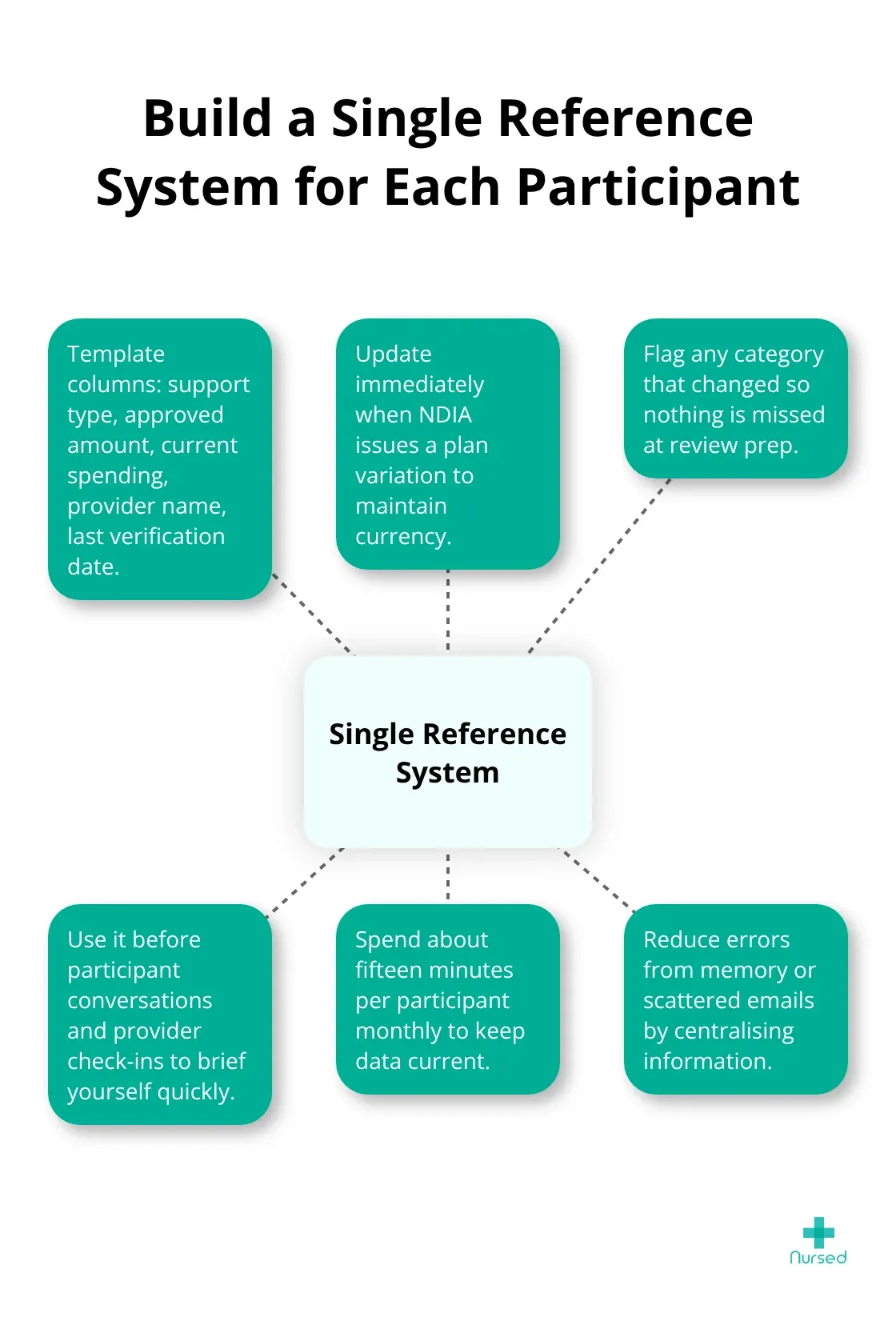
Support coordinators who succeed under the new NDIS framework treat documentation as the foundation of participant advocacy rather than administrative overhead. You need practical systems that capture information consistently without creating administrative burden that pulls you away from actual coordination work. A simple spreadsheet for each participant tracks plan components, approval dates, NDIA correspondence, and review deadlines in one place. This single document becomes your reference point before every participant conversation and every provider check-in.
Create a template that includes columns for support type, approved amount, current spending, provider name, and last verification date. When the NDIA introduces plan variations, you update this sheet immediately and flag any support category that changed, making it impossible to miss a modification when you prepare for conversations with participants. This approach takes approximately fifteen minutes per participant monthly but prevents the costly mistakes that emerge when you operate from memory or scattered emails.
Translate Policy Changes Into Practical Solutions
Your communication strategy with participants must shift from explaining policy to translating impact into their actual lives. When a participant’s informal support funding decreases, you show them the exact dollar amount they’re losing and then present two or three concrete alternatives that fit within the new budget. If they previously received funding for a support worker to assist with community participation but the NDIA now defines this as a capacity building activity with stricter justification requirements, you might propose redirecting that funding toward assistive technology that enables more independent community access. This reframing demonstrates you’re solving their problem rather than delivering bad news.
Schedule these conversations at least two weeks before plan reviews take effect so participants have time to adjust their expectations and you have time to coordinate provider changes. When you communicate with families, separate the policy explanation from the practical implications. You should say: Your son’s plan will reduce funding for informal support by two thousand dollars because the NDIA now requires documented evidence that informal supports directly address disability-related goals rather than general life support. Then immediately move to solutions: We can redirect funding toward assistive technology for his mobility, which gives him more independence without requiring ongoing paid support. This approach positions you as solution-focused rather than defensive about changes you didn’t create.
Verify Provider Alignment Before Plan Reviews
When you coordinate with providers, you send written confirmation of every support arrangement, including frequency, duration, and cost. You then follow up with the provider two weeks before the plan review period to confirm nothing has changed. Providers operating under the old NDIS framework may still submit invoices for supports that no longer qualify under new guidelines, so you flag these misalignments before they create billing disputes. You request that providers confirm in writing which supports they’re delivering align with the updated plan, and keep this confirmation on file.
Your role now includes being the translator between the NDIA’s stricter interpretation of reasonable and necessary and the participant’s lived reality of needing those supports. This translation work-moving from policy language to practical implementation-shapes how successfully participants navigate the transition ahead.
Final Thoughts
The NDIS framework has fundamentally shifted how support coordinators operate, and these changes represent a permanent recalibration rather than temporary adjustments. The stricter documentation requirements, tighter budget assessments, and more frequent plan reviews now define how the scheme evaluates reasonable and necessary supports. Support coordinators who adapt their systems to these new standards will advocate more effectively for participants and manage expectations with greater clarity.
Your role has become more complex, but also more valuable. The detailed documentation you maintain, the honest conversations you conduct with participants about budget changes, and the provider coordination you manage all serve one purpose: participants receive supports that genuinely address their disability-related goals. This support coordinators guide has walked you through the practical mechanics of navigating these changes, from building reference systems to translating policy into solutions participants understand.
Support coordinators who treat documentation as advocacy rather than burden will build stronger relationships with the NDIA, participants, and providers. The NDIA’s stricter approach actually rewards coordinators who complete thorough work upfront, because detailed justification prevents plan variations and appeals later. If you want support services that align with these principles of personalised, outcome-focused care, Nursed offers daily living assistance, home modifications, day programs, and respite care designed to enhance independence and community integration.