

NDIS community nursing roles are about more than just medical support-they’re about helping you live the life you want. At Nursed, we work with participants every day to manage health needs, coordinate care, and build confidence in daily activities.
This guide walks you through what community nursing involves and how we support NDIS participants to achieve real independence.
What NDIS Community Nursing Actually Delivers
Community nursing under the NDIS covers three core areas that shape how you live each day. Personal care and daily living assistance includes help with bathing, grooming, dressing, and mobility support. This isn’t about doing everything for you-it’s about maintaining your independence while you receive the practical help you need. Many NDIS participants struggle with personal hygiene routines after hospital stays or during flare-ups of chronic conditions, and having a qualified nurse manage this means you stay healthy and confident. Health monitoring and medication management form the second major area. NDIS nurses administer prescribed medications, watch for side effects and drug interactions, and track your vital signs during regular assessments. Medication-related issues contribute to hospital admissions in Australia, with patients harmed in almost 340,000 admissions to Australian hospitals because of medical errors and other mishaps. A nurse managing your medications at home catches problems early and prevents costly hospital visits. The third component involves coordinating your care across different healthcare providers-your GP, specialists, allied health professionals, and support workers all need to work together, and community nurses act as the hub that keeps everyone informed and aligned.
Wound Care That Prevents Serious Complications
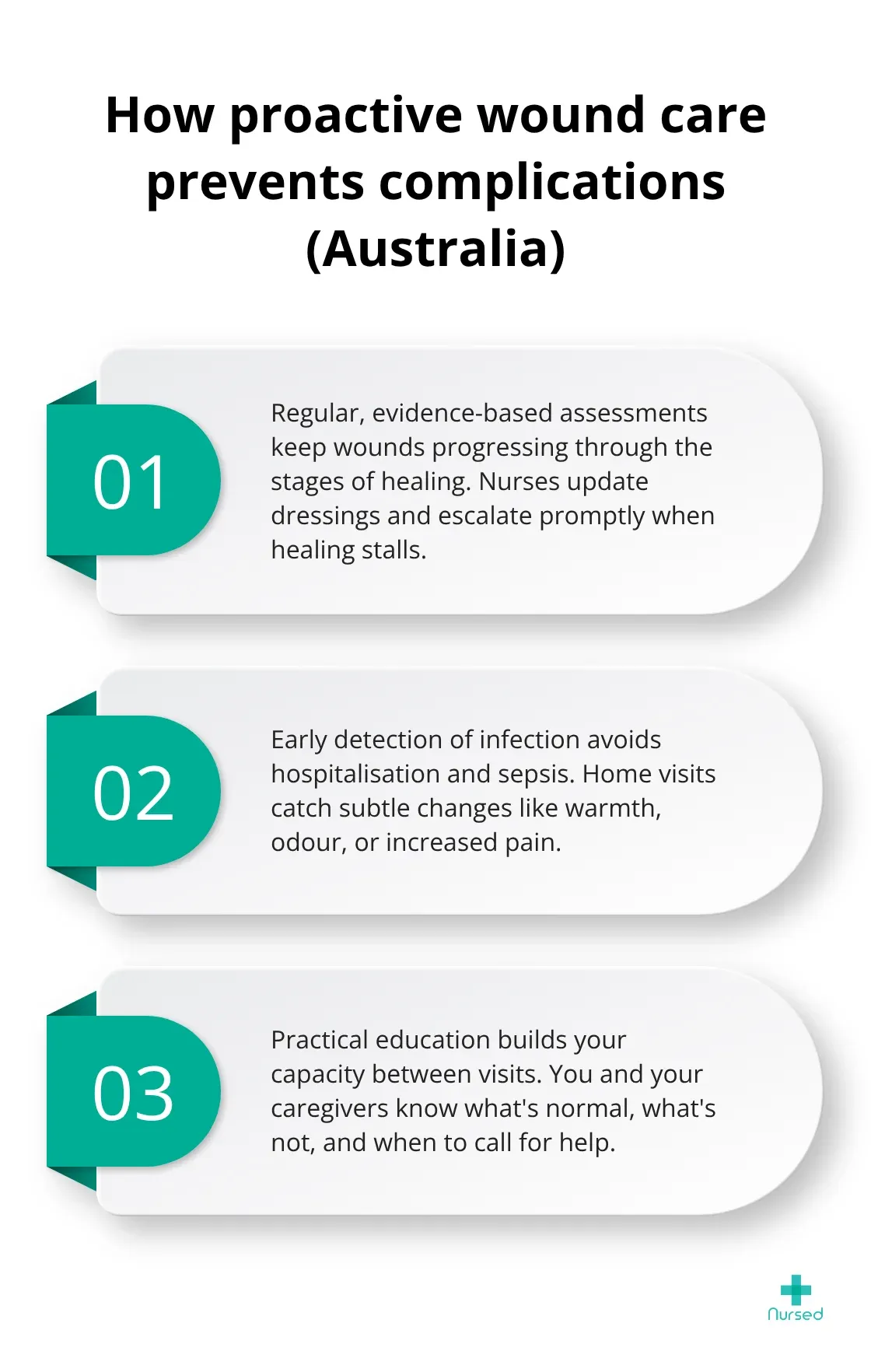
Wound care is where community nursing makes an immediate, visible difference. Whether you recover from surgery, manage pressure sores, or deal with diabetic ulcers, nurses assess wounds properly, change dressings using current techniques, and monitor for infection. Pressure injuries cost the Australian healthcare system an estimated A$983 million annually, and most develop because wounds lack consistent management at home. A nurse visiting regularly catches early signs of infection before they escalate into sepsis or hospitalisation. You and your caregivers learn proper wound care techniques, so you understand what’s happening and can spot problems between visits.
Chronic Disease Management That Reduces Hospital Visits
Managing conditions like diabetes, asthma, or hypertension at home requires consistent monitoring and quick responses to changes. Community nurses work with your healthcare team to adjust medications, offer lifestyle recommendations, and teach you to recognise warning signs. This preventative approach directly reduces emergency department visits and hospital admissions. For participants with diabetes, a nurse can manage insulin administration and blood glucose monitoring, which matters because poor diabetes control increases infection risk and delays healing. Regular health checks by your community nurse mean you catch complications early rather than waiting until symptoms become severe enough to need emergency care.
These three areas form the foundation of what community nursing delivers, but the real impact shows up when you explore how nurses coordinate across your entire support network.
How We Build Care Plans That Actually Work
Start With Your Goals, Not a Template
Community nursing works best when your care plan reflects what matters to you, not what fits a template. We start every plan with a conversation about your goals, your daily routine, and the barriers that stop you from doing what you want to do. This isn’t theoretical planning-we ask specific questions about your morning routine, your medication schedule, your work or study commitments, and the activities that give your life meaning.
A participant managing type 2 diabetes while working part-time needs a different nursing approach than someone with the same diagnosis who’s retired and isolated at home. We adjust medication timing, wound care scheduling, and health monitoring frequency to fit your actual life, not the other way around.
Review and Adjust as Your Needs Change
Your care plan gets reviewed regularly because your needs change-sometimes within weeks-and a rigid plan becomes useless. We work with your support coordinator, your GP, and your family to spot when adjustments are needed, then we make them quickly. This responsiveness matters because Australian research shows that participants with regularly reviewed care plans experience better health outcomes and fewer unplanned hospital visits.
Qualified Nurses Who Stay Current With Best Practice
Our team includes Registered Nurses and Enrolled Nurses who hold current AHPRA registration, meaning they meet strict professional standards and carry professional indemnity insurance. Each team member receives ongoing training in chronic disease management, wound care techniques, and NDIS policy updates. This matters because nursing practice changes constantly; techniques that worked five years ago get replaced by better evidence. A nurse managing your wound care uses current best-practice protocols, not outdated methods.
We also prioritise continuity, which means you work with the same nurse whenever possible rather than meeting someone different every visit. Research consistently shows that consistent relationships between nurses and participants improve trust, reduce anxiety, and help nurses spot subtle changes in your health that matter. When you build a relationship with your nurse over weeks and months, they know your baseline and catch early warning signs that a new person would miss.
Build Independence Through Education and Trust
Independence isn’t something we do to you-it’s something we build with you through education and gradually shifting responsibility back to you. If you manage a catheter, we teach you the proper technique, watch while you do it yourself, then step back as you gain confidence. If you track blood glucose, we show you what the numbers mean and how to respond to different readings.
Many participants report they felt more confident in their own health after working with a nurse who explained things clearly and trusted them to take on more responsibility over time. We measure success not by how many visits we make but by how much you can manage independently between visits. This foundation of confidence and capability then shapes how you approach the broader support services available to you.
Common Challenges NDIS Participants Face and How We Address Them
Managing Multiple Health Conditions Without Coordination
Managing multiple health conditions simultaneously creates a coordination nightmare that most NDIS participants face alone. You might have diabetes requiring daily insulin management, hypertension needing medication adjustments, and a wound from recent surgery all happening at once. The problem isn’t the conditions themselves-it’s that your GP handles one, a specialist handles another, and nobody talks to each other until something goes wrong. When a community nurse sits at the centre of your care team, they spot dangerous drug interactions before they cause harm, catch when one condition worsens because of another, and adjust your overall plan rather than treating each issue in isolation.
Fragmentation Across Your Support Network
The second barrier participants hit is fragmentation across support services. You might have one worker helping with personal care, another managing your NDIS plan, a physiotherapist coming weekly, and a community nurse visiting twice a week, yet nobody knows what the others are doing. This creates gaps where important information falls through-your physiotherapist doesn’t know you’re fatigued from poor medication timing, or your support worker doesn’t realise your wound needs monitoring. Participants often feel they’re responsible for keeping everyone informed, which exhausts them and creates safety risks.
Building confidence in daily activities becomes nearly impossible when you’re stressed about whether your team knows what’s happening. Active communication with your support coordinator, your GP, and other providers in your network prevents these gaps from forming. Your care team needs to work as one unit, not as separate services operating in isolation.
Taking Control Through Health Literacy
Education transforms how you respond to your own health. When you understand what normal looks like for your blood glucose or your wound healing, you stop waiting for permission to speak up and start taking action. Participants who recognise warning signs themselves catch problems faster than waiting for someone else to notice. This knowledge (combined with regular professional monitoring) creates a safety net that works both ways-your nurse catches what you might miss, and you catch what happens between visits.
Final Thoughts
NDIS community nursing roles centre on one core principle: helping you stay healthy, independent, and in control of your own life. We’ve shown how community nursing manages your medications, prevents complications through wound care, coordinates across your healthcare team, and builds your confidence in daily activities. The real difference happens when these services work together as a unified support system rather than separate visits from different people.
At Nursed, we’ve seen firsthand how personalised care plans, qualified nurses who stay with you over time, and genuine coordination across your support network transform health outcomes. When your nurse understands your goals, your routine, and what independence means to you specifically, the care you receive actually fits your life. Education and trust become the foundation for managing your own health between visits, which means you stop waiting passively for someone else to notice problems.
The challenges NDIS participants face-managing multiple conditions, navigating fragmented services, building confidence-require a provider who listens, who communicates actively with your entire team, and who measures success by how much you can do independently. Contact Nursed to explore how we support your independence and health goals.