


Moving into your own home through Supported Independent Living (SIL) is a real step toward the life you want to build. At Nursed, we know that understanding SIL funding pathways can feel overwhelming, which is why we’ve created this guide to walk you through each stage.
From your first conversation with your NDIS planner to settling into your new space, this guide covers what you need to know to make informed decisions about your future.
Understanding SIL Funding and Your Eligibility
What SIL Funding Actually Covers
SIL funding pays for support services inside your home, not the home itself. This distinction matters more than you might think. The NDIS covers personal care such as showering and dressing, meal preparation, medication management, cleaning, and overnight supervision.
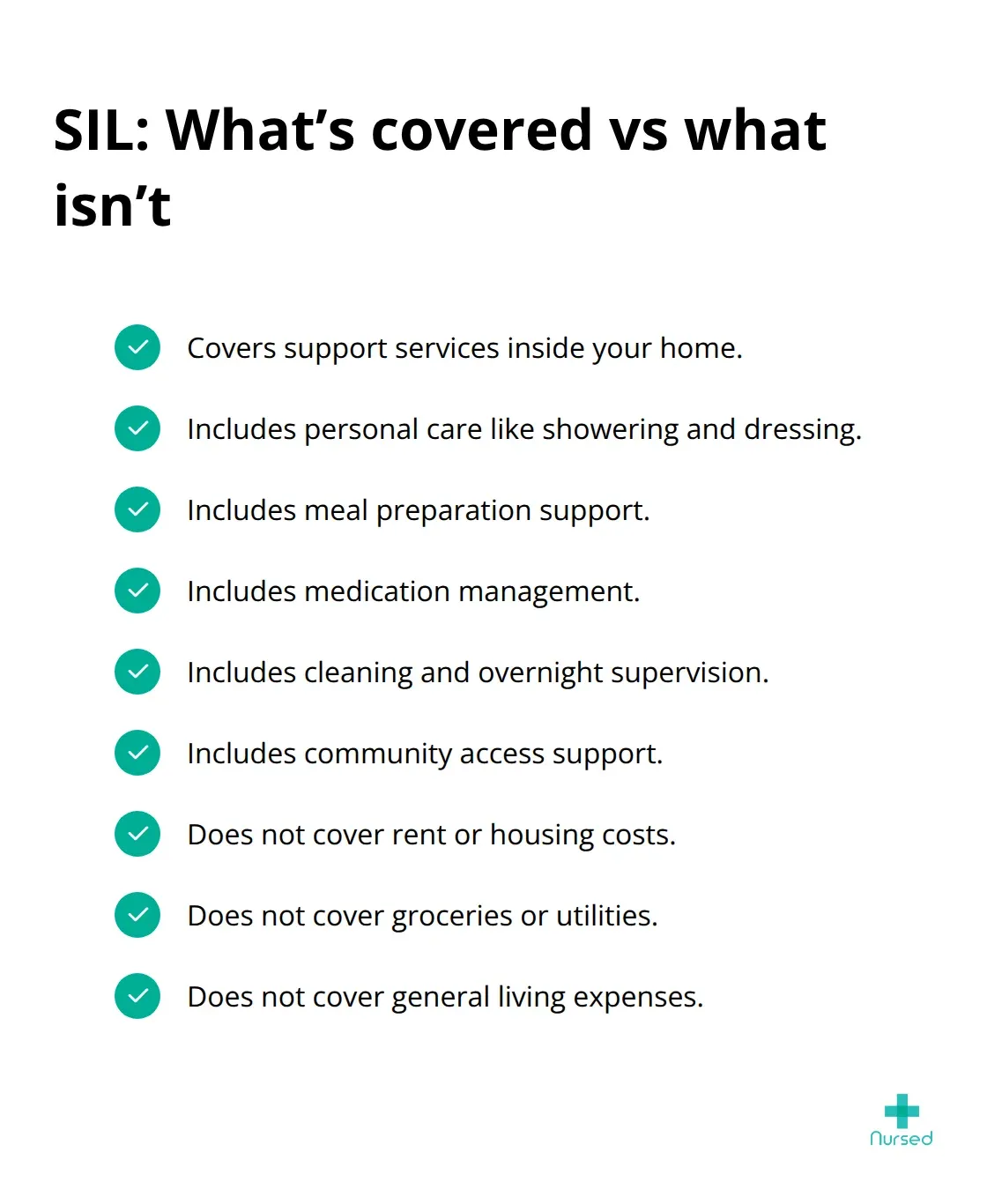
SIL also funds community access support, which helps you attend appointments, access local services, and participate in activities that matter to you. What SIL does not cover is rent, housing costs, groceries, utilities, or general living expenses. Many people misunderstand this boundary and assume SIL is a housing payment-it is not.
If you need funding for the actual property or specialist accommodation design, you would look at Specialist Disability Accommodation funding separately. The NDIA classifies SIL under Core Supports within your NDIS plan, meaning it sits alongside other daily living assistance and the NDIA reviews it as part of your broader support package.
Who Actually Qualifies for SIL
You typically need to demonstrate high daily living support needs that require assistance most of the day, including overnight support, usually seven days a week. The NDIA uses a functional capacity assessment from an occupational therapist or psychologist to verify this. You must be aged between 9 and 65, an Australian citizen, permanent resident, or Protected Special Category Visa holder, and your disability cannot be primarily age-related.
The critical piece is showing that your disability significantly impacts everyday tasks and that less intensive supports would not work for you. You must submit a detailed roster of care that maps out a typical week. Include specific examples of what support looks like across morning routines, meals, medication, community access, and overnight needs-generic descriptions rarely succeed. The NDIA assesses whether SIL represents value for money and whether it genuinely improves your independence and safety compared with other options. If your application is declined, you have the right to request an internal review or appeal through the Administrative Appeals Tribunal.
How SIL Differs From Other Home and Living Supports
SIL is often confused with Specialist Disability Accommodation because both relate to home-based living. SDA funds the housing design itself (including modifications and accessibility features), while SIL funds the daily support you receive inside that home. You may receive both, or just one, depending on your needs and what your NDIS plan approves.
Individualised Living Options provides support in mainstream housing without the same intensity as SIL. Short-term or medium-term accommodation suits people needing temporary support rather than ongoing daily assistance. In-home supports under Core funding work for people with lower support needs who do not require 24/7 or near-24/7 assistance. The key difference is intensity and frequency. SIL assumes you need substantial, ongoing support to live safely and independently. If you need support building life skills rather than daily hands-on assistance, Capacity Building supports might be more appropriate. Understanding which option fits your actual needs prevents wasted time pursuing the wrong funding stream and helps you build a realistic NDIS plan from the start.
Once you understand what SIL covers and whether you qualify, the next step is working with your NDIS planner to shape a plan that reflects your real independence goals.
Planning Your SIL Pathway
Map Out Your Actual Weekly Routine
Honest conversations about what independence means for you matter more than describing an idealised version of yourself. Write down a typical week in your current life with specific times: when you wake, eat, shower, take medication, attend appointments, and sleep. Note exactly where you struggle without support and where you manage well. The NDIA reviews thousands of plans annually and spots generic descriptions immediately. Your roster of care must match reality, not aspiration. If you need someone to prompt you through a morning routine three times before you move, write that down.
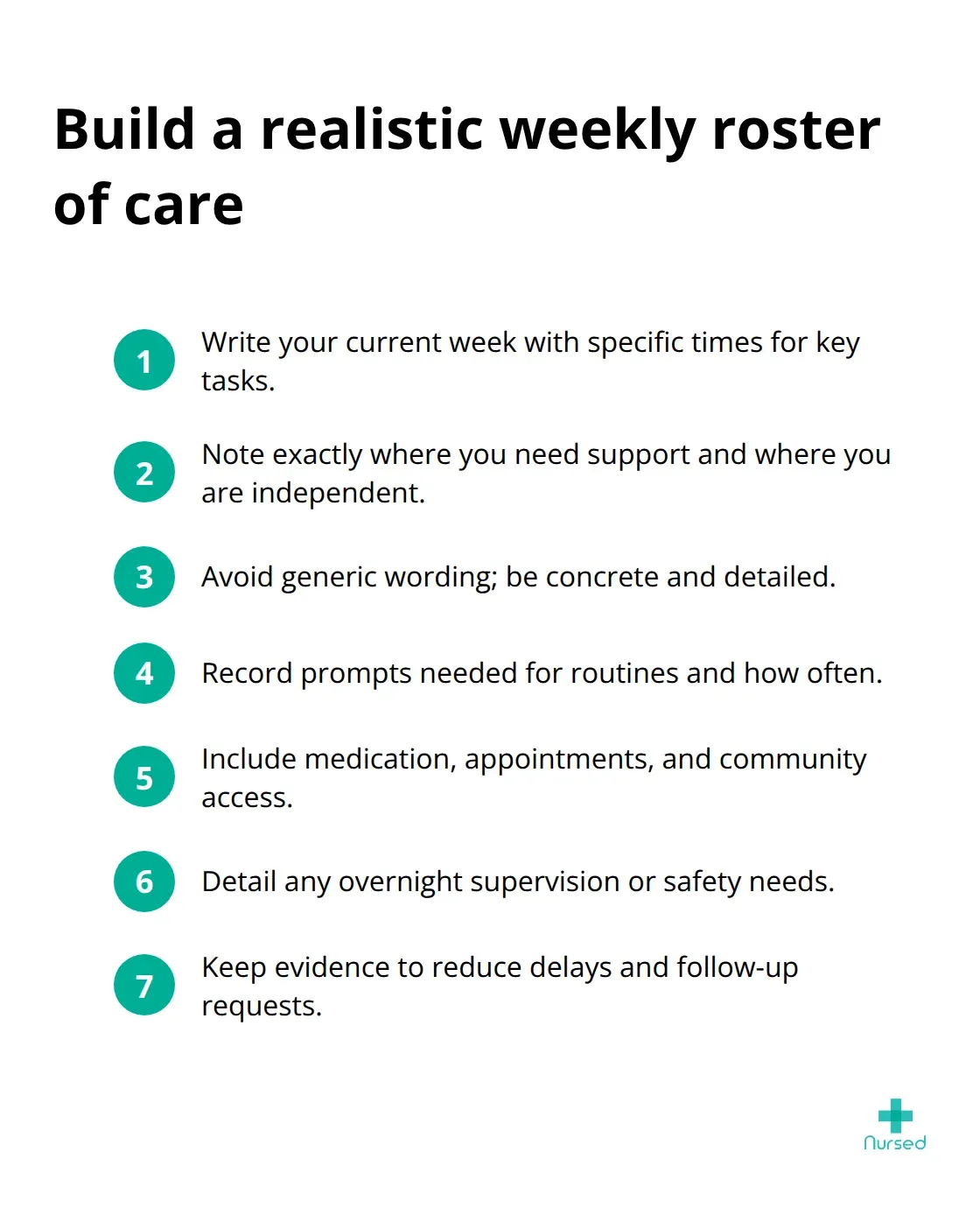
If you shower independently but need medication reminders, specify it. This level of detail strengthens your application and prevents the NDIA from requesting additional information, which delays approvals by weeks.
Work With Your NDIS Planner to Shape Your Request
Your NDIS planner translates your weekly routine into a formal SIL request. Bring your completed routine to the planning meeting and discuss specific support gaps. Ask your planner explicitly whether SIL fits your needs or whether another option suits you better. The SIL application requires a written request linked to plan goals, a series of objective assessments, and a cost roster prepared by a provider. Bring an occupational therapist’s functional capacity assessment to your planning meeting if you have one. If not, the NDIA often requests one before approving SIL, so obtaining this assessment early accelerates the process.
When your planner includes SIL in your plan, the quote from your chosen provider becomes critical. The quote outlines the type and frequency of supports and the associated costs. Request quotes from at least two NDIS-registered providers to compare service models and pricing. Some providers offer 24/7 in-home support, while others deliver scheduled visits. The model you choose affects both your independence trajectory and your budget allocation.
Select Accommodation That Matches Your Needs
Shared accommodation means your family member lives in a house with other participants and shares support worker costs. Solo living requires stronger independent living skills but offers greater privacy and control over your daily routine. If you choose shared accommodation, ask potential providers about the stability of housemates and staff turnover rates. High staff turnover disrupts your routine and slows skill development.
Visit any property before committing and spend time there at different times of day to assess noise levels, accessibility, and whether the environment suits your needs. Ask whether the provider has experience supporting people with your specific disability type and what their average tenure is for both staff and residents (this information reveals how stable the living arrangement will be). These practical details determine whether your SIL arrangement succeeds or becomes a source of stress.
Once you have mapped your needs, worked with your planner, and identified suitable accommodation, you move into the next phase: transitioning into your SIL property and developing the daily living skills that support your independence goals.
Transitioning to SIL and Building Independence
Establishing Routines in Your First Weeks
Your first weeks in SIL accommodation set the tone for everything that follows. The transition itself is not automatic-it requires planning, clear communication with your support team, and honest reflection on what independence actually means for you in this new space. Treat the first month as a foundation-building phase rather than expecting instant comfort.
Spend your first week establishing routines with your support workers. Walk through morning and evening tasks together, document what works and what doesn’t, and flag any environmental issues-a light switch that’s hard to reach, a kitchen layout that slows you down, or noise from housemates at particular times. These details shape whether you’ll develop skills or become frustrated. Many people underestimate how much their old home accommodated them without them realising it; your new space has different geography, different support workers, and different housemates. Give yourself permission to feel the adjustment.
Your support workers should actively build independence with you during this phase, not just complete tasks. If a worker showers you without explaining what they’re doing or teaching you steps, that’s a red flag. Ask your provider explicitly whether their staff receive training in skill-building approaches. Quality providers prioritise hands-on independence coaching from day one, which accelerates your ability to manage more of your routine yourself.
Tracking Progress and Adjusting Your Support Model
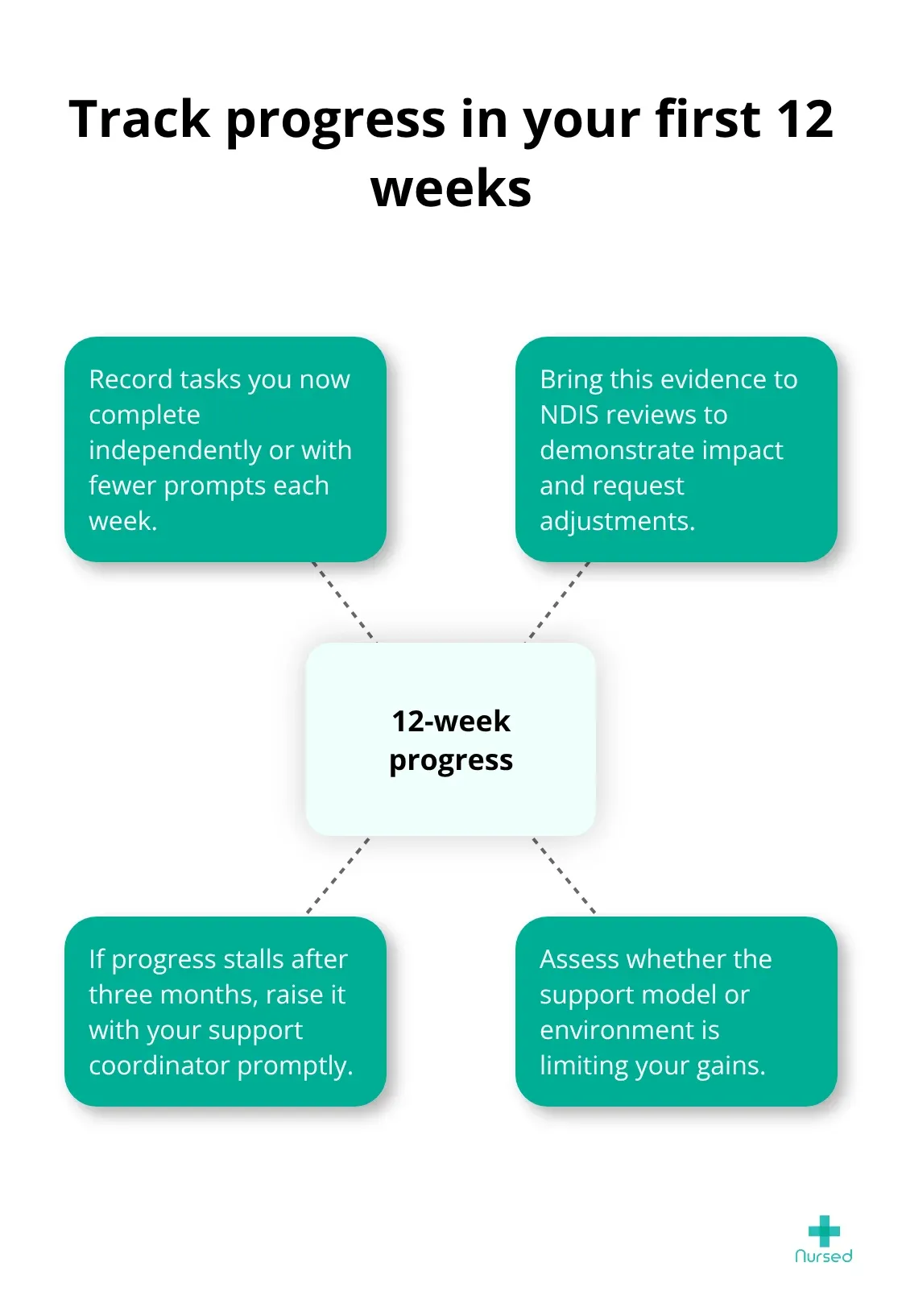
Track your progress over the first 12 weeks by tracking which tasks you’ve started doing independently or with less prompting. This data matters when your NDIS plan is reviewed-it shows the funding is working and that your independence is genuinely improving. If you’re not seeing progress after three months, the support model or the environment may not be right, and you should raise this with your support coordinator before frustration sets in.
Building Community Connections That Matter
Community connection often gets overlooked in SIL planning, but isolation is one of the biggest reasons people leave supported living arrangements. Your support workers should help you access activities you actually want to participate in, not just generic community options. If you enjoy gardening, cooking, or a particular sport, that should be written into your support plan with specific times and provider responsibility (the NDIS funds community access support, so use it deliberately).
Ask your provider how many hours per week are allocated for community participation hours allocation in NDIS funding and whether those hours are actually being used. Some people receive funding that sits unused because no one actively coordinates activities. Work with your provider to map out what community participation looks like for you personally-not a one-size-fits-all approach.
Integrating Informal Supports Into Your Plan
If you have informal supports-family members, friends, or community connections-introduce them to your support workers early and establish boundaries about what paid support does and what informal support handles. This prevents confusion and helps your workers understand your broader life context. Clear communication between formal and informal supporters strengthens your entire support network and reduces gaps in your daily routine.
Using NDIS Reviews to Advocate for Changes
Attend your three-month and six-month NDIS reviews and bring specific examples of what’s working and what isn’t. This is when you have the most influence over plan adjustments. If you need more community access hours, more skill-building support, or a different accommodation arrangement, the review meeting is where you advocate for those changes with evidence.
Final Thoughts
SIL funding pathways work best when you move through them with clear goals and realistic expectations about what independence means for you personally. The journey from planning to settling into your own home takes time, but the payoff is genuine control over your daily life and the support you need to build skills that matter. At Nursed, we understand that SIL success depends on more than just funding approval-it requires ongoing partnership between you, your support workers, your NDIS planner, and your informal supports.
Your next step is straightforward. If you’re considering SIL or already moving through the planning phase, contact Nursed to discuss how we can support your specific situation. Bring your weekly routine, your independence goals, and any questions about what SIL actually looks like in practice, and we’ll help you build a realistic plan that works from day one.