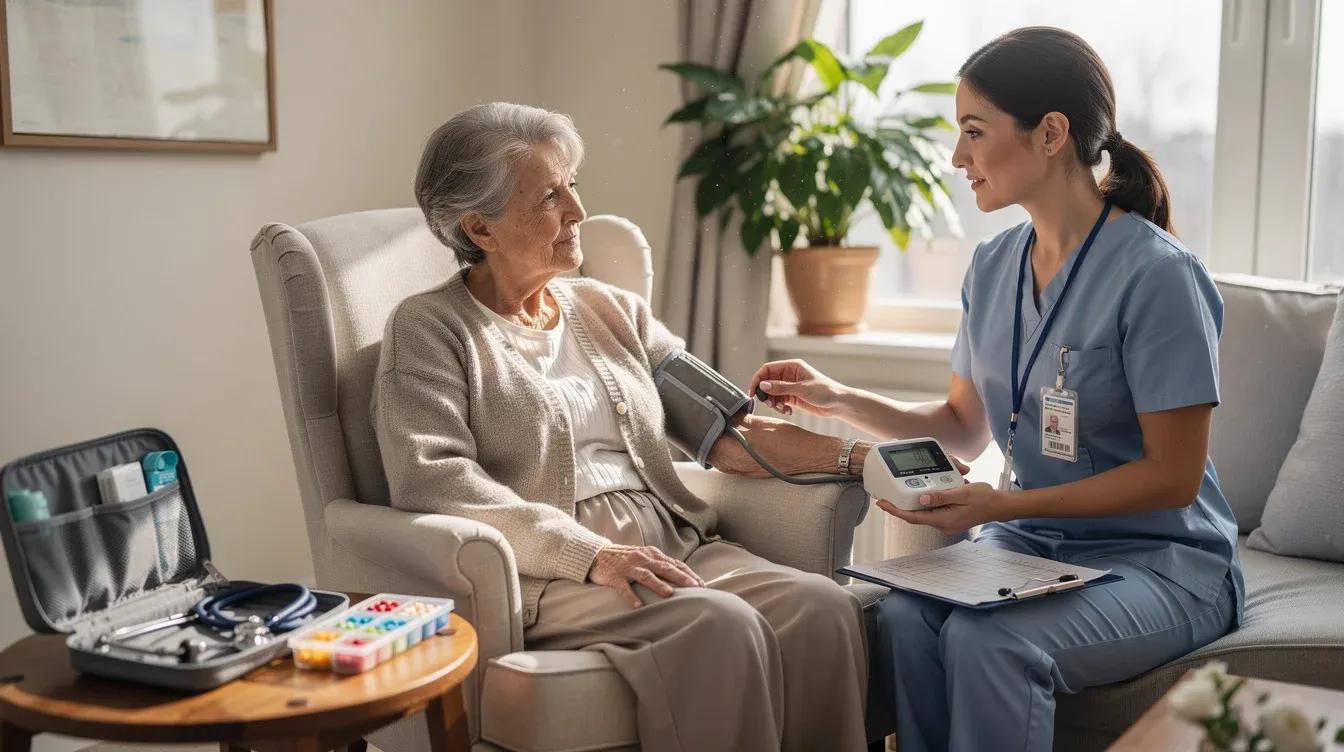


Staying in your own home while receiving professional care is possible. Many Australians are choosing nurse at home support because it offers comfort, independence, and personalised attention all at once.
At Nursed, we’ve built our service around one simple idea: care should work for you, not the other way around. We’ll show you how in-home care transforms lives and why it might be right for your situation.
What In-Home Care Actually Means
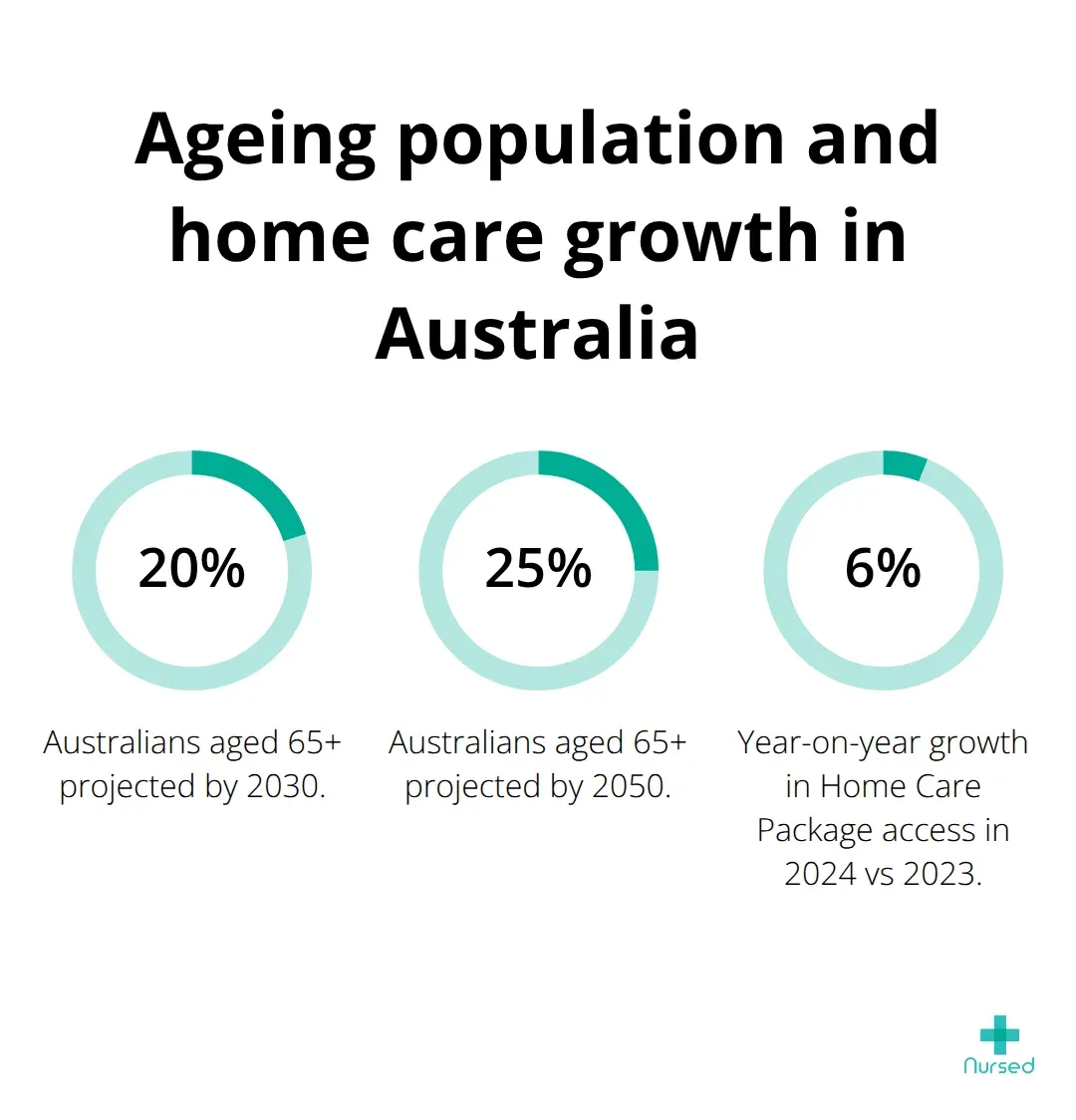
In-home care is professional support delivered in your own home, ranging from personal assistance with daily tasks to clinical nursing care. It covers everything from help with showering and meal preparation to wound care, medication management, and mobility support. 20% of the population will be aged 65 or older by 2030, with projections showing this group will represent 25% of the population by 2050. This demographic shift has driven real growth in home-based services. In 2024, nearly 334,000 people accessed Home Care Packages, up about 6 per cent from 2023, while more than 829,000 accessed support through the Commonwealth Home Support Programme. These numbers show that in-home care is no longer a niche option-it has become the mainstream choice for Australians who want to age or recover in their own environment rather than moving to residential facilities.
Why Australians Are Choosing Home-Based Support
The demand for personalised in-home care reflects a clear preference: people want to stay home. As of October 2025, more than 299,000 Home Care Package recipients actively used their funded support, and over 107,000 waited in the National Priority System for packages at their approved level. This isn’t just about comfort. Care at home preserves your independence, maintains your connection to familiar routines, and keeps you embedded in your community. For people with disabilities, in-home support through the NDIS removes barriers to participation in everyday activities and community events. For older Australians, staying home with professional support means avoiding the disruption of residential aged care while still accessing the help needed for daily living. The shift toward personalised plans has accelerated this trend-care that’s tailored to your specific needs, preferences, and goals works better than one-size-fits-all services. Women make up about 60 per cent of Home Care Package recipients, and those aged 85 and over represent 35 per cent of home care admissions, showing that diverse age groups and demographics benefit from this model.
How Home-Based Care Supports Independence
Care in your own home delivers practical benefits that residential settings cannot match. You control your daily schedule, choose your meals, and maintain your routines without institutional constraints. Safety improves because the environment is familiar and can be modified to suit your specific needs-grab rails, accessible bathrooms, and better lighting reduce fall risk and boost confidence. Home modifications are tailored to your layout and mobility requirements, not standardised for a facility. Independence is actively supported because carers help you participate in activities you enjoy rather than replacing your involvement. Social engagement happens naturally when you remain in your community; you can still attend local events, visit friends, and maintain the relationships that matter.
The Wellbeing and Cost Benefits
Emotional wellbeing improves significantly when you’re not isolated from your familiar surroundings. For people with disabilities, in-home support creates a foundation for community participation and personal growth without the constraints of group settings. Cost-effectiveness matters too-government-funded programmes like the Support at Home scheme launched on 1 November 2025 substantially reduce out-of-pocket expenses, combining in-home aged care programmes with clinical care and independence support. This funding model makes professional in-home care accessible to more Australians than ever before. Whether you’re managing a disability, recovering from surgery, or navigating the changes that come with age, the right in-home support can transform how you live. The next step is understanding how that support is actually delivered-and how providers like Nursed tailor their approach to match your unique situation and goals.
How Nursed Builds Your Care Plan From the Ground Up
Assessment That Actually Listens
We at Nursed start every relationship with a thorough assessment of your actual situation, not assumptions about what people like you typically need. A Registered Nurse sits down with you and your family to understand your daily routines, mobility challenges, and social goals. This conversation forms the foundation of everything that follows. We don’t apply a template; we listen to what matters most.
Matching the Right Staff to Your Needs
From there, we design a support plan that specifies which tasks require a Registered Nurse, which an Enrolled Nurse can handle, and which suit a support worker better. This staffing mix directly affects both the quality of care and your costs. If you manage wound care or complex medication reviews, an RN leads that work. If you need help with showering or meal preparation, a support worker is often the right fit and costs less per hour. The Department of Health and Aged Care reports that the home care workforce grew significantly in recent years, yet the right skill matching remains rare in the industry.
We assign a consistent team of two to three carers to your care plan whenever possible, which builds trust and means your team understands your preferences without starting from scratch each visit. If you request a change, we make it happen. We also offer flexible scheduling with minimum visit lengths of one hour for support worker shifts and two hours for nursing shifts, and we’re available evenings and weekends because life doesn’t follow business hours.
Home Modifications That Reduce Risk
Home modifications aren’t cosmetic additions we suggest after the fact; they’re core to how we support independence and reduce injury risk. We assess your specific environment-the width of doorways, bathroom layout, lighting, and stairs-then recommend modifications that match your mobility needs and your home’s actual design. Grab rails in the shower, accessible bathroom fixtures, better lighting for navigation, and ramps or step modifications all reduce fall risk significantly. We work with you to prioritise what matters most (given your budget and funding situation).
If you access NDIS funding, home modifications may be covered depending on your plan. We also provide assistive technology recommendations and help you understand how equipment like mobility aids or communication devices fit into your independence goals. Consistency in your care team means they notice when something isn’t working-when a modification needs adjustment or when your needs have shifted-and we address it directly rather than waiting for a formal review.
24/7 Clinical Support When You Need It
Our 24/7 access to a Registered Nurse via hotline means you can get clinical guidance any time, whether it’s a question about wound care, medication concerns, or whether something warrants a GP visit. This round-the-clock support removes the uncertainty many people feel when managing health at home. When your care plan is truly personalised and your team remains consistent, the real measure of success isn’t just what happens during scheduled visits-it’s how well you navigate the hours in between and how confident you feel making decisions about your own health and daily life.
Real-World Impact of In-Home Care
How Tailored Support Transforms Independence
Personalised in-home support changes what becomes possible in daily life. When care matches your specific goals rather than a standard package, people report measurable improvements in independence, confidence, and engagement. Older adults who receive tailored home-based care maintain higher levels of functional independence and report better mental health outcomes than those in group settings. For people with disabilities, the shift from one-size-fits-all services to personalised plans means the difference between passive support and active participation. A support worker who knows you prefer meal preparation over showering assistance prioritises what matters to your week. A carer familiar with your mobility challenges won’t suggest exercises you’ve already told them don’t work. Consistency in staffing directly enables this level of personalisation-when the same two or three carers visit regularly, they notice subtle changes in your confidence, spot safety issues before they become problems, and adjust your plan without waiting for formal reviews.
This continuity also reduces the emotional labour of repeatedly explaining your preferences and history to new faces. People with disabilities who access NDIS funding through providers like Nursed report higher satisfaction when their support team remains stable, because trust builds quickly and genuine relationships form rather than transactional interactions. The practical outcome is straightforward: you spend less time managing your care arrangement and more time living your life.
Community Participation as a Core Outcome
Community participation becomes genuinely possible when in-home support aligns with your actual interests and mobility. If you want to attend local community events, visit friends, or participate in activities you enjoy, the right support worker makes that happen without treating outings as exceptions requiring special approval. Someone managing a disability or recovering from illness often loses connection to community simply because logistics feel overwhelming-getting ready, transportation, managing fatigue or pain during the activity. When your support includes help preparing for outings and someone who understands your energy levels accompanies you, participation shifts from aspirational to routine.
The Australian Government’s Support at Home programme explicitly recognises community participation as a core outcome, not an add-on. This means funding can support attending local groups, social events, and activities that matter to you personally. For people with disabilities, NDIS community access isn’t treated as medical care but as a fundamental part of quality of life. Providers who integrate this into planning, rather than treating it as occasional respite, see better long-term outcomes.
Strengthening Your Social Network
Your support network-whether family, friends, or community connections-strengthens when you’re actually present and engaged rather than isolated at home. Regular participation in chosen activities reduces isolation, maintains mental health, and gives your life structure and purpose that passive support arrangements simply cannot provide.
Final Thoughts
The right in-home care provider transforms what becomes possible in your daily life, and the wrong fit wastes time, money, and your confidence in the support system itself. We at Nursed have built our service around what actually works: personalised plans that reflect your real life, consistent staff who understand your preferences without explanation, and clinical leadership from Registered Nurses available 24/7 when you need guidance. Our status as a registered NDIS provider means we meet rigorous standards for quality, safety, and person-centred support, and we match the right skill level to each task so you pay fairly while receiving excellent care.
What sets nurse at home Australia services apart isn’t the marketing or the promises-it’s what actually happens during visits and between them. We assign a consistent team of two to three carers whenever possible, which builds genuine relationships rather than transactional interactions, and if something isn’t working, you request a change and we make it happen. We offer flexible scheduling with evening and weekend availability because your life doesn’t fit standard business hours, and home modifications become part of your plan from the start, designed specifically for your environment and mobility needs.
Whether you manage a disability, recover from surgery, or navigate age-related changes, the right support transforms what becomes possible. Contact Nursed to discuss your situation and explore how personalised in-home care can work for you.