



Managing complex care needs requires more than standard support-it demands a tailored approach that addresses medical, behavioural, and social challenges simultaneously.
At Nursed, we’ve created this high intensity supports overview to help you understand what these services involve, who benefits from them, and how to access the right support for your situation. Whether you’re navigating multiple providers or coordinating care for yourself or a loved one, this guide breaks down the essentials without the confusion.
What High Intensity Supports Actually Cover
High intensity supports address specific medical and complex care tasks that go far beyond standard personal assistance. The NDIS defines these as daily personal activities requiring specialised knowledge and skills to manage health risks effectively. Tasks like complex bowel care, enteral feeding through PEG tubes, tracheostomy management, urinary catheter care, wound management, dysphagia support, and ventilation assistance all fall under this category.
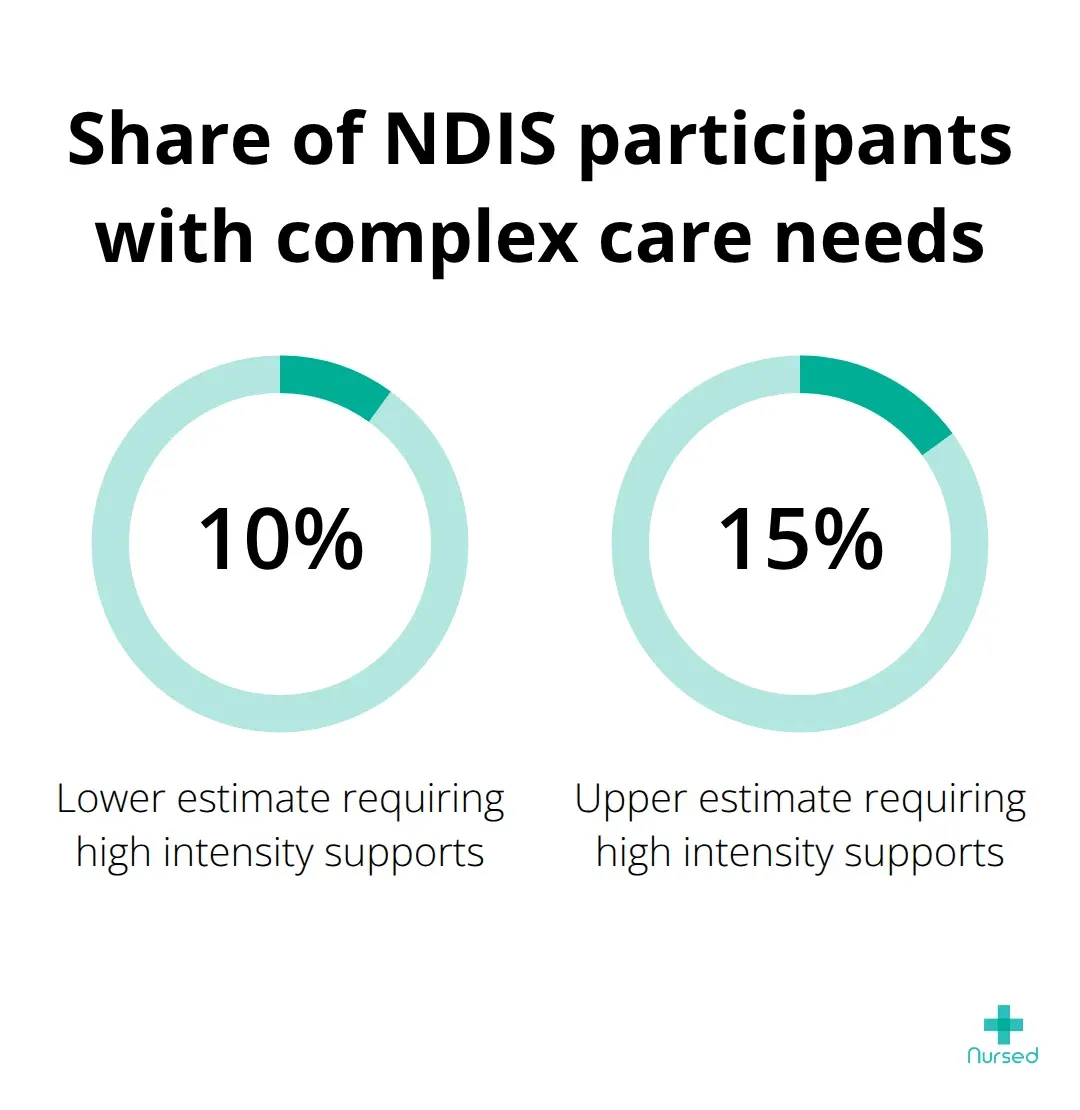
According to the NDIS, approximately 10 to 15 per cent of NDIS participants experience complex care needs significant enough to warrant high intensity supports. These aren’t optional services-they’re essential for participants whose health conditions demand more than a standard support worker can safely provide. The distinction matters because attempting to deliver high intensity tasks without proper training creates genuine safety risks: aspiration during feeding, pressure injuries from immobility, infections from catheter or wound care, seizure-related injuries, and hypoglycaemic episodes.
Who Actually Qualifies for High Intensity Support
Eligibility hinges on your NDIS plan specifically including funding for High Intensity Daily Personal Activities. Simply having a disability isn’t enough; your plan must document complex health needs that require trained support workers operating under clinical supervision. Children with intellectual disabilities alongside physical health concerns requiring medication management and wound care qualify. Older adults managing multiple conditions like dementia with physical disabilities also access these supports.
The key factor is interconnected, complex challenges that significantly affect independence and wellbeing. Your NDIS planner assesses whether your circumstances warrant this level of support during your plan review. High intensity supports differ fundamentally from standard care because they require workers to complete NDIA-specific training, undergo competency assessments from qualified health professionals like registered nurses, and work under ongoing clinical supervision. Standard support workers can assist with personal hygiene and mobility; high intensity workers manage medical procedures, administer medications through feeding tubes, and respond to health emergencies within their trained scope.
Why Training and Supervision Make the Real Difference
The training pathway for high intensity support workers is rigorous. Workers must complete nationally recognised qualifications including the Certificate III in Individual Support and module-specific units covering complex bowel care, enteral feeding, tracheostomy management, urinary catheter management, dysphagia support, ventilation management, subcutaneous injections, complex wound management, epilepsy management, and diabetes management.
A qualified health professional must verify competency in each module through theoretical, practical, workplace, and documentation assessments. This isn’t a box-ticking exercise-it’s verification that workers can safely perform procedures that carry genuine health consequences if done incorrectly. Clinical supervision isn’t occasional oversight; it’s an ongoing requirement where qualified nurses remain involved in care planning and accessible for consultation.
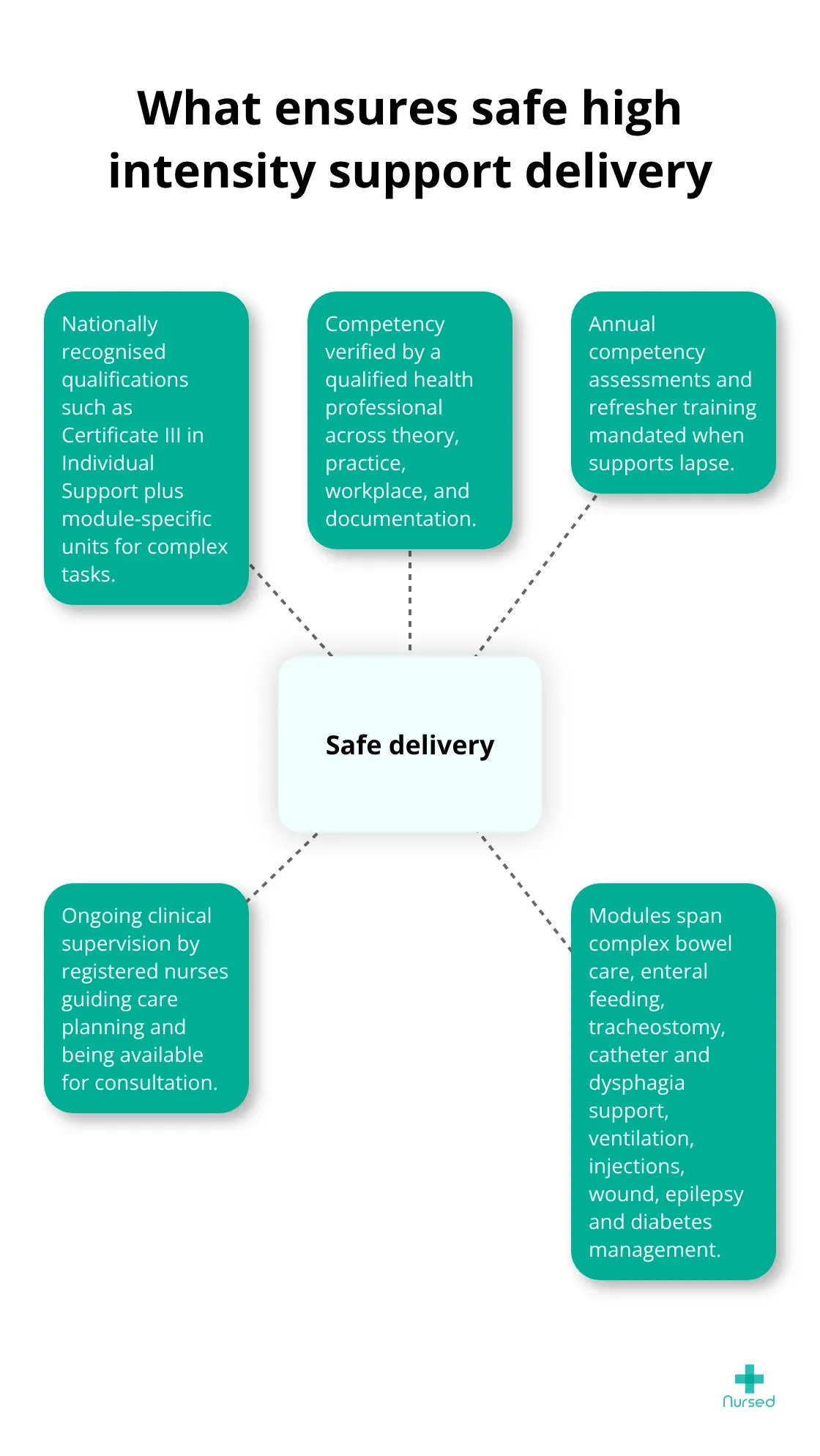
The NDIS Commission updated the High Intensity Support Skill Descriptors in February 2023, expanding guidance and emphasising that annual competency assessments and refresher training are required, particularly when supports haven’t been delivered for three months or longer. This structured approach protects participants and gives families confidence that their loved one receives care from someone genuinely equipped to handle complex medical needs safely.
Moving Forward with the Right Provider
Selecting a registered NDIS provider matters significantly. Your provider must hold registration in group 0104 (High Intensity Daily Personal Activities) with the NDIS Commission, ensuring they meet regulatory standards and employ workers with verified competencies. The provider’s team should include qualified nurses who oversee care planning and remain available for consultation throughout your support arrangement.
When you connect with a potential provider, ask about their staff’s training records, competency verification processes, and how they maintain clinical supervision. A quality provider will explain their approach to risk management, documentation practices, and how they involve you in decisions about your care. This foundation sets you up to access the complex care you need with confidence and safety.
What Makes High Intensity Support Delivery So Difficult
The Complexity Workers Face Daily
Delivering high intensity supports requires managing competing priorities that standard disability care never encounters. Support workers must handle complex medical procedures, monitor for behavioural changes, maintain detailed documentation, and respond to health emergencies-often within the same shift. The NDIS data shows that approximately 10 to 15 per cent of participants need these supports, yet the workforce remains stretched thin. Workers report high stress levels because they carry accountability for tasks where mistakes create serious consequences: a feeding error causes aspiration, improper wound care triggers infections, and missed medication administration creates medical crises.
Many support workers enter the field with standard care training, then face a steep learning curve when they transition to high intensity roles. They must master complex bowel care, tracheostomy management, urinary catheter care, and diabetes management within compressed timeframes, all while building confidence in their clinical decision-making. This gap between training completion and genuine competence creates real risks for participants and genuine stress for workers.
Service Coordination Breaks Down Regularly
Coordinating multiple services compounds these challenges significantly. Participants often need input from registered nurses, GPs, allied health professionals, and support workers simultaneously, yet these teams frequently operate in silos. Communication breakdowns happen regularly: a nurse updates a care plan but the support worker doesn’t receive the notification, or a GP changes medication timing without informing the coordination team.
The NDIS Complex Support Needs Pathway launched in 2018, assigned Specialist Support Coordinators to help navigate these fragmented services. Yet many participants still report confusion about who holds responsibility for what. When coordination fails, participants suffer: hospital admissions increase, health outcomes decline, and care quality deteriorates.
The Burden on Families and Caregivers
Families and caregivers face their own pressures-they manage logistics between providers, advocate for their loved one’s needs, and carry emotional weight that professional support workers don’t experience. Caregivers often become the glue holding fragmented services together, translating information between providers and ensuring nothing falls through the cracks. This invisible labour exhausts families and prevents them from simply being present with their loved one rather than constantly problem-solving.
High intensity support isn’t just about individual workers performing tasks-it’s about orchestrating an entire care ecosystem where communication flows, responsibilities remain clear, and participants stay at the centre of every decision. Understanding these delivery challenges helps explain why selecting the right provider matters so much when you’re ready to access support.
Getting Started with High Intensity Supports
Assess Your Actual Support Needs
Start by documenting your current health situation in detail: which medical tasks require assistance daily, which create the most safety concerns, and which impact your independence most significantly. If you’re assessing needs for a family member, involve them in this conversation where possible-their perspective on what matters most shapes everything that follows. Write down specific tasks that concern you: Does feeding require tube management? Does mobility create pressure injury risks? Does medication administration need oversight?
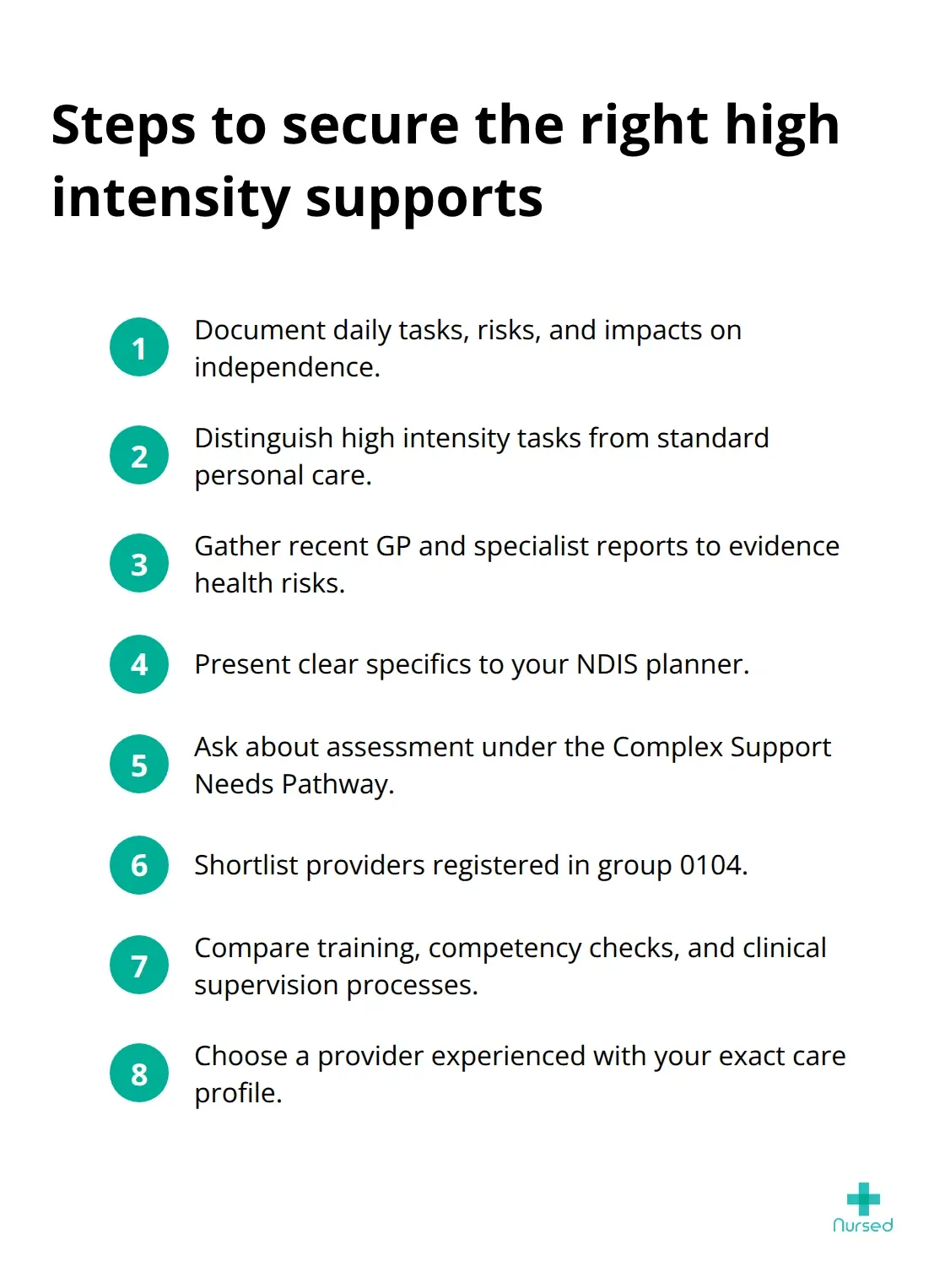
This isn’t about listing everything; it’s about identifying which tasks genuinely demand specialised medical knowledge versus which could work with standard personal care support. Many people conflate complexity with high intensity support eligibility, but the NDIS distinction is precise: high intensity supports covers tasks where mistakes create serious health consequences. A support worker helping someone shower differs fundamentally from one managing enteral feeding or tracheostomy care. Your honest assessment of which category your needs fall into determines whether high intensity supports are appropriate.
Present Your Case to Your NDIS Planner
When you approach your NDIS planner, bring your documented assessment plus any recent health reports from your GP, specialists, or hospital. Planners review participants as potential high intensity support candidates, yet many eligible people don’t access these supports because they haven’t clearly articulated their complex needs. Your planner needs specifics: not just that mobility is difficult, but that immobility creates pressure injury risks requiring specialised preventative care. Not just that eating is challenging, but that dysphagia creates aspiration risks demanding trained support.
The planner’s job involves translating your health needs into NDIS funding categories, and high intensity supports funding requires demonstrating that standard care won’t adequately manage your health risks. If your planner seems uncertain about whether high intensity supports fit your situation, ask directly whether your circumstances warrant assessment under the Complex Support Needs Pathway, which connects participants with Specialist Support Coordinators who navigate multiple services. This pathway exists specifically for people whose needs span health, disability, housing, or justice systems simultaneously.
Select a Provider with Verified Credentials
Finding the right provider requires checking their NDIS Commission registration first-this confirms they’re authorised to deliver high intensity supports. Then contact three providers and ask identical questions: How many participants do they currently support with your specific care needs? What qualifications do their staff hold? How frequently do they conduct competency assessments? What’s their process for clinical supervision?
A quality provider answers these questions directly without vagueness. Poor providers deflect or provide generic responses. Ask whether they’ve supported someone with your exact health profile previously; providers with relevant experience reduce your learning curve and support quality significantly. A registered NDIS provider matches participants with support workers who’ve managed their specific care needs before, ensuring continuity and confidence from day one.
Final Thoughts
High intensity supports overview fundamentally changes what’s possible for people managing complex medical needs at home. If you’re uncertain whether high intensity supports apply to your situation, start with an honest assessment of your medical needs and safety concerns, then bring that documentation to your NDIS planner and ask directly whether high intensity supports warrant inclusion in your plan. If you’re already approved for these supports, focus entirely on provider selection because the right team transforms your experience fundamentally.
Quality support produces measurable differences in outcomes. Participants supported by trained, clinically supervised workers experience fewer hospital admissions, better health management, and greater independence at home (while families report reduced stress when they know their loved one receives care from someone genuinely equipped to handle medical complexity). Workers themselves perform better when they’ve completed proper training and work within clear clinical supervision structures.
We at Nursed support individuals with disabilities to thrive at home through personalised care that prioritises independence and community integration. Whether you need daily living assistance, respite care for caregiver relief, or supportive accommodation, our team works with you to create support arrangements that match your actual needs. Explore how Nursed can support your high intensity care journey and discover what quality, person-centred support genuinely looks like.


